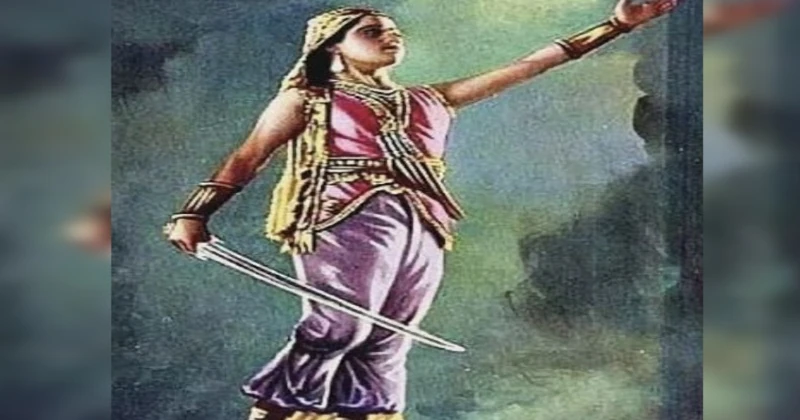
At just 13 years of age, Kumari Maina chose death over surrender, standing firm before the might of the British Empire during the tumultuous days of the 1857 War of Independence. Her sacrifice on September 3, 1857, remains a powerful yet often forgotten chapter in the story of India’s struggle against British rule.
Maina was the adopted daughter of Nana Saheb Peshwa, one of the prominent leaders of the 1857 uprising. As British forces began gaining the upper hand, Nana Saheb decided to leave his palace at Bithoor and retreat to a safer location to regroup his forces and continue the fight.
3 सितम्बर/बलिदान-दिवस
बाल बलिदानी कुमारी मैना
1857 के स्वाधीनता संग्राम में प्रारम्भ में तो भारतीय पक्ष की जीत हुई; पर फिर अंग्रेजों का पलड़ा भारी होने लगा। भारतीय सेनानियों का नेतृत्व नाना साहब पेशवा कर रहे थे। उन्होंने अपने सहयोगियों के आग्रह पर बिठूर का महल छोड़ने का निर्णय कर… pic.twitter.com/J8cq1ONg52— Rashtra Sevika Samiti Delhi Prant (@sevikasamiti) September 3, 2026
But one question troubled him deeply: what would happen to his young daughter?
The journey ahead was uncertain, and the hardships of war made taking Maina along dangerous. Leaving her behind, however, carried its own risks. It was Maina herself who resolved the dilemma. She chose to remain at the palace.
Nana Saheb warned her that the British were notorious for their brutal treatment of prisoners and that, as a young girl, she could face even greater danger if captured. Maina nevertheless refused to be intimidated.
She reportedly declared that as the daughter of a revolutionary and a Hindu maiden, she knew how to defend herself and protect her honour. Nana Saheb eventually left her behind with a handful of trusted soldiers.
The British Siege
Within days, British forces surrounded the palace after receiving information from their spies. Commander Hay ordered the palace to be shelled.
Maina emerged and appealed to Hay to stop the destruction. She knew him from Nana Saheb’s court, while Hay’s daughter Mary had been a friend of hers. But Hay claimed he was bound by orders from General Outram and ordered Maina’s arrest.
The young girl, however, knew the palace better than the soldiers did. Familiar with its secret passages and underground chambers, she disappeared before the British could seize her.
The shelling continued. Within hours, the palace was reduced to ruins. Believing Maina had been buried beneath the rubble, Commander Hay returned to his residence.
But the British had failed to kill her. That night, Maina emerged from her hiding place, unaware that British soldiers were still stationed amid the ruins. Two soldiers spotted her, captured her and took the young girl before General Outram.
A child who refused to betray the revolution
The British were desperate to capture Nana Saheb. A reward of one lakh rupees had reportedly been announced for his capture. Outram believed that extracting information from Maina could help the British crush the rebellion.
He initially tried persuasion. Maina remained silent. Threats followed. She was warned that she would be burned alive if she refused to speak. Still, the 13-year-old did not yield.
Finally, Outram ordered his soldiers to tie the young girl to a tree and set her on fire. The order was carried out. On the night of September 3, 1857, Kumari Maina was burned alive. She gave the British no information, betrayed no one and surrendered neither her courage nor her resolve.
A sacrifice that must not be forgotten
The story of Kumari Maina is a stark reminder that the resistance of 1857 was not fought only by seasoned warriors. Even children became victims and, in some cases, symbols of the struggle against British rule.
Maina’s death represents the brutal face of colonial repression and the extraordinary courage attributed to a young girl who chose to face death rather than submit.