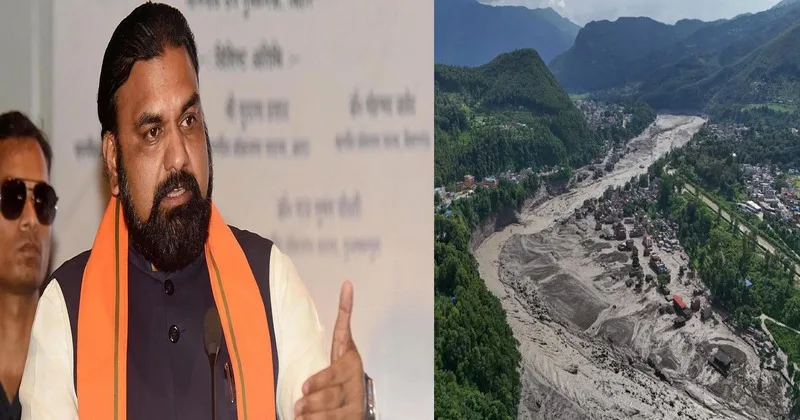
How Bihar stood resilient against Nepal floods?
October 9, 2026
  • Read Ecopy
  • Circulation
  • Advertise
  • Careers
  • About Us
  • Contact Us
Android AppiPhone AppArattai
Organiser
  • ‌
  • Bharat
    • Assam
    • Bihar
    • Chhattisgarh
    • Jharkhand
    • Maharashtra
    • View All States
  • World
    • Asia
    • Europe
    • North America
    • South America
    • Africa
    • Australia
  • Editorial
  • International
  • Opinion
  • RSS @ 100
  • More
    • World Hindu Congress 2026
    • Op Sindoor
    • Analysis
    • Sports
    • Defence
    • Politics
    • Business
    • Economy
    • Culture
    • Special Report
    • Sci & Tech
    • Entertainment
    • G20
    • Azadi Ka Amrit Mahotsav
    • Vocal4Local
    • Web Stories
    • Education
    • Employment
    • Books
    • Interviews
    • Travel
    • Law
    • Health
    • Obituary
  • Subscribe
    • Subscribe Print Edition
    • Subscribe Ecopy
    • Read Ecopy
  • ‌
  • Bharat
    • Assam
    • Bihar
    • Chhattisgarh
    • Jharkhand
    • Maharashtra
    • View All States
  • World
    • Asia
    • Europe
    • North America
    • South America
    • Africa
    • Australia
  • Editorial
  • International
  • Opinion
  • RSS @ 100
  • More
    • World Hindu Congress 2026
    • Op Sindoor
    • Analysis
    • Sports
    • Defence
    • Politics
    • Business
    • Economy
    • Culture
    • Special Report
    • Sci & Tech
    • Entertainment
    • G20
    • Azadi Ka Amrit Mahotsav
    • Vocal4Local
    • Web Stories
    • Education
    • Employment
    • Books
    • Interviews
    • Travel
    • Law
    • Health
    • Obituary
  • Subscribe
    • Subscribe Print Edition
    • Subscribe Ecopy
    • Read Ecopy
Organiser
  • Home
  • Bharat
  • World
  • Operation Sindoor
  • Editorial
  • Analysis
  • Opinion
  • Culture
  • Defence
  • International Edition
  • RSS @ 100
  • Magazine
  • Read Ecopy
Home Bharat

How Bihar stood resilient against Nepal floods? Real-time warning, govt prepardness & advanced tech averted disaster

Bihar's resistance against Nepal floods cannot be just attributed to luck. Timely intervention by the Bihar government, the opening of all 36 gates of the Gandak Barrage is one of the crucial step for controlling the potential damage triggered by the Nepal floods. Deployment of engineers in sensitive areas and the constant monitoring by the administration has also controlled the situation

Abhay KumarAbhay Kumar
Aug 29, 2026, 07:00 pm IST
inBharat, Analysis, Bihar
Follow on Google News
Timely and swift action by the Bihar government thwarted major disaster

Timely and swift action by the Bihar government thwarted major disaster

Facebook
Twitter
WhatsAppTelegramEmail

The sudden flood from Nepal has raised concerns in Bihar. The rising water levels of Nepal’s Narayani River, which is being known as Gandak in Bihar has raised tensions about potential flooding in several districts of Bihar ranging from the bordering district of  West Champaran to Gopalganj, Saran and beyond these districts too. The main issue is that the flood from Nepal has the potential to wreak havoc in Bihar.

However, the devastation in Nepal will not be replicated in Bihar: The damage in Bihar is averted mainly due to the promptness and preparedness of the Bihar government. Hence, it is a matter of big relief that in Bihar the danger has been averted. The images emerging from the flood prone areas of Bihar are reassuring this fact. The Gandak River is flowing well below the danger mark and the rapid flooding in Nepal has not had the same widespread impact in Bihar.

This cannot be just attributed to luck but the timely and proper intervention by the Bihar government. The opening of all 36 gates of the Gandak Barrage is one of the timely and crucial step for controlling the potential damage triggered by the Nepal flood. Deployment of engineers in sensitive areas and the constant monitoring by the administration has also controlled the situation. We can say in other words that the devastation weakened in the state of Bihar by the vigilant administration.

The administration in districts like West Champaran, East Champaran, Gopalganj, Saran, Muzaffarpur, Vaishali, Siwan and Sitamarhi was highly vigilant and averted the catastrophe and its impact on lives and infrastructure. These districts are located along the Gandak River.

What triggered Nepal floods?

Now the moot question: how did this massive influx of water from Nepal weaken upon reaching in Bihar? Besides, how was the potential crisis controlled? Are Nepal’s rivers always a time bomb for Bihar, destined for disaster, or can they also be controlled too by the timely and proper action? To answer these questions we have to understand the flow of water in Nepal’s Bhote Koshi,Trishuli and Narayani rivers.

The flood’s strong current first flowed into the Bhote Koshi River, which originates in Tibet. This water later merged with theTrishuli River. The Trishuli is one of Nepal’s major rivers and the sudden surge of water increased the pressure on it.

The water then moved from theTrishuli River to the Narayani River. The strong currents caused devastation in Nepal. However, as the water flowed from Trishuli to Narayani and then towards Bihar, the water spread rapidly. Due to the river’s wide width, the pressure and velocity of the current gradually decreased. The strong current weakened as it reached Bihar: This is why the deluge of water seen in Nepal did not remain as intense by the time it reached Bihar. Furthermore, preparations had already been made on the barrages and embankments on the Bihar side.

Vigilant Bihar administration & timely action thwarts major disaster

All 36 gates of the Gandak Barrage were opened: Besides it took approximately 6 to 8 hours for water from Bhote Koshi and other rivers in Nepal to reach the Gandak river. The water level of the Gandak began to rise on Wednesday evening and continued to rise rapidly until nightfall. The water flow rapidly climbed on Wednesday night, peaking at approximately 150,000cusecs around 11:00 PM. Approximately 150,000 cusecs of water was discharged from the Valmikinagar Barrage.

Also Read: Human Rights Defense International questions New York Mayor Mamdani over opposition to ‘Universal Oneness Celebration’

The decision to reduce pressure on the barrage proved effective: The most significant decision taken by the Water Resources Department was to open all 36 gates of the Gandak Barrage. This allowed for the rapid release of excess water and prevented the barrage from experiencing increased pressure. According to officials and experts, if the water had not been discharged timely, the pressure on the barrage could have increased, potentially leading to an uncontrolled discharge.

High-alert at vulnerable districts

Therefore, a strategy was adopted to allow the excess water to flow freely. High Alerts were immediately issued across eight vulnerable districts in Bihar including West Champaran, East Champaran, Gopalganj, Saran, Muzaffarpur, and Vaishali. Precautionary evacuations have shifted over 5,000 plus families to higher ground The immediate danger has largely subsided. The bulk of the floodwaters spilled safely through the Narayani river system, causing less downstream impact than originally feared. Embankments have held firm, and the discharge rates at the Valmikinagar Barrage have stabilized back down to a routine 100,000 cusecs.

Early hydrological warning, advanced technology & swift action dismantled the disaster

Engineers had anticipated the danger: The department has prior information about the direction and potential impact of the water coming from Nepal. Based on this, preparations are made at sensitive locations providing them with requisite resources in sensitive areas. Since Gandak is a large river and it receives water from many small and large multiple water outlets. Therefore, the department identifies sensitive areas in advance and arranges for deployment and resources there.

Sensitive areas were already in focus: The most important step in this entire development was to allow free flow of water by opening all the gates of the barrage. Engineers were priorily  deployed at sensitive locations. Besides Special monitoring was also maintained where anti-erosion work was already underway to ensure that the safety measures undertaken were not affected by the high water level.

The availability of flood fighting material was ensured in potentially sensitive areas. Additional engineers were deployed and officers were also sent from headquarters as needed. Constant patrolling and monitoring kept the situation under control.


Topics: BiharBihar governmentDisasterNepal FloodsHydrological Warning
Share
Tweet
SendShareSend
✮ Subscribe Organiser YouTube Channel. ✮
✮ Join Organiser's WhatsApp channel for Nationalist views beyond the news. ✮
Previous News

India’s Semiconductor Push: From electronics manufacturing to semicon 2.0

Next News

Universal Oneness Celebration: How global personalities hail visit of RSS’ Dr Bhagwat as reflection of Sanatan culture

Related News

Assam Police STF busts Pakistan spy network in Guwahati ; Bihar Man arrested

Assam Police STF busts Pakistan spy network in Guwahati, arrests Bihar man Abhishek Kumar

Exclusive Interview | “I Have Positive Pressure to Perform”: Bihar Chief Minister Samrat Choudhary

SIR Spares None: Jaishankar, Judges & Elites Flagged — Delhi’s Voter Blitz Crushes ‘Targeting Poor & Muslims’ Narrative

SIR Spares None: Jaishankar, Judges & Elites Flagged — Delhi’s Voter Blitz Crushes ‘Targeting Poor & Muslims’ Narrative

Bihar Temple Vandalism: Police detain 3 minor Muslim boys for stone-throwing, urination at Hanuman murti in Nalanda

Nepal’s devastating floods are a stark warning of how climate change, melting Himalayan glaciers are pushing nature to the brink

Nepal floods expose the growing climate crisis as melting himalayan glaciers bear the burden of reckless consumerism

India ramps up aid to flood-hit Nepal

Nepal Floods: Death toll hits 1,344; India airlifts 7th aid tranche, deploys tunnel rescue team for relief efforts

Load More

Latest News

Union Minister Sarbananda Sonowal meets Saudi Arabia’s Suliman Almazroua (left), Belgium’s Annick De Ridder (centre) and Bhutan’s Lyonpo Chandra Bahadur Gurung in New Delhi. Photo: X/@sarbanandsonwal

Sagarmanthan 2026: India becomes 2nd largest global seafarer hub, boosts ties with Saudi Arabia, Belgium and Bhutan

PM Modi calls for free, open and rule-based global maritime order for peace and progress

Sagarmanthan 2026: India seeks free, open, secure, rules-based maritime order: PM Modi

Pakistan Denies NYT Report on PAF Jet Deployment Against Houthis in Saudi Arabia

Pakistan debunks NYT Report on PAF Jets used against Houthis attacking Saudi Arabia amid Makkah Defence Pact

West Bengal SIR Data Questions TMC Manipulation Claims

TMC’s ‘Vote Chori’ charge fails SIR data test: Five highest-deletion seats won by Trinamool, five lowest by BJP

Beyond Ram Mandir: Ashok Singhal’s vision with five aspects for Ayodhya

India to Clamp Down on Deepfakes: Centre to roll out AI regulatory framework within a month

The SIR controversy has raised questions over street pressure on constitutional institutions and judicial decision-making

Democracy or Mobocracy: Can street pressure influence constitutional institutions and judicial outcomes in India?

Swami Vigyananand, Joint General Secretary of Vishwa Hindu Parishad(VHP) and Initiator of the World Hindu Congress(WHC)

World Hindu Congress 2026: 60 countries, 4000 delegates & Hindu Expo; Hindu leaders unite for civilisational resurgence

Ajin, a CPM councillor in the Tiruvananthapuram Municipal Corporation (File Photo)

Keralam govt orders vigilance probe against Tiruvananthapuram CPM councillor Ajin over Rs 10 lakh bribe demand video

The banking community realised that UFBU was using bank workers as fodder and collateral damage in this process. Hence, most workers had already abandoned the strike calls

Bank Strike: When the call is louder than the support

Load More
  • Privacy
  • Terms
  • Cookie Policy
  • Refund and Cancellation
  • Delivery and Shipping

© Bharat Prakashan (Delhi) Limited.
Tech-enabled by Ananthapuri Technologies

  • Home
  • Search Organiser
  • Bharat
    • Assam
    • Bihar
    • Chhattisgarh
    • Jharkhand
    • Maharashtra
    • View All States
  • World
    • Asia
    • Africa
    • North America
    • South America
    • Europe
    • Australia
  • Editorial
  • Operation Sindoor
  • Opinion
  • Analysis
  • Defence
  • Culture
  • Sports
  • Business
  • RSS @ 100
  • Entertainment
  • More ..
    • Sci & Tech
    • Vocal4Local
    • Special Report
    • Education
    • Employment
    • Books
    • Interviews
    • Travel
    • Health
    • Politics
    • Law
    • Economy
    • Obituary
  • Subscribe Magazine
  • Read Ecopy
  • Advertise
  • Circulation
  • Careers
  • About Us
  • Contact Us
  • Policies & Terms
    • Privacy Policy
    • Cookie Policy
    • Refund and Cancellation
    • Terms of Use

© Bharat Prakashan (Delhi) Limited.
Tech-enabled by Ananthapuri Technologies