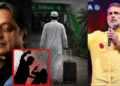

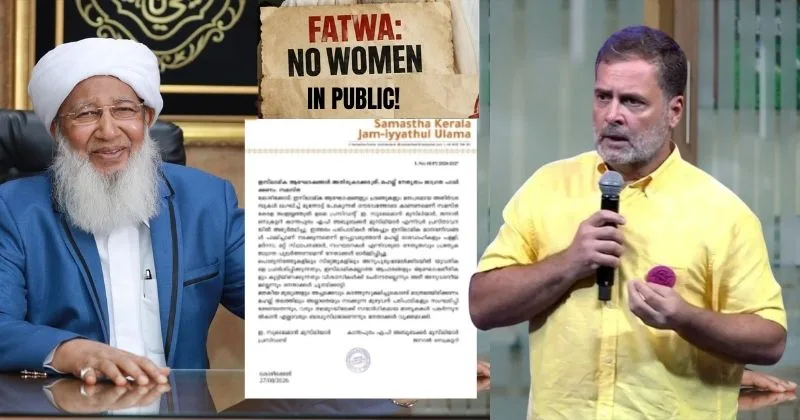
When national politics demands it, Rahul Gandhi is quick to pick up the megaphone, rallying the youth to tear down regressive norms and “smash the patriarchy.” But progressive slogans have a habit of losing their voice the moment they cross the Western Ghats into Kerala.
At the gates of Kozhikode, the rhetoric hits a wall of cold political reality. The Kanthapuram faction of Samastha—a hardline Sunni body whose orthodoxy runs deep—has handed down another unapologetic decree seeking to erase women from public visibility. Anywhere else, this would trigger instant liberal fury, fiery press conferences, and nationwide outrage from 10 Janpath.
Here, there is only silence…
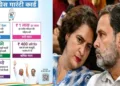
That silence is not accidental; it is bought and paid for. In Kerala’s electoral calculus, the Muslim League is not just another coalition partner—it is the Congress’s lifeline, tied to the Gandhi family by bonds far thicker than ordinary politics. Priyanka Gandhi’s sweeping victory in Wayanad wasn’t a grassroots awakening; it was an electoral gift, carefully engineered and delivered on a platter by the League’s ground machinery.
Now, the hypocrisy sits out in the open. When the clerical establishment decrees that women must remain out of sight, will Rahul Gandhi show the same ideological spine he performs on Pune, Delhi stages? Will he march straight into the heart of Malabar and tell his most crucial political patrons to dismantle their patriarchy—or does the crusade for women’s empowerment end wherever coalition math begins?
‘No Women in Islamic Celebrations, No Display in Public Places’: Kanthapuram Section Issues Directive to Mahals, Madrasas
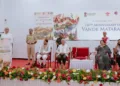
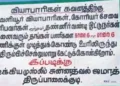
The Samasta Kerala Jamiyyathul Ulama’s Kanthapuram faction has issued a controversial call asking Mahals, madrasas, mosques and other Islamic institutions to ensure that religious celebrations strictly adhere to what it describes as Islamic norms.
In a statement, Kanthapuram A. P. Aboobacker Musliyar said Islamic celebrations should not cross religious boundaries or become overly elaborate. The statement comes amid the participation of women in Prophet’s Day celebrations, triggering a fresh debate over the visibility and participation of women in public religious programmes.
The Kanthapuram faction has specifically cautioned against bringing young women onto stages or displaying them in public spaces alongside men during such celebrations.
‘Not Allowed’ Under Religious Norms
According to the statement, Mahall leaders and the leadership of mosques, madrasas and other institutions should ensure that programmes are conducted strictly according to Islamic standards. It states that displaying young women among men on public streets and stages, along with incorporating practices considered un-Islamic, is not permissible for believers.
The statement further calls for all celebrations at the Mahall level and beyond to be organised while maintaining what it describes as religious values and discipline. The leadership also stressed that those organising such programmes have a responsibility to provide appropriate role models for the next generation.
The directive effectively calls on local religious institutions to prevent women from appearing alongside men at public Islamic celebrations, raising questions about the extent to which religious organisations should regulate women’s participation in community and public life.
Other Incidents: The Evidence Was Never Hidden From Rahul
Malappuram, Kerala — May 2022
A madrasa building was being inaugurated in Malappuram, the kind of function that happens dozens of times a year in this part of Kerala — folding chairs on a dais, a microphone that crackles a little, parents in the crowd watching their children get certificates for a year of hard study.
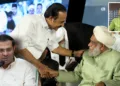
A class 10 student walked up to receive her educational award. The memento was handed to her by Panakkad Sayed Abbas Ali Shihab Thangal, a senior leader of the Muslim League. It should have ended there — a small, forgettable moment of pride.
Instead, as she stood near the dais, M.T. Abdulla Musaliyar — General Secretary of the Samastha Kerala Jem-iyyathul Ulama’s education board, and a senior figure in the organisation — was recorded objecting, audibly and sharply, to her presence on stage, telling organisers not to call girls up there again and to summon their parents instead. The clip spread fast, and so did the reaction.
Samastha, Sunni, Muslim League and the Congress
Samastha is not a fringe outfit. It’s one of the oldest and most influential bodies of Sunni Islamic scholars in Kerala, running a vast network of madrasas and religious education across the state. When one of its senior office-bearers says something like this from a public dais, it doesn’t stay local for long. The Muslim Students Federation’s state president went further, defending the scholar’s right to set the terms of his own function and describing the backlash as something close to a pile-on. These are just a few instances that have reached the national arena. There are many more cases at the local level, particularly in parts of Malabar such as Kozhikode, Malappuram, Kasaragod and Palakkad, where women are allegedly treated as second-class citizens and subjected to deeply restrictive social norms.
The controversy also highlights a wider tension within Kerala’s Muslim community: while the state has a long history of high female literacy, education and public participation, sections of religious leadership continue to advocate stricter gender segregation in public and religious spaces. -A report from the world bank have highlighted these patriarchal norms added by the migrants who came from Gulf countries.
A Documented History of Gender Hardlining
- 2015 (Gender Equality is Un-Islamic): Kanthapuram A.P. Aboobacker Musliyar sparked statewide outrage after publicly declaring that gender equality was “un-Islamic” and against nature, arguing that women lacked the mental capacity to govern or hold equal status in public life.
- 2018 (Public Presence Leads to Disaster): Musliyar reiterated that Islam does not permit women to enter open public spheres, claiming that female visibility in public arenas leads to “violence and disaster”.
- 2022 (Stage Felicitation Incident): Senior Samastha leader M.T. Abdulla Musaliyar publicly berated school organizers on stage in Malappuram for inviting a 10th-standard female student to receive an academic award in the presence of male clerics, asking why a girl was allowed on stage and warning against photographic documentation.
- 2026 (Resolutions on Public Role): Clerical resolutions have repeatedly warned against “distorted progressive arguments” and sought to limit women’s involvement in public platforms to preserve traditional domestic and religious boundaries.
The Political Matrix: Why the Silence is Structural
The hesitation of major coalition leaders to directly confront orthodox bodies stems from the arithmetic of northern Kerala politics.
- The IUML Lifeline: The Muslim League (IUML) represents the indispensable backbone of the Congress-led UDF in Kerala. Without the organizational machinery and community reach of the League across Malappuram, Kozhikode, and Kasaragod, the UDF loses its electoral foundation.
- The Wayanad Dynamic: Both Rahul Gandhi’s previous parliamentary victories and Priyanka Gandhi Vadra’s subsequent sweep in the Wayanad constituency rely heavily on the consolidated turnout engineered by the IUML and associated community institutions across the constituency’s Malabar assembly segments.
- Clerical Balancing: While the two Samastha factions (the E.K. faction historically linked to the IUML leadership, and the A.P. Kanthapuram faction often publicly courted across party lines but majorly with Congress) occasionally differ in political leanings, their underlying conservative social consensus remains influential. Direct public condemnation of clerics by mainstream party leaders risks alienating critical voter segments.
The Fundamental Contradiction with Rahul Gandhi’s ‘Smash Patriarchy’ Campaign
The recurring clash between patriarchal religious diktats and progressive party slogans exposes an unresolved political dilemma. While national platforms frequently target orthodox practices in other communities, patriarchal decrees from allied vote blocs in Kerala are met with calculated ambivalence.
As orthodox clerics continue to define public limits for women in Malabar, the central question remains: can a political movement credibly wage a national campaign against patriarchy while remaining silent when that same patriarchy operates within its most essential electoral strongholds? So that’s why we say,