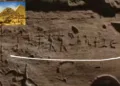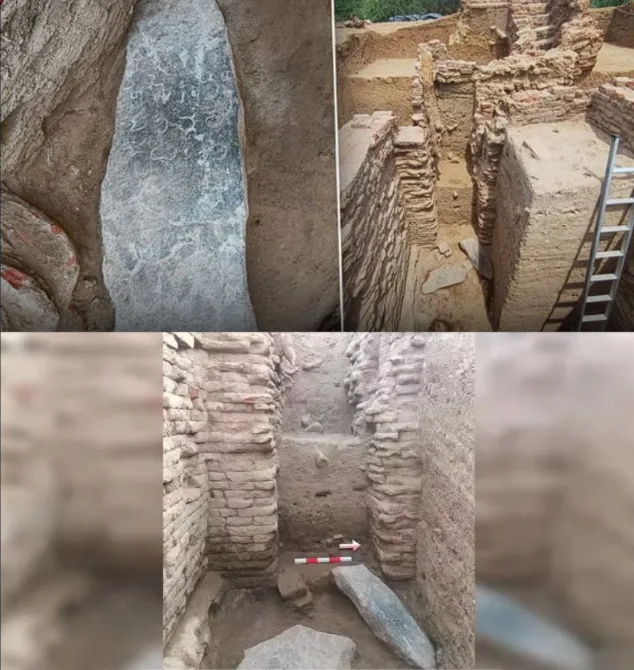
A fifth-century hero stone inscription dating back to the Sangam era has been unearthed at Malayadipatti village near Karivalamvanthanallur in Tenkasi district, according to the Tamil Nadu Archaeological Department, as reported on August 22. The discovery was made at one of the sites where the Tamil Nadu State Department of Archaeology (TNSDA) has been conducting excavations.
The four-line inscription represents a transitional stage from Tamil Brahmi to Vattezhuthu and mentions “Karukkaj”, Sulgan, Nannag and Kodiyan. Experts said the hero stone was erected in memory of Nananga Kodiyan, son of Karukkan Sulagan, in the 5th Century.
5th-century CE hero stone unearthed at a Sangam Age brick well in Karivalamvanthanallur near Tenkasi by archaeologists from the TN State Archaeology Department.#news #keeladi #thenkasi #history #chennailive pic.twitter.com/dsctTEUDuO
— Chennai Live Digital 104.8 (@chennailive1048) August 22, 2026
The absence of a depiction of a warrior on the stone is also significant. It is reported that during the Sangam and post-Sangam era, figures were not carved on hero stones, and those found at Pulimankombai, Appanur and Mallikapuram do not bear depictions of the warriors as well. The present hero stone also does not have a depiction of a warrior.
In the same site, a well believed to date back to the Sangam period has also been discovered. Archaeological researcher Kalieswaran, who is working on the site, said the well was built in accordance with the construction system prevalent during the Sangam period. The steps are made of stones and the walls are made of bricks. The wear and tear on the steps shows that people used the well for a long time, he said.
He also disclosed that two areas have been discovered at the excavation site here, namely the habitation area and the eema area (crematorium). Excavations are underway at both these places. Remains of buildings from the Sangam period have also been found in the habitation areas here.
The brick structures found at the site have also been compared with those found at other archaeological sites. The official said that the brick structures found in areas like Keezhadi, Alagankalam, Kaveripoompattinam and Panditham Medu are consistent with those found here. The bricks here are 40 cm long, 20 cm wide and 7 cm thick.
While the Tenkasi excavation has brought to light the fifth century hero stone, the Sangam-era well and remains of habitation, another archaeological discovery has reportedly been made in the Tindivanam-Villupuram region.
A Pallava/Chola era Kotravai sculpture has reportedly been found in the Tindivanam-Villupuram region.
In the land of Jesus / Yesappa Discovery of ancient Pallava/Chola-era archaeological remains in the Tindivanam–Villupuram region of Tamilnadu.
A Pallava-period Kotravai (war goddess) sculpture has reportedly been discovered.
The sculpture is described as being around 1,300… pic.twitter.com/tF7igEJPmX
— RajeIyer (@RajeswariAiyer) August 24, 2026
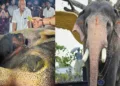
Kotravai, the goddess of war, victory, fertility and the hunt, believed to be 1,200 years old, was found during a field survey conducted by historian K Senguttuvan in the Kollar and Pelakuppam areas near Tindivanam.
He told media, “A sculpture was buried more than half way inside a lake of Kollar village. The local worshipped it as Durga. It was a sculpture from the Pallava period of the 8th Century AD. The sculpture, carved on a slab of stone around five feet high, is depicted wearing a beautiful headdress, earrings called ‘Vyava Kundalam’, a necklace, and a knotted loincloth. The elder goddess is seated on a seat with both her legs hanging down”.
The discoveries in Tamil Nadu are also accompanied by a recent archaeological discovery in Thailand, where archaeologists unearthed a pair of 2,000-year-old gold rings, one engraved with an ancient script, alongside human remains.
The news that surfaced last month was from the Don Yai Thong archaeological site, which is located roughly 80 miles southwest of the capital Bangkok in Phetchaburi province. Researchers think the site was used as a burial ground for high-ranking members of society. Since February, it has yielded a trove of artefacts that offer new glimpses at life—and death—during the area’s Iron Age, roughly 1,500 to 2,500 years ago.
According to TS Krishnan, author, historian and researcher, “In a big blow to mirror image readers, the name Pusarahita is also found in Ashoka inscriptions with Brahmi. Unfortunate that no one used to mirror there to claim that these are Tamil.”
In a big blow to mirror image readers, the name Pusarahita is also found in Ashoka inscriptions with Brahmi.
Unfortunate that no one used to mirror there to claim that these are Tamil. @venkatkrishvith https://t.co/VJSICp435h pic.twitter.com/EbYGm5H8NI
— 𑀓𑀺𑀭𑀼𑀱𑁆𑀡𑀷𑁆 🇮🇳 (@tskrishnan) July 9, 2026
Krishnan was replying to some who claimed that it was Tamili letters and claiming it was the civilisation and identity of Tamils in Thailand. It was first identified as Brahmi and a mirror image of Tamizhi, according to Singapore-based Saar group Ranjith Kumar.
தாய்லாந்து அகழாய்வில் கிடைத்த மோதிர அச்சில் உள்ள எழுத்துக்கள் தமிழி என்று உறுதிப்படுத்தப்பட்டுள்ளது.
" அளர் வைரதன் "
என்ற வாசிப்பு சரியாக உள்ளது.அளர் என்பது வளமான மருத நிலத்தைக் குறிக்கும் தமிழ்ச் சொ ல் என்று தொல்லியல் அறிஞர் சாந்தலிங்கம் அவர்கள் உறுதிசெய்தார். pic.twitter.com/1B3Fdvxnno
— 𓄂𖤍Bhairavi Nachiyar𖤍 பாண்டிய நாட்டு இளவரசி 𓄂 (@Bhairavinachiya) July 8, 2026
The Thailand Fine Arts Department, in a statement, said, “one ring was found on July 2. An initial assessment by experts identified the script reading as ‘pusarakhitasa,’ meaning ‘the one protected by Pushya,’ said to be one of the most auspicious zodiac signs in Indian astronomy. The other ring found with the same skeletal remains is a plain gold ring without any pattern. Experts believe the rings’ owner may have been a merchant of the Indian ancient caste system Vaishyas”.
The site was dated to a late prehistoric era in Thailand, a period of human settlement, established to be around 1,500 to 2,500 years ago.