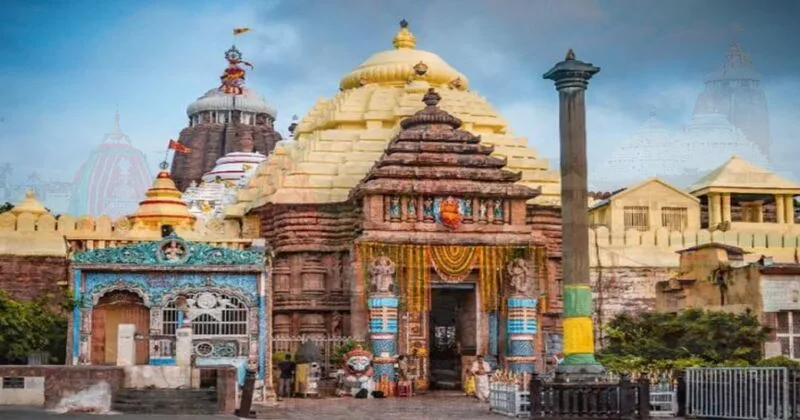
Bhubaneswar: The Odisha government has engaged the technical expertise of IIT Bhubaneswar to develop a refined queue-management and darshan system for the 12th-century Shree Jagannath Temple in Puri, with the objective of managing the steadily increasing footfall of devotees and ensuring a more organised and hassle-free spiritual experience.
The decision was taken at a high-level meeting chaired by Odisha Law Minister Prithiviraj Harichandan, where various aspects of the proposed darshan arrangements were discussed. IIT Bhubaneswar presented different models for regulating the movement of devotees inside the temple, following which a pilot model for the most suitable design will be prepared shortly.
Minister Harichandan said the government’s earlier proposal to install elevated wooden ramps inside the Nata Mandap and Jagamohan would undergo modifications based on technical assessment. The proposed ramps are intended to raise devotees’ eye level and enable them to have a clearer view of Lord Jagannath, Lord Balabhadra and Devi Subhadra from a distance.
Under the revised proposal, five to six elevated lanes are envisaged in the Nata Mandap and Jagamohan areas. Another proposal involves ramps through the Sata Pahacha area, with five ramps extending from the Garuda Stambha towards the Bahaar Katha, or outer wooden barricade.
The proposed arrangement could allow around 50 devotees to have darshan simultaneously across the five ramps. According to the plan discussed at the meeting, the system could facilitate the movement of approximately 8,000 to 10,000 devotees per hour, significantly improving crowd management during periods of heavy footfall.
The minister said the proposed system would first be tested through a pilot project before being implemented on a larger scale. The pilot model will be examined by the Chhatisa Nijoga and the Shree Jagannath Temple Administration (SJTA), after which the final design will be given practical shape. The full queue-management system is expected to be implemented within the next three to four months, subject to the outcome of the trial and consultations.
Taking to X, Harichandan said the number of devotees visiting the Shree Jagannath Temple has been increasing continuously, with the footfall rising substantially during holidays and other important occasions. He said the government was committed to ensuring disciplined darshan while preserving the sanctity and traditional practices of the temple.
Temple officials said the existing arrangement often results in congestion in the Nata Mandap, leaving many devotees unable to get a proper glimpse of the deities. The proposed system is expected to streamline the movement of devotees and reduce congestion while improving the overall darshan experience.
The government is also considering the installation of air-conditioning facilities inside the temple complex and the Nata Mandap to provide greater comfort to devotees during prolonged waiting periods. Officials said all such measures would be implemented strictly in accordance with temple traditions and without disrupting daily rituals.
The proposed changes will be carried out after detailed consultations with the Chhatisa Nijoga and senior servitors to ensure that the temple’s established customs and rituals remain fully protected.
The meeting was attended by Law Department Principal Secretary Dr Pavitra Mohan Samal, Puri Superintendent of Police Prateek Singh, Law Department Special Secretary Pranab Kumar Patra, Additional Secretary Shiva Prasad Mahapatra, Works Department Adviser J.K. Das, OBCC Chief General Manager Sridhar Rout, technical advisers from IIT Bhubaneswar and other senior officials.
The pilot project is expected to provide a practical assessment of the proposed queue system before the government proceeds with its full-scale implementation at the temple.