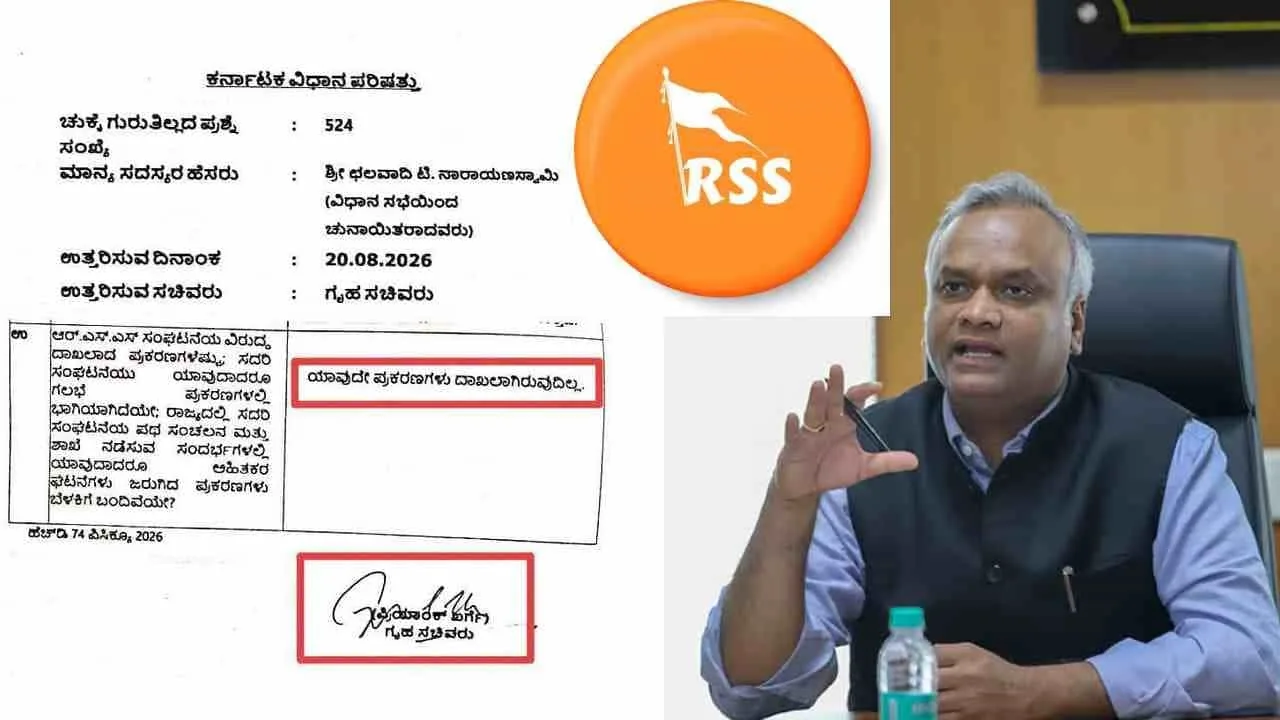
Bengaluru: The political debate over the Rashtriya Swayamsevak Sangh (RSS) in Karnataka intensified on Tuesday (August 25) after Home Minister Priyank Kharge told the Legislative Council that no cases had been registered against the organisation in the state in connection with communal violence, RSS shakhas or path sanchalans.
The response has provided fresh ammunition to the Opposition BJP, which questioned Kharge’s repeated criticism of the RSS and demanded that he explain the basis for his allegations against the organisation.
ಮಾನ್ಯ @PriyankKharge ಅವರೇ, ರಾಜ್ಯದಲ್ಲಿ ಆರೆಸ್ಸೆಸ್ ವಿರುದ್ಧ ಎಷ್ಟು ಪ್ರಕರಣಗಳು ದಾಖಲಾಗಿವೆ? ಸಂಘ ಯಾವುದಾದರೂ ಗಲಭೆ ಪ್ರಕರಣದಲ್ಲಿ ಭಾಗಿಯಾಗಿದೆಯೇ? ಪಥ ಸಂಚಲನದ ಸಂದರ್ಭದಲ್ಲಿ ಯಾವುದಾದರೂ ಅಹಿತಕರ ಘಟನೆ ದಾಖಲಾಗಿದೆಯೇ ಎನ್ನುವ ಪ್ರಶ್ನೆಗೆ ಆರೆಸ್ಸೆಸ್ ವಿರುದ್ಧ ಯಾವುದೇ ಪ್ರಕರಣ ದಾಖಲಾಗಿಲ್ಲ ಎಂದು ರಾಜ್ಯದ ಗೃಹ ಸಚಿವರು ತಿಳಿಸಿದ್ದಾರೆ.… pic.twitter.com/nClp6qvAqL
— Dr. Ravi C. T 🇮🇳 ಡಾ. ರವಿ ಸಿ. ಟಿ (@CTRavi_BJP) August 25, 2026
The issue came up during Question Hour in the Legislative Council when BJP MLC Chalavadi Narayanaswamy sought information from the Home Department regarding cases registered against the RSS in Karnataka.
He also asked whether the organisation had been involved in any communal violence and whether any untoward incidents had been reported during RSS path sanchalans.
Kharge, in his response, said no cases had been registered in relation to the issues raised in the question. The response has assumed significance as the Home Minister has been vocal about the RSS and has repeatedly raised questions over its activities and legal status.
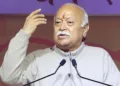
Kharge had earlier spoken about the registration of the RSS when he was serving as Rural Development and Panchayat Raj Minister. After assuming charge of the Home Department, he continued to raise the issue and recently wrote to RSS Sarsanghchalak Dr Mohan Bhagwat seeking clarity on the organisation’s registration.
The question of the RSS’s legal and organisational status has now emerged as a major political issue in Karnataka. The Congress and BJP have taken opposing positions, with the Congress government raising questions about the organisation while the BJP has accused the ruling party of targeting the RSS for political reasons.
The latest statement in the Legislative Council, however, has led the BJP to question the apparent contradiction between the government’s official response and Kharge’s political criticism.
The Karnataka BJP said the Home Minister’s response itself showed that there were no cases against the RSS in the state in the specific categories mentioned in the Legislative Council question. The party demanded that Kharge stop making allegations against the organisation without providing evidence.
BJP leaders also argued that the Home Minister should concentrate on law and order in Karnataka rather than repeatedly targeting the RSS.
Senior BJP leader CT Ravi launched a sharp attack on Kharge following the statement. Referring to the Home Minister’s response in the Council, Ravi said Kharge should stop criticising the RSS and instead focus on the state’s law-and-order situation.
Ravi also questioned the basis for Kharge’s earlier statements about the organisation. He pointed out that the Home Minister had himself informed the legislature that no cases had been registered against the RSS in connection with the issues raised by the BJP legislator.
The BJP’s argument is that if the police records do not show cases against the RSS in these categories, the government should explain why the organisation continues to be portrayed as a source of communal tension.
The controversy comes at a time when the Congress government and the BJP are engaged in a broader political confrontation over issues relating to communal harmony, organisational activities and public order.
Kharge has previously criticised the RSS and questioned its role in society. His position has drawn strong opposition from BJP leaders, who maintain that the organisation has a large grassroots network and has been involved in social-service activities, including relief work during floods and other disasters.
The RSS and its supporters have frequently highlighted the role of swayamsevaks in disaster-relief operations, including assistance to people affected by floods, distribution of food and essential commodities and support during emergencies. BJP leaders argue that such activities demonstrate the organisation’s community presence and service network.
The political debate, however, is not limited to the organisation’s social activities. The Congress has continued to raise questions about the RSS’s ideological and organisational role, while the BJP has accused the ruling party of attempting to create controversy around an organisation that operates through a large network of volunteers.
The latest Legislative Council response is therefore significant because it places an official statement from the Home Department at the centre of the political debate.