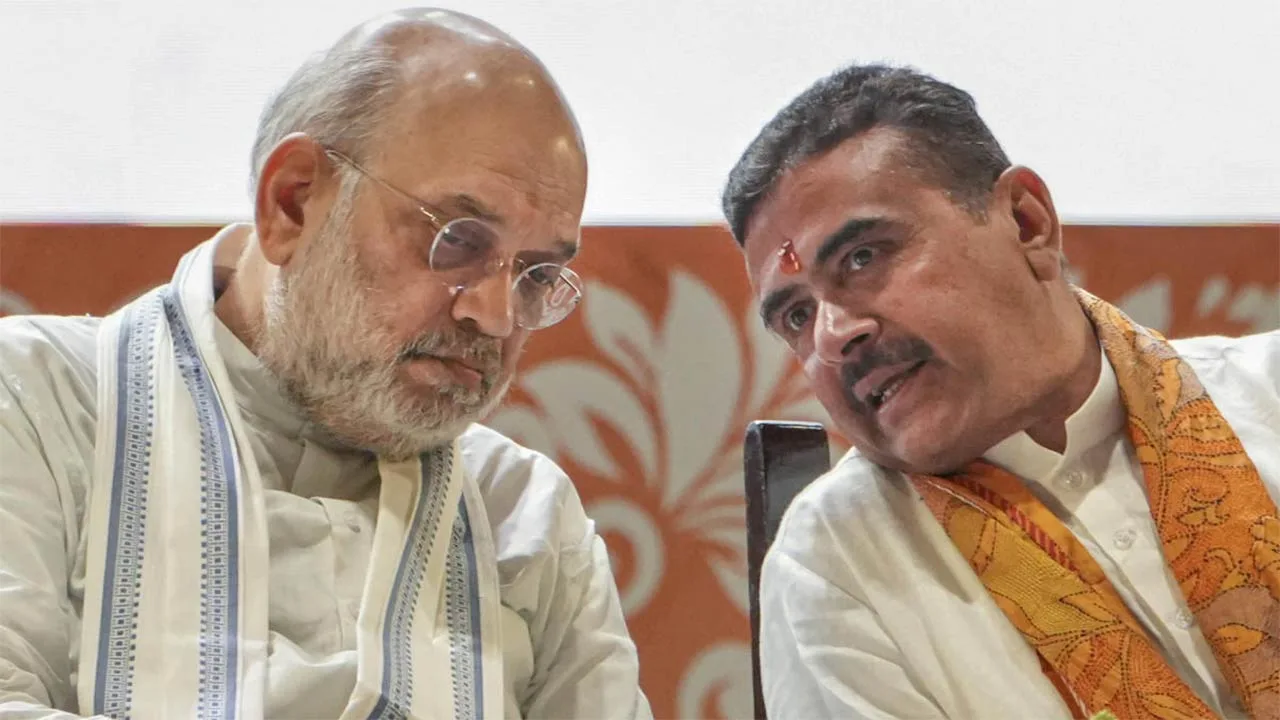
Union Home Minister Amit Shah has vowed to find a “Permanent Political Solution” to the long-standing Gorkha identity and administrative issues in West Bengal’s Darjeeling hills. The proposed resolution, he said, will remain within the Constitution and will not involve dividing West Bengal.
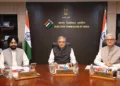
The announcement came during a tripartite meeting at Sukna in the Darjeeling foothills, attended by state and regional political representatives. The discussions also focused on a proposed institutional mechanism, development-related concerns and long-pending demands of Gorkha communities.
The Darjeeling hills issue is rooted in a decades-old political and identity movement among the Gorkha population of northern West Bengal, particularly in areas including Darjeeling, Kalimpong and Kurseong. The principal demand has alternated between greater administrative autonomy within West Bengal and a separate state of Gorkhaland.
What did Amit Shah say?
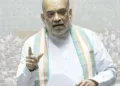
At the Sukna meeting, Shah said the Centre would work towards a “Permanent Political Solution” for the Gorkha identity and administrative issues in the hills. He made it clear that any settlement would be pursued within the constitutional framework and without dividing West Bengal.
The Centre has also announced an intermediary committee headed by Pankaj Kumar Singh, a former Deputy National Security Adviser and central interlocutor. According to the source material, the committee will work on drafting the final agreement, determining its modalities and preparing a roadmap for implementation.
The proposed approach includes examining whether greater autonomy can be provided within West Bengal or whether a distinct administrative arrangement could be created, while remaining within constitutional limits. The Centre has also pledged financial assistance to address infrastructure gaps and development backlogs in the north Bengal hills.
Who attended the meeting?
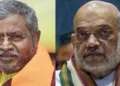
The meeting brought together representatives from the state government, Parliament and the major political organisations associated with the hills. Those mentioned in the source include West Bengal Chief Minister Suvendu Adhikari, Darjeeling MP Raju Bista, Rajya Sabha MP Harsh Vardhan Shringla, Gorkha Janmukti Morcha chief Bimal Gurung and Gorkha National Liberation Front president Mann Ghising.
The participation of these different stakeholders made the meeting significant because the Gorkhaland question has historically involved competing political organisations and repeated attempts at finding an acceptable administrative arrangement.
What is the Gorkhaland conflict?
The Gorkhaland conflict refers to the prolonged political and identity movement centred on the Gorkha population of the Darjeeling hills and adjoining northern hill areas of West Bengal.
At its core is the demand for recognition of Gorkha identity and greater political and administrative autonomy. For sections of the movement, the preferred solution is the creation of a separate state called Gorkhaland.
Supporters of the statehood demand argue that the hill population is ethnically, culturally and linguistically distinct from the plains-centric population of West Bengal. They have also raised concerns about political and economic neglect in the region.
How did the demand develop?
The demand for Gorkhaland has continued for decades, with major periods of agitation and unrest. According to the source material, the movement saw violent conflicts during the 1980s and renewed major protests in 2007 and 2017. Supporters have presented statehood as a means of preserving Gorkha identity and securing constitutional recognition.
Governments have previously attempted to address the political demand through semi-autonomous administrative arrangements rather than creating a separate state.
The Darjeeling Gorkha Hill Council (DGHC) was established in 1988, while the Gorkhaland Territorial Administration (GTA) was created in 2011. However, local leaders have criticised these arrangements, arguing that they have not adequately addressed the larger political and identity concerns.
What are the major grievances?
The Gorkhaland issue is not limited to the question of statehood. The movement also incorporates a range of socio-economic and administrative grievances.
The hill economy relies heavily on tea estates, timber and tourism. Concerns raised by local communities include stagnant wages for tea workers, closure of historic tea gardens, land-rights issues and what they perceive as the imposition of Bengali over Nepali in the region.
Another important demand relates to Scheduled Tribe status. The source identifies a demand for ST status for 11 left-out Gorkha sub-communities, with supporters seeking reservation benefits and greater constitutional protection.
What is the centre proposing?
The current approach focuses on negotiating a settlement rather than immediately creating a separate state.
The proposed high-level panel is expected to prepare the framework of the agreement and establish the modalities for implementing the eventual settlement. The discussions are also expected to examine greater autonomy within West Bengal or another distinctive administrative arrangement that remains constitutionally permissible.
Alongside the political question, the Centre has indicated that development concerns will also form part of the solution. Financial assistance has been promised to address infrastructure gaps and developmental backlogs in the north Bengal hills.
Why is the latest move significant?
The latest initiative places the Gorkhaland question once again at the centre of negotiations between the Union government, West Bengal and political representatives from the hills.
However, Shah’s emphasis on a constitutional solution without dividing West Bengal establishes a clear framework for the negotiations. The challenge will be to reconcile the demand for stronger political recognition and autonomy with the Centre’s stated position on preserving the territorial integrity of West Bengal.
For the Gorkha population, the key test will be whether the proposed process can address the long-standing questions of political identity, administrative powers, constitutional safeguards and economic development that have sustained the movement for decades.