One of the common questions during my public interaction relates to the supremacy of air power in the ongoing conflicts. Some even feel that the wars can be won by the air force alone. This article is an attempt to put the issue in correct perspective. In the conventional war scenario, air strikes by the enemy is treated as the formal declaration of war. The Indian Air Force (IAF) has closely supported the land and maritime campaign in all the wars with Pakistan, be it 1947-48, 1965, 1971 and Kargil War of 1999.
During Operation Sindoor in May last year, the IAF demonstrated its precision strike capability against terrorist infrastructure, followed by destruction of Pakistan’s military targets at operational depth. Since no ground campaign was launched by the either side, India’s air campaign was a success in limiting the conflict to just under four days. But it would be premature to arrive at conclusions when full-scale war did not take place between India and Pakistan.
India shares a land border of 15,107 km with seven countries, with China and Pakistan accounting for 6811 km of contested frontier. If we add the coastline of 7517 km, the Indian Army has a formidable task of defending 22,234 km of frontage to defend the territorial integrity of India. For a country like India, where we cannot lose an inch of territory, we need a large conventional army, with adequate boots on ground for every conceivable contingency.
In addition, a large strength of the Indian Army is needed for counter-terrorism operations, in Jammu & Kashmir and India’s North East. Even when the security situation improves in such areas, a considerable ground force is needed for securing the lines of communication for the ground forces and the follow-up logistics. Under hybrid threat in grey zone warfare scenario, assured physical security of military establishments, particularly in the border areas, is another critical reality.
While the lessons from the ongoing Rusia-Ukraine war and West Asia conflict are relevant, the dynamics of war are so very different for India. With border disputes with Pakistan and China, both nuclear powers and uneasy relations with Nepal, Bangladesh and Myanmar, India has direct threat from the West, to its North and East. Ukraine has continued fighting Russia with the NATO support. In the West Asia conflict, no direct war has been fought between the US- Israel-Iran. Instead, it has been fought by the proxies Houthis, Hezbollah, Hamas and Iraqi militias.
India fights its own wars and no country provides the financial backing to India. Thus, India has to remain prepared for long duration wars with its adversaries, with its own resources. While an effective air campaign provides initial success, the dividends from the air power in a long war diminish with passage of time, as evidenced after the combined might of the US-Israel air strikes against well-entrenched targets in Iran.
The last five years have also demonstrated that conventional air forces are facing massive threat from the precision missiles and armed drones. Cheap swarm drones and missiles are making air forces to waste expensive missiles on them, as Israel has realised in its conflict with Iran. Since the IAF is mandated for the air defence of the nation, having more fighter jets alone is not the answer. India and particularly the IAF has to be prepared for a long war of attrition, particularly with China.
With major indigenous production of air platforms some years away, India has to quickly fill in the gaps in its layered air defence. India’s ‘Sudarshan Chakra’ when fully developed by 2035 is going to be an effective air defence shield to protect India’s critical assets from the enemy threats. China still has some limitations in fighting an air battle over the Himalayas because of the altitude, logistics and less air bases. But China relies more on its missile power against India in the mountains. Thus, an air battle over the contested air spaces against Pakistan and China has inherent risks.
Iran experience has also shown that well-concealed missile bases and other military assets in the mountains are difficult to target and neutralise. Both China and Pakistan have the ability to continue to combat Indian positions from their concealed bases in mountains and valleys. Even the most lethal American B-2 bombers have caused only surface level damage against hardened targets in Iran. Pakistan also would have learnt their lessons from their defeat during Operation Sindoor in May last year.
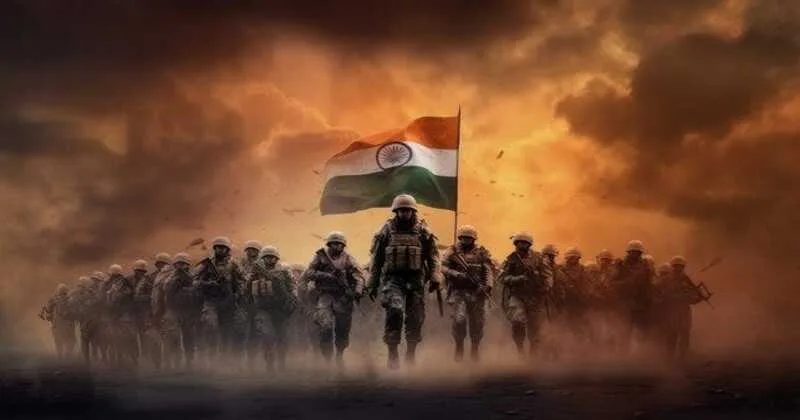
In the times to come, the ability of the fighter jets against hardened objectives is going to be expensive, with temporary damage to the military assets like airfields and runways. Therefore, the air campaign may signal the start of war for the right optics. But the victory eventually is assured by boots on ground, through a rigourous land campaign, duly supported by the air power, in the Indian context. At the same time, no army can achieve worthwhile victory on ground, without the full support of its air force.