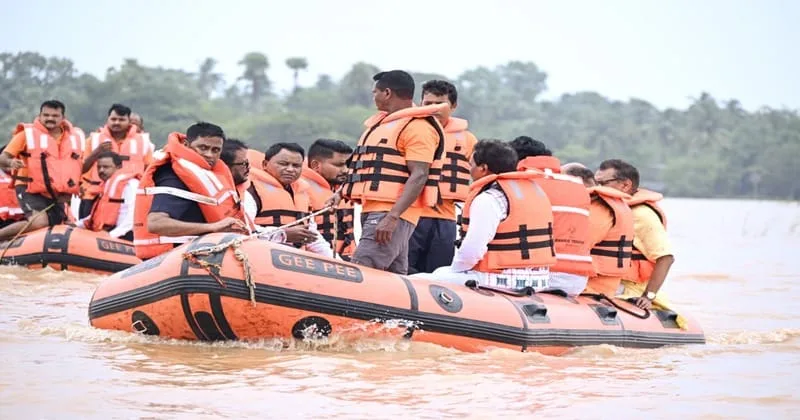
Bhubaneswar: Odisha Chief Minister Mohan Charan Majhi on August 18 travelled by boat and motorcycle through flood-affected areas of Jajpur and Bhadrak, undertaking a first-hand assessment of the situation, interacting with affected residents and reviewing relief and rescue operations. His field visit came as floodwaters continued to disrupt normal life in several parts of the state, with the Water Resources Department cautioning that moderate flooding and waterlogging could persist for another four to five days.
ଆଜି ଯାଜପୁର ଜିଲ୍ଲାର ଦଶରଥପୁର ବ୍ଲକ୍ ଅନ୍ତର୍ଗତ କସପା ଓ ତରପଡ଼ା ପଞ୍ଚାୟତର ବନ୍ୟା ପ୍ରଭାବିତ ଅଞ୍ଚଳ ଗସ୍ତ କରି ସ୍ଥିତି ଅନୁଧ୍ୟାନ କଲି। ଏହି ଅବସରରେ ରାମଚନ୍ଦ୍ରପୁର, ବାଲଦା ଏବଂ ଦୋଭାବିଲ ଗ୍ରାମର ଭାଇ ଓ ଭଉଣୀମାନଙ୍କୁ ଭେଟି ସେମାନଙ୍କ ସହ ଆଲୋଚନା କରିଛି।
ପ୍ରଭାବିତ ଜନସାଧାରଣଙ୍କ ସୁରକ୍ଷା ଓ ଆବଶ୍ୟକ ସହାୟତା ଯୋଗାଇଦେବା ଆମ… pic.twitter.com/zXoRTwnO8P
— Mohan Charan Majhi (@MohanMOdisha) August 17, 2026
The Chief Minister’s visit also came against the backdrop of the latest flood assessment released by the Special Relief Commissioner (SRC), which showed that 7,85,199 people across six districts had been affected by the floods as of August 17. The affected districts are Baleswar, Bhadrak, Jajpur, Kendujhar, Mayurbhanj and Kendrapada.
The SRC report said 66 blocks, 448 gram panchayats, 1,304 villages, 10 urban local bodies and 64 wards had been affected. As many as 2,77,655 people had been evacuated to safer locations, while 126 villages remained marooned. The floods had also affected 42,216.7 hectares of crop area, underlining the scale of the impact on rural communities and agriculture.
CM Takes Boat to Flooded Villages in Dasarathpur
Majhi began his Jajpur inspection by reaching Katia Chhak and proceeding to Patiri Chhak, where he attended a review meeting at Annapurna Mandap. Following the meeting, he travelled by boat from near Patiri on the main road connecting Katia Chhak with Ahiyas to reach some of the worst-affected areas of Dasarathpur block.
ଆଜି ଭଦ୍ରକ ଜିଲ୍ଲାର ବନ୍ୟା ପ୍ରଭାବିତ ଅଞ୍ଚଳକୁ ପ୍ରତ୍ୟକ୍ଷ ପରିଦର୍ଶନ କରି ସ୍ଥାନୀୟ ଲୋକଙ୍କ ସହ ଆଲୋଚନା କଲି। ପ୍ରଭାବିତ ଜନସାଧାରଣଙ୍କ ନିକଟରେ ତୁରନ୍ତ ରିଲିଫ, ଖାଦ୍ୟ, ବିଶୁଦ୍ଧ ପାନୀୟ ଜଳ, ଚିକିତ୍ସା ସେବା ଏବଂ ଗୋ-ଖାଦ୍ୟ ପହଞ୍ଚାଯାଉଛି।
ବିପନ୍ନଙ୍କୁ ଆବଶ୍ୟକୀୟ ସହାୟତା ଯୋଗାଇ ଦେବା ଏବଂ ପୁନରୁଦ୍ଧାର କାର୍ଯ୍ୟ ସମ୍ପୂର୍ଣ୍ଣ କରିବାକୁ… pic.twitter.com/MwZeHcI8Mw— Mohan Charan Majhi (@MohanMOdisha) August 17, 2026
The Chief Minister inspected Tarapada, Dobhavil, Ramachandrapur, Balada and Kasapa, among other areas, to assess the extent of inundation and understand the difficulties faced by residents.
The field visit assumed significance as Dasarathpur has been particularly affected by repeated flooding. Persistent rainfall in the upper catchment areas has led to increased water levels in the Baitarani and its distributary Kanani rivers, inundating large areas of the block.
The repeated flooding has affected homes, agricultural land, roads and local connectivity, leaving several communities dependent on government relief and emergency assistance.
Majhi Interacts with Flood Victims, Inspects Cooked Food
During the inspection, Majhi met flood-affected residents and listened to their grievances and immediate requirements. He reviewed the status of relief distribution and sought information from officials about the availability of essential commodities and services.
At a flood shelter in Tarapada, the Chief Minister inspected the quality of cooked food being prepared for displaced residents. He emphasised that people staying in relief centres should receive nutritious and hygienically prepared food without interruption.
ମାନ୍ୟବର ମୁଖ୍ୟମନ୍ତ୍ରୀ ଶ୍ରୀ ମୋହନ ଚରଣ ମାଝୀ ଯାଜପୁର ଜିଲ୍ଲାର ଦଶରଥପୁର ବ୍ଲକ୍ ଅନ୍ତର୍ଗତ କସପା ଓ ତରପଡ଼ା ପଞ୍ଚାୟତର ବନ୍ୟା ପ୍ରଭାବିତ ଅଞ୍ଚଳ ଗସ୍ତ କରି ସ୍ଥିତି ଅନୁଧ୍ୟାନ କରିଛନ୍ତି। ଏହି ଅବସରରେ ମାନ୍ୟବର ମୁଖ୍ୟମନ୍ତ୍ରୀ ରାମଚନ୍ଦ୍ରପୁର, ବାଲଦା ଏବଂ ଦୋଭାବିଲ ଗ୍ରାମର ପ୍ରଭାବିତ ଜନସାଧାରଣଙ୍କୁ ଭେଟି ସେମାନଙ୍କ ସହ ଆଲୋଚନା… pic.twitter.com/ck7uqvWw0Q
— CMO Odisha (@CMO_Odisha) August 17, 2026
Majhi directed officials to ensure that flood-affected families receive timely and adequate relief assistance, safe drinking water and essential healthcare services. He also called for continuous monitoring of the situation and instructed the administration to remain alert around the clock.
The Chief Minister stressed that relief operations should be responsive to the needs of people on the ground and that immediate action should be taken wherever fresh difficulties arise.
Chief Minister Reviews Flood Situation in Bhadrak
After completing his inspection in Jajpur, the Chief Minister proceeded to Bhadrak to assess the flood situation in the district. He visited affected areas, travelled through inundated locations and interacted with residents to understand the problems caused by the floodwaters.
ମାନ୍ୟବର ମୁଖ୍ୟମନ୍ତ୍ରୀ ଶ୍ରୀ @MohanMOdisha ଭଦ୍ରକ ଜିଲ୍ଲାର ବିଭିନ୍ନ ବନ୍ୟା ପ୍ରଭାବିତ ଅଞ୍ଚଳ ଗସ୍ତ କରି ସ୍ଥିତି ଅନୁଧ୍ୟାନ କରିଛନ୍ତି। ଜଳବନ୍ଦୀ ଓ ପ୍ରଭାବିତ ଅଞ୍ଚଳରେ ପହଞ୍ଚି ସ୍ଥାନୀୟ ଲୋକଙ୍କ ସହ ଆଲୋଚନା କରି ସେମାନଙ୍କ ସମସ୍ୟା ଓ ଆବଶ୍ୟକତା ବୁଝିବା ସହ ରିଲିଫ୍ ଓ ଉଦ୍ଧାର କାର୍ଯ୍ୟର ସମୀକ୍ଷା କରିଛନ୍ତି ।
ବନ୍ୟା ପରିସ୍ଥିତିରେ… pic.twitter.com/lbmjDl3lKk
— CMO Odisha (@CMO_Odisha) August 17, 2026
Officials briefed Majhi on the prevailing water levels, the extent of inundation and the condition of affected communities. Several low-lying areas of Bhadrak have experienced flooding and waterlogging, disrupting normal life and affecting movement and access to essential services. However, officials said water levels in parts of Jajpur and Bhadrak had started to recede as rainfall decreased. Despite the improvement, several areas remained waterlogged and the administration continued to monitor the situation closely.
ବନ୍ୟା ପ୍ରଭାବିତଙ୍କ ସୁରକ୍ଷା ଓ ସହାୟତାକୁ ସର୍ବୋଚ୍ଚ ପ୍ରାଥମିକତା ଦେଇ ପ୍ରଭାବିତ ଅଞ୍ଚଳ ଗସ୍ତ କରି ସ୍ଥିତିର ପ୍ରତ୍ୟକ୍ଷ ଅନୁଧ୍ୟାନ କରିଛନ୍ତି ମାନ୍ୟବର ମୁଖ୍ୟମନ୍ତ୍ରୀ ଶ୍ରୀ ମୋହନ ଚରଣ ମାଝୀ। ପ୍ରଭାବିତ ପରିବାରଙ୍କ ନିକଟରେ ରିଲିଫ୍, ଉଦ୍ଧାର ଓ ସ୍ୱାସ୍ଥ୍ୟସେବା ନିରନ୍ତର ପହଞ୍ଚାଇବା ସହ ଏହି ସଙ୍କଟ ସମୟରେ ଲୋକଙ୍କ ସହ ଦୃଢ଼ ଭାବେ ଠିଆ… pic.twitter.com/5hu3rOTAXT
— CMO Odisha (@CMO_Odisha) August 17, 2026
The Chief Minister directed officials to maintain vigilance and ensure uninterrupted delivery of relief materials, drinking water, healthcare and other essential services to affected residents.
Flood Situation May Persist for Another 4–5 Days
Odisha Water Resources Department Chief Engineer Dilip Raut said the flood situation in the state is likely to continue for another four to five days. According to him, moderate flooding and waterlogging may persist in several areas, particularly those influenced by the Brahmani and Baitarani river systems.
Raut said the water levels in Jajpur and Bhadrak had started to recede following a decline in rainfall. Nevertheless, several areas continue to remain waterlogged and normal life has not yet been fully restored.
The official said authorities were also undertaking repair work on two embankment breaches in Jajpur district. Restoration work is being carried out to repair the damaged stretches and prevent further deterioration of the flood situation.
Raut clarified that there was currently no flood situation in the Subarnarekha and Jalka rivers. However, he cautioned that the situation could worsen if fresh rainfall occurs in the coming days.
Bhadrak Records Highest Number of Evacuations
The SRC’s latest assessment indicates that Bhadrak has recorded the highest number of evacuations among the six affected districts. A total of 1,07,773 people have been evacuated from the district. Jajpur has evacuated 77,680 people, while Baleswar has evacuated 61,418. Mayurbhanj has evacuated 26,741 people, followed by Kendrapada with 2,085 and Kendujhar with 1,958.
The evacuation drive has been a key component of the state’s response, with people from vulnerable and inundated areas moved to safer locations and relief centres.
The report also identified 126 marooned villages across the six districts. Baleswar accounted for 60 such villages, followed by Kendrapada with 33, Kendujhar with 14, Mayurbhanj with 11 and Jajpur with eight.
Jajpur, Baleswar and Bhadrak Among Worst-Affected
The district-wise figures underline the severity of the flood impact. Jajpur recorded the highest affected population at 2,06,272, followed by Baleswar with 2,03,878 and Bhadrak with 1,96,240. Kendrapada reported 1,43,715 affected people, while Kendujhar and Mayurbhanj recorded 1,19,953 and 26,741 respectively.
Baleswar has reported flooding across 12 blocks, 97 gram panchayats and 453 villages, along with two urban local bodies and 19 wards. Jajpur has reported 10 affected blocks, 117 gram panchayats and 270 villages.
The figures reflect the extensive geographical spread of the flooding and the pressure on the district administrations to provide relief, evacuation support and essential services.
531 Relief Camps Provide Shelter
The state administration has opened 531 relief camps across the six affected districts, with the camps covering 2,78,188 beneficiaries. Jajpur has the highest number of relief camps at 191, covering 77,680 beneficiaries. Baleswar has opened 103 camps for 61,418 beneficiaries, while Bhadrak has 90 camps covering 1,07,773 people. Kendujhar has opened 20 relief camps, while Mayurbhanj and Kendrapada have opened 123 and four camps respectively.
The administration has mobilised emergency supplies for people staying in relief centres and other affected locations. The SRC report records the distribution of 1,950 quintals of chuda, 203.2 quintals of gur and 782.8 metric tonnes of cattle feed. As many as 1,079 polythene sheets have also been distributed to affected households. Free kitchens have also been opened at relief locations to provide cooked food to displaced and affected residents.
Over 42,000 Hectares of Cropland Affected
Agriculture has suffered a significant impact from the floods. The SRC’s preliminary assessment puts the affected crop area at 42,216.7 hectares across the six districts.
Jajpur has reported the largest affected crop area at 18,642 hectares, followed by Baleswar with 16,000 hectares. Mayurbhanj has reported 4,992 hectares, while Bhadrak and Kendujhar have recorded 1,623 hectares and 959.7 hectares respectively.
The impact on agriculture is likely to remain a major concern for the administration as floodwaters recede and damage assessments are undertaken. Farmers in affected areas may also require assistance for restoration of agricultural activities following the floods.
941 Houses Reported Damaged
The SRC report has recorded 941 damaged houses in the six affected districts in its preliminary assessment.
Mayurbhanj has reported the highest number of damaged houses at 505, followed by Kendujhar with 367 and Baleswar with 69. No house damage has been recorded in the preliminary figures for Bhadrak, Jajpur and Kendrapada. The report has not recorded any human or livestock casualties in the six districts covered by the assessment as of August 17.
Rescue Forces Deployed Across Flood-Hit Areas
The state has intensified rescue and emergency response operations by deploying personnel from the Odisha Disaster Rapid Action Force (ODRAF), National Disaster Response Force (NDRF) and Fire Services.
The consolidated figures in the SRC report indicate the deployment of 39 ODRAF units, seven NDRF units and 53 fire service teams across the affected districts. These teams are assisting local administrations in evacuation, rescue operations and emergency response in vulnerable areas. District authorities are also maintaining surveillance of river levels, embankments and inundated areas.
Government Focuses on Relief, Healthcare and Continuous Monitoring
The Chief Minister’s field inspection in Jajpur and Bhadrak comes at a critical stage of the state’s flood response, with water levels receding in some locations but extensive waterlogging continuing elsewhere.
The administration is focusing on evacuation of vulnerable populations, operation of relief camps, distribution of essential commodities, supply of safe drinking water, healthcare support and repair of damaged embankments.
With the Water Resources Department expecting flood and waterlogging conditions to persist for another four to five days, authorities have been asked to remain prepared for any fresh deterioration caused by additional rainfall.