The Return of Taslima Nasrin to Kolkata
September 5, 2026
  • Read Ecopy
  • Circulation
  • Advertise
  • Careers
  • About Us
  • Contact Us
Android AppiPhone AppArattai
Organiser
  • ‌
  • Bharat
    • Assam
    • Bihar
    • Chhattisgarh
    • Jharkhand
    • Maharashtra
    • View All States
  • World
    • Asia
    • Europe
    • North America
    • South America
    • Africa
    • Australia
  • Editorial
  • International
  • Opinion
  • RSS @ 100
  • More
    • Op Sindoor
    • Analysis
    • Sports
    • Defence
    • Politics
    • Business
    • Economy
    • Culture
    • Special Report
    • Sci & Tech
    • Entertainment
    • G20
    • Azadi Ka Amrit Mahotsav
    • Vocal4Local
    • Web Stories
    • Education
    • Employment
    • Books
    • Interviews
    • Travel
    • Law
    • Health
    • Obituary
  • Subscribe
    • Subscribe Print Edition
    • Subscribe Ecopy
    • Read Ecopy
  • ‌
  • Bharat
    • Assam
    • Bihar
    • Chhattisgarh
    • Jharkhand
    • Maharashtra
    • View All States
  • World
    • Asia
    • Europe
    • North America
    • South America
    • Africa
    • Australia
  • Editorial
  • International
  • Opinion
  • RSS @ 100
  • More
    • Op Sindoor
    • Analysis
    • Sports
    • Defence
    • Politics
    • Business
    • Economy
    • Culture
    • Special Report
    • Sci & Tech
    • Entertainment
    • G20
    • Azadi Ka Amrit Mahotsav
    • Vocal4Local
    • Web Stories
    • Education
    • Employment
    • Books
    • Interviews
    • Travel
    • Law
    • Health
    • Obituary
  • Subscribe
    • Subscribe Print Edition
    • Subscribe Ecopy
    • Read Ecopy
Organiser
  • Home
  • Bharat
  • World
  • Operation Sindoor
  • Editorial
  • Analysis
  • Opinion
  • Culture
  • Defence
  • International Edition
  • RSS @ 100
  • Magazine
  • Read Ecopy
Home Bharat

The Return of Taslima Nasrin to Kolkata: The story of exile and belonging

In 2026, West Bengal is governed by a different calculus. The Bengali culture has been re-tooled to include cultural dissent as heritage, not threat. The state, eager to position Kolkata as a global city of ideas, could no longer afford the optics of a banished writer. In interviews this year she has spoken more of morality. The sentence went viral because it sounded like poetry, not protest

Dr Smaranika BanerjeeDr Smaranika Banerjee
Aug 16, 2026, 02:00 pm IST
inBharat, Analysis, West Bengal
Follow on Google News
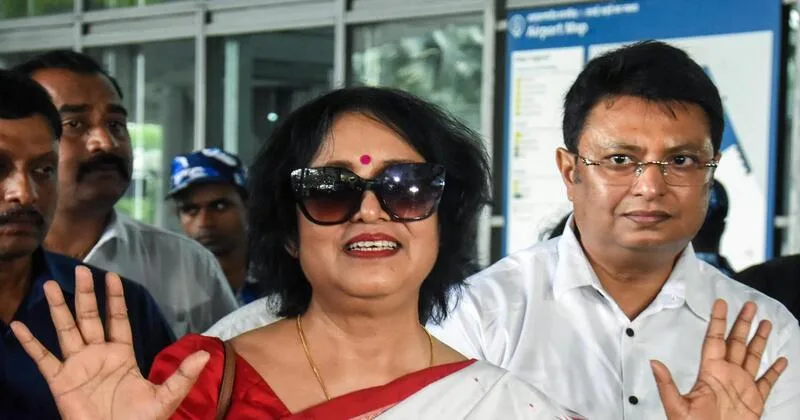
Taslima Nasrin returns to Kolkata

Taslima Nasrin returns to Kolkata

Facebook
Twitter
WhatsAppTelegramEmail

On an August evening in 2026, Kolkata did something it has always done best — it argued. At Netaji Subhas Chandra Bose International Airport, beyond the barricades and the camera flashes, a woman in a simple cotton saree stepped into Kolkata. No slogans. No garlands. Just the wait of twenty years. Taslima Nasrin was home. Not “back” in the bureaucratic sense. The return was not an event. It was a rupture and a suturing at once.

Taslima Nasrin had lived in Kolkata for nearly three years after fleeing Bangladesh in 1994. She wrote, she protested, she became part of the city’s progressive intellectualism. Then came the protests of November 2007 — the fatwas, the political calculations, the state’s anxious balancing act between free speech and public order. The West Bengal government, under Left Front rule, asked her to leave “For her own safety,” they said.  The Leftists, the flag-bearer of freedom of expression and speech, drove her out to appease the jihadi fanatics. Jihadis handicapped the entire city of Kolkata to ensure her banishment.

On the other hand, Taslima Nasrin was welcomed honourably under the regime of the present Nationalist government in West Bengal. This evidences that freedom of expression and speech is rightly protected under the Nationalists government, the true upholder of freedom. What followed was two decades of itinerancy: Sweden, India on short visas, the US, Europe. She wrote 40 more books. She became both icon and cautionary tale in global debates on secularism, Islam, and feminism.

In 2026, West Bengal is governed by a different calculus. The Bengali culture has been re-tooled to include cultural dissent as heritage, not threat. The state, eager to position Kolkata as a global city of ideas, could no longer afford the optics of a banished writer. In interviews this year she has spoken more of morality. The sentence went viral because it sounded like poetry, not protest. As far as the Global Mood is concerned, post-2020, the international conversation has shifted from “clash of civilizations” to “fatigue of exile”.

Diasporas are returning. Writers are being un-cancelled, re-read, re-located. Nasrin’s return fits a larger 21st-century pattern. Taslima Nasrin outlives the regime that exiled her. The visa was issued quietly. The security detail was minimal. That minimalism itself was the statement.

Also Read: Red Fort Attack: UN report links AQIS to Delhi Blast; Warns expanding Al Qaeda terror network in Indian subcontinent

Nasrin returned to Kolkata, the city that theorizes itself. It reads. It remembers betrayals. In the 48 hours after her arrival, three things happened simultaneously: The literary reception, the political reception and the street reception. At Coffee House, Kolkata, she was asked, “Did you miss the mishti?” Someone brought her rosogolla. That is Kolkata’s politics. This is the high academic point: the return is not being adjudicated in courts or parliament. It is being adjudicated in the grammar of everyday life.

Nasrin’s works have always sat at the intersection of three fault lines: religion, gender and the postcolonial state. Her critique of institutional Islam made her a hero in certain Western circles and a villain in others. She has always revealed the ‘true face of Islam’ as an obstacle to progression made it the matter of global consciousness through her writings. Her feminism made her inconvenient to both religious conservatives and to nationalist feminisms that wanted “our women” to speak differently. She has always been a vociferous personality. In 2026, that terrain has shifted. Nasrin, in this new shift, is neither martyr nor provocateur alone. Her return forces Kolkata to ask- Can we host a voice that we do not agree with? Can we love a city and still be furious with its writers?

There was no press conference. Instead, on day three, she went to her old house in Bhawanipur. The current tenants made tea. She sat on the balcony and watched the rain. Later that week she read at Jadavpur University. The topic was not “Islam” or “Fundamentalism.” It was “Nostalgia as a Political Act.” She expressed that exile teaches you that borders are not on maps. They are in the tongue. When I speak Bengali here, I am not returning. I am continuing. That is the flowy, human part. The academic part is this: return is not reversal. It is a new chapter written in the margins of the old text. She has rented a flat in South Kolkata.

She says she will write. Kolkata will do what it does — argue, forget, remember and argue again. Some will call her return a victory for free speech. Opportunists will call it a political stunt. What is certain is that in 2026, a city that once asked a writer to leave for “peace” has decided that peace might also mean making room for discomfort.

Taslima Nasrin did not return to settle scores. She returned to conjugate verbs in the language that first taught her how to be angry and how to be tender at the same time. Kolkata, being Kolkata, welcomes Taslima Nasrin, because a city that stops arguing is a city that has stopped living. Banishment of Taslima Nasrin from Kolkata under the regime of the so-called liberals was the beginning of the cycle of history and her return under the reign of champions of true modernity and progression completes this cycle.


Topics: Taslima NasrinWest BengalKolkata
Dr Smaranika Banerjee
Distinguished professor and an essayist of History from West Bengal [Read more]
Share
Tweet
SendShareSend
✮ Subscribe Organiser YouTube Channel. ✮
✮ Join Organiser's WhatsApp channel for Nationalist views beyond the news. ✮
Previous News

ABVP demands release of EFLU students arrested after NSUI attack in Hyderabad

Next News

J&K: Police arrest absconder Altaf Hussain Shah 35 years after Jammu railway station bomb blast

Related News

Jadavpur University

Jadavpur University: From nationalist educational emblem to leftist battleground & Maoist anarchy

Home Minister Amit Shah holds a review meeting on the security situatinon in Siliguri Corridor

Home Minister Amit Shah outlines Siliguri strategy; Calls for inter-departmental synergy to foster national security

Asphulla Mallik created his AI image and projected himself as a Mujahideen on social media

Karnataka: Suspected TTP operative Asphulla Mallik arrested in Bengaluru; Police probe reveal terror links

National Women Commission Conclave in West Bengal: Women could be key entrepreneurs in pharma sector

Muslim League anchored planned atrocities against Hindus on Direct Action Day in Calcutta

Decoding the horrors of Direct Action Day; Revisiting the forgotten lessons from the streets of Calcutta

Rashtriya Swayamsevak Sangh (RSS) Sarkaryavah Dattatreya Hosabale

Independence Day 2026 | Everyone should pledge to protect the nation’s unity, integrity: RSS Sarkaryavah Dattatreya ji

Load More

Latest News

PM Modi at SRCC

SRCC@100: PM Modi hails India’s Atmanirbharata, manufacturing, startups & national security; Urges youth to dream big

PM Narendra Modi addressing the gathering at SRCC

“Homeopathic pill exposed Dimagi Naxals”: PM Modi addresses SRCC centenary celebrations

Ladakh: 36 dams planned on Indus after Upshi pilot project; Aids to irrigate large tracts of land, a boon to farmers

PM Modi at SRCC

SRCC @100| Sach ki hoonkar ke aage, jhooth ki goonj tikegi nahi: PM Modi slams opposition as India ends fragile 5 tag

PM Narendra Modi addressing the gathering at SRCC

From ‘Glass Full’ vision to centenary milestone: PM Narendra Modi returns to SRCC 13 years later

PM Modi’s metro ride on way to SRCC centenary celebrations; Interacts with Gen Z, connects with aspirations of youth

Sheikh Jan Saida alias Rabbani (Inset)

Andhra Pradesh: 20-year-old Sheikh Jan Saida arrested in Haryana with missing 14-year-old Hindu girl after 3-month hunt

PM Modi hails SRCC

“Nurturing generations of leaders…”: PM Modi hails Shri Ram College of Commerce ahead of centenary event

Karnataka: Suhas Shetty murder accused Mohammed Muzamil and four others booked for assaulting jail warden

An ancient-looking Shivling discovered in the dense forest of Gaurar Mountain in Khurai has drawn devotees in large numbers

Khurai Forest Discovery: Ancient Shivling found on Gaurar Mountain; Large number of devotees arrive to offer prayers

Load More
  • Privacy
  • Terms
  • Cookie Policy
  • Refund and Cancellation
  • Delivery and Shipping

© Bharat Prakashan (Delhi) Limited.
Tech-enabled by Ananthapuri Technologies

  • Home
  • Search Organiser
  • Bharat
    • Assam
    • Bihar
    • Chhattisgarh
    • Jharkhand
    • Maharashtra
    • View All States
  • World
    • Asia
    • Africa
    • North America
    • South America
    • Europe
    • Australia
  • Editorial
  • Operation Sindoor
  • Opinion
  • Analysis
  • Defence
  • Culture
  • Sports
  • Business
  • RSS @ 100
  • Entertainment
  • More ..
    • Sci & Tech
    • Vocal4Local
    • Special Report
    • Education
    • Employment
    • Books
    • Interviews
    • Travel
    • Health
    • Politics
    • Law
    • Economy
    • Obituary
  • Subscribe Magazine
  • Read Ecopy
  • Advertise
  • Circulation
  • Careers
  • About Us
  • Contact Us
  • Policies & Terms
    • Privacy Policy
    • Cookie Policy
    • Refund and Cancellation
    • Terms of Use

© Bharat Prakashan (Delhi) Limited.
Tech-enabled by Ananthapuri Technologies