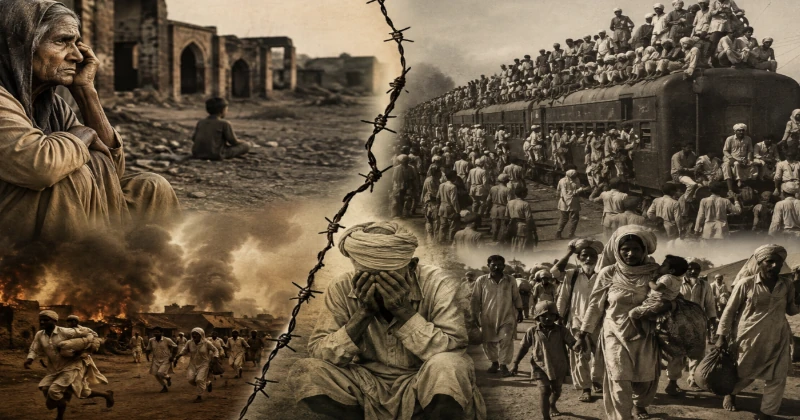
Even today, when those old eyes close, they see their home. Children playing in the courtyard, a mother standing at the doorway, and the lane where neighbours were known through relationships beyond religion. But the very next image in the memory changes everything: a caravan of fleeing people, a screaming crowd, burning houses and that train in which more deaths arrived than passengers. The home was left behind, the city became alien, and a line drawn on a map changed the identity of an entire lifetime. Islamic jihadist thinking took away from them everything that had been theirs until the day before, everything for which generations had struggled and worked collectively, their home, their doorstep, their people. They had now become strangers.
The Partition of India in 1947 remains a throbbing wound in the collective memory of millions of families, a wound that still makes the heart cry out whenever it is remembered. The sun of independence did rise, but that very morning also brought the darkness of displacement, fear and separation to millions of homes. It was the largest human displacement in history. Around 15 million people were forced to leave their homes. People became foreigners and refugees in the very ancestral homes that had belonged to them. With the announcement of Partition, horrific riots broke out across the country, particularly in Punjab and Bengal. Around 500,000 to 2 million people lost their lives in the violence. Millions of women were abducted, mistreated and subjected to inhuman atrocities.
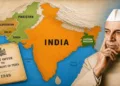
People were forced to flee empty-handed, leaving behind their land, houses, shops and savings. Amidst stampedes and violence, thousands of families were separated from one another forever. Radcliffe drew a line on the map in haste, without knowing the ground realities (the Radcliffe Line), as a result of which many villages and homes were divided down the middle. In such circumstances, the Partition of India was a painful division. Its pain and wounds are still present in the history of both countries and in the hearts of their people. Every year, on 14 August, the Government of India observes this day as “Bharat Vibhajan Vibhishika Diwas” (Partition Horrors Remembrance Day) to remember this very pain.
For those whose village had been their entire world, that same village suddenly became part of another country. The fields where generations had worked were left behind. The shop that had sustained the family was shuttered for the last time and never opened again. The greatest irony of Partition was that the future of millions of people was decided by a boundary line drawn in an extremely short period of time. Sir Cyril Radcliffe was entrusted with the task of determining the India-Pakistan border. The Radcliffe Line, drawn across Punjab and Bengal, divided villages, fields, families, and social relationships between the two countries.
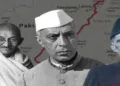
In this context, H. V. Sheshadri’s book Aur Desh Bat Gaya is particularly noteworthy. The book, spread across 27 chapters, analyses the events from the freedom struggle, Muslim separatism, the two-nation theory, the policies of the Congress, the Khilafat Movement, Jinnah’s political rise, Direct Action and, ultimately, the acceptance of Partition. Sheshadri describes the transformation of Jinnah from his early nationalist political persona to the leading figure of the Muslim League and the central face of the demand for Pakistan.
After the Lahore Resolution of 1940, the demand for a separate nation emerged in a more clearly defined political form. The Direct Action of 1946 and the violence that erupted thereafter turned political distrust into social violence. Pressure replaced dialogue, and ordinary citizens paid the price for political differences.
When Neighbours Suddenly Became Strangers
The deepest wound of Partition was the collapse of social trust. In many parts of Punjab, Sindh and Bengal, religious identity became a matter of life and death. Amritsar, Lahore, Rawalpindi, Multan, Kolkata and Noakhali, among many other areas, were scorched by violence. Neighbours who, until the previous day, had shared one another’s joys and sorrows suddenly began to fear each other. Names were asked. Religion was asked. And then it was decided who was one of their own and who was a stranger. This is where the real tragedy of Partition becomes visible.
Trains That Arrived Carrying Death Instead of Passengers
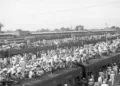
In the memories of Partition, trains emerged as a horrifying symbol. Millions of people were crossing the border by rail. But when several trains reached their destinations, they carried not life, but death. In Khushwant Singh’s novel Train to Pakistan, the changing state of mind of Punjab during Partition is poignantly portrayed through the town of Mano Majra. The most painful chapter of the tragedy of Partition is the suffering of women. Abduction, rape, forced conversion, separation from families and violence in the name of ‘honour’ changed the lives of thousands of women forever. Islamic violence and jihadists carried out everything they could to the extreme during this period.
Fifteen Million Displaced
Reaching Indian territory was not the end of the tragedy for displaced families. The person who had a home the day before was now in a refugee camp. The person who had fields was now standing in a ration queue. The person who ran a business faced an employment crisis. In refugee camps in Delhi and elsewhere, people began new lives, but this was the point at which the story of Partition ceased to be merely a story of suffering. Those who had been uprooted rebuilt their world with their own hands. They opened shops, started businesses, established industries and educated their children.
Partition took their homes away, but it could not take away their desire to build homes. In this sense, the story of the refugees is also a story of the indomitable resilience of Indian society.
An Entire World Preserved in a Bundle
The displaced had few belongings, but many memories. Someone had the key to their old home. Someone had ancestral documents. Someone had a family photograph. Someone had preserved the soil of their home. Someone had nothing left except the name of their village. In economic terms, the value of these things may have been very little, but emotionally, they represented their entire world.
Literature Gave Words to History’s Cry
History records dates; literature records pain. Saadat Hasan Manto’s Toba Tek Singh is regarded as one of the sharpest human interpretations of Partition. Bishan Singh’s question, where exactly is one’s homeland? becomes a symbol of the identity crisis faced by a person displaced by Partition.
Bhisham Sahni’s Tamas shows how communal frenzy can push an ordinary society towards violence. Rumour, provocation and political self-interest can combine to destroy years of social trust. Could Partition have been avoided? This is one of the most difficult questions in history.
In Aur Desh Bat Gaya, by the prominent writer of national consciousness, H. V. Sheshadri, the question is raised whether Partition was inevitable. From the book’s perspective, the political resolve and decisions of the national leadership are important in this context. Still, there is no single undisputed answer to this question. Historians point to numerous factors, including the rapid transfer of power by the British, communal violence, the political demands of the Muslim League, the circumstances faced by the Congress and the administrative crisis. One conclusion, however, is indisputable: the price of Partition was enormous, and ordinary people bore the greatest burden.
Why Is Remembrance Necessary?
In fact, the Modi Government at the Centre’s observance of 14 August as “Bharat Vibhajan Vibhishika Diwas” (Partition Horrors Remembrance Day) is an effort to keep this collective memory alive. Its purpose is to remember those who paid the terrible price of Partition. Preserving all these memories is an expression of the consciousness and sensitivity of the human heart, because forgetting history means losing the past and, by failing to learn from it, also losing a warning for the future.
One Generation Lost, Another Preserved Its Story
Today, the direct generation of 1947 is gradually diminishing, but their stories are still alive within families. In some old trunk there is a key to a home. In some photograph there is a house. In the memory of an older adult there is a lane. In the story of a family there is a city left behind. On some yellowing piece of paper there is an address in Lahore. On the lips of an older adult there is the name of a village in Sindh. In the memory of some families, that train is still moving, the train on which their loved ones boarded and never returned. This is Partition’s longest journey; the journey of memory.
Although the new generation did not witness the violence of that Islamic jihadist Partition with its own eyes, it has seen its impact in the eyes of its grandparents. This is why Partition exists not only in books; it also lives on in the oral traditions of thousands of families.
It is therefore necessary to remember the Partition of India so that history does not merely tell us that two countries were created in 1947; it must also tell us how many human beings were broken amidst that political decision, how many families were uprooted and how many generations carried within themselves the memory of a lost home.
When Pritam Das Chawla, who lives in the city of Morena in Madhya Pradesh, said this, one could hear a mother’s voice: “Do not let go of the children’s hands… do not look back.” But when he looks back, that same home can still be seen. The same threshold. The same courtyard. The same soil and a pain that even time can never erase.
As he narrated his story, tears streamed from his eyes, and a writer sitting before him was also swept away by the current of emotion tied to the horrors of Partition. Tears were once again equal on both sides: one was the generation of yesterday, for whom this was a lived reality, and the other was the generation sitting here in 2026, which feels: if only the Partition of India and Pakistan had never happened.