JAMMU: Panun Kashmir has submitted a comprehensive compilation of 500 pages to the high-level committee constituted by the Government of India to examine demographic changes in the Union Territory of J&K. This study includes abnormal population changes and the factors responsible for such changes within J&K.
Panun Kashmir is an organisation working for the welfare of the Kashmiri Hindu community now living in exile. This organisation is working for the return of Hindus who had to flee the Kashmir valley to save their lives decades ago.
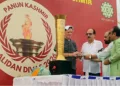
The study was submitted to the committee in Jammu on Wednesday by Dr. Agnishekhar, Convenor, Panun Kashmir, and Tito Ganju, Chairman Panun Kashmir and Chief Patron Jonaraja Institute of Genocide & Atrocities Studies (JIGAS). Prepared by Panun Kashmir in association with the Jonaraja Institute of Genocide & Atrocities Studies, the study is the outcome of an extensive inter-disciplinary research exercise examining demographic transformation in J&K from historical, demographic, constitutional, legal and socio-political perspectives.
Population patterns, migration, forced displacement
The study examines demographic changes over an extended historical period and seeks to place population trends within the circumstances in which those changes occurred. It analyses historical population patterns, migration, displacement, settlement, political representation, property ownership and the consequences of prolonged displacement, with particular attention to the demographic transformation of the Kashmir Valley.
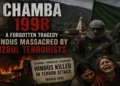
A substantial portion of the study deals with the displacement of Kashmiri Hindus from the Valley beginning in late 1989 and early 1990. It also examines its continuing demographic consequences. It studies the community’s displacement not merely as a migration event but as a process involving the loss of physical presence, disruption of established settlements, property-related consequences, changes in political participation and the inability of a large section of the displaced population to return to its ancestral places of residence.
The researchers have also examined the distinction between ordinary demographic movement and demographic changes arising from extraordinary circumstances such as conflict, targeted violence, forced displacement, insecurity, dispossession and prolonged absence from one’s original habitat.
Documentation, testimonies by Hindu community
The study draws upon historical sources, demographic material, government and institutional records, legal and constitutional material, community documentation and testimonies. The historical component includes an examination of Kashmir’s indigenous historiographical tradition, including the writings of Kalhana and Jonaraja, alongside later historical and documentary sources.
The association with JIGAS has brought an additional research dimension to the study through its work on genocide and atrocity studies and its examination of the Kashmiri historical concept of “Jatividhvans” in the context of mass atrocities, displacement and destruction of communities.
The study also examines demographic change through the lens of constitutional rights, political representation, property, rehabilitation and the rights of displaced populations. It seeks to examine whether demographic statistics, when viewed independently of the circumstances that produced them, provide a complete picture of demographic transformation.
Displacement, dispossession & erasure from Valley
The present submission also builds upon Panun Kashmir’s earlier documentation concerning the displacement of Kashmiri Hindus. The organisation’s earlier documentation submitted to the National Human Rights Commission had specifically examined the effect of demographic change in the Kashmir Valley, besides documenting issues relating to displacement and dispossession.
According to Dr. Agnishekhar and Tito Ganju, the study has been submitted with the sole objective of placing the research and documentation available with Panun Kashmir and JIGAS before the Central committee so that it may be considered as part of the Committee’s wider examination of demographic change.
They said the study was intended as a research contribution and not as a substitute for the committee’s independent assessment. The material has accordingly been placed before the committee for its consideration and such use as it may deem appropriate in the discharge of its mandate.
The study raises the broader question of whether demographic change can be assessed only by recording numerical population variations. Also it raises questions whether a comprehensive assessment must also examine the circumstances that caused particular populations to leave their historical habitats. This also includes the conditions affecting their return and the long-term demographic consequences of such displacement.
Panun Kashmir and JIGAS have expressed the hope that the study will assist the high level committee in examining demographic change in J&K through a combination of historical evidence, demographic data, legal analysis and documented experiences of affected communities.