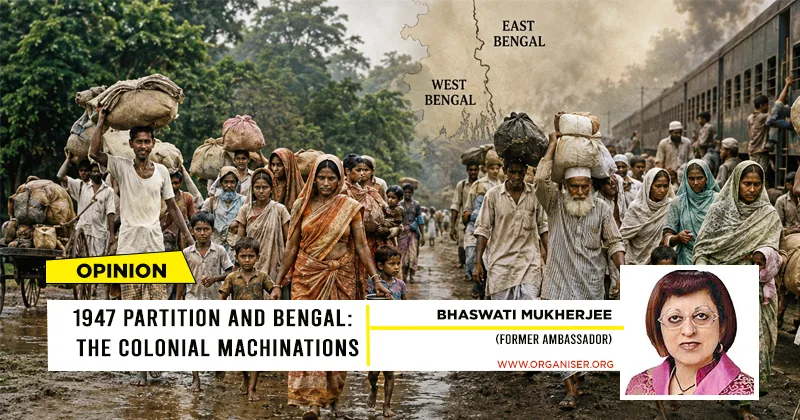
This is a narrative about Bengal’s Partition (1947), the painful division of a beloved part of undivided India where my family had strong roots for centuries, the Partition of Bengal.
In Bengal, it began with Bengal’s first encounter with Islam. It impacted Bengal’s syncretic culture forcefully. The census of 1872, followed by the first modern Census of India in 1901, confirmed that Bengal’s Muslim population was concentrated in the fertile plains, called ‘rice swamps’ of East Bengal. Bengali Muslims concentrated in the rural areas of East Bengal were not outsiders but were converts from lowest-caste Hindus.
Bengal’s First Encounter with Islam
The Bengali Muslim convert was not a monolithic Muslim social or cultural entity. The common Bengali cultural and social norms remained and would deeply influence future history. The deep divisions within Bengali Muslim society represented the cleavages inherent in their social and caste origin.
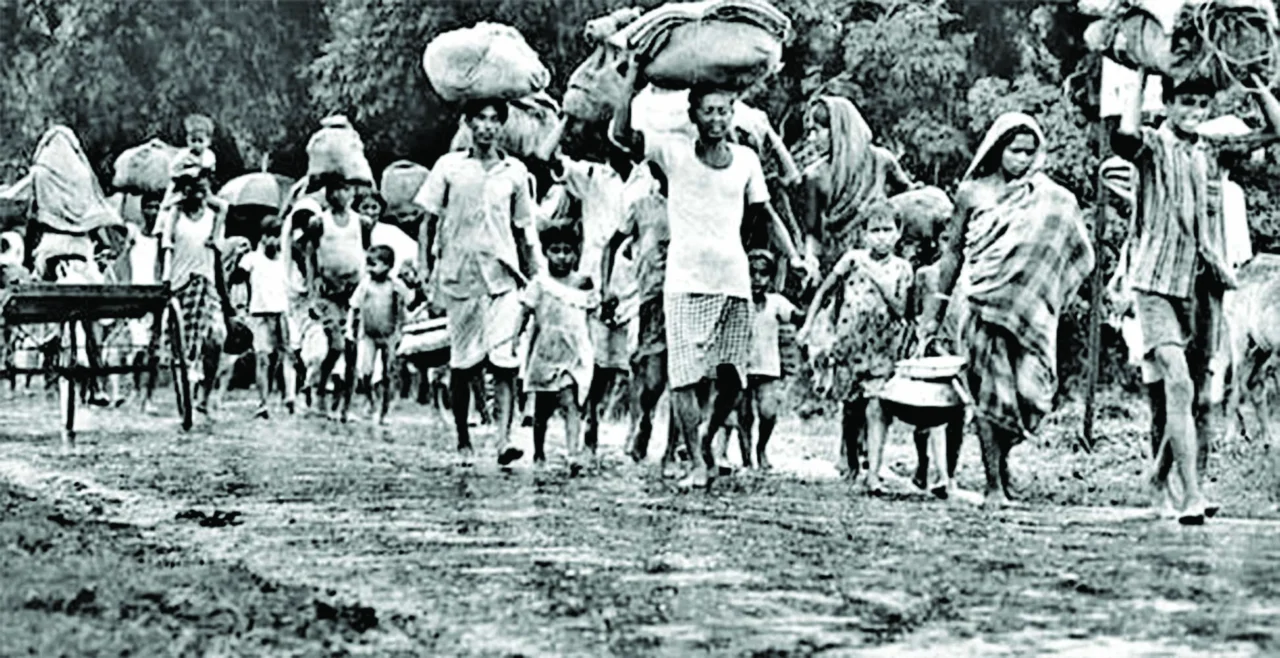
There were the new ‘Muslim Brahmins’, the ‘Ashraf’ or ‘Sharif’, the nobility descended from foreigners and upper-caste Hindu converts. The upper-class Ashraf also rejected the local language, Bengali, in preference to Urdu. Their rejection reflected their social and caste bias towards lower-class Bengali Muslim, whose preference was for Bengali. The new Muslim lower castes were called the ‘Ajlaf’ and ‘Atrap’. This bias would later result in the birth of Bangladesh.
In Bengal, in the late nineteenth century, many were influenced by the teachings of Ramakrishna Paramhamsa. His disciple, Swami Vivekananda, presented Vedantic Hinduism as a universal faith and the synthesis of all religions.
Bankim Chandra Chattopadhyay played a catalytic role in the development of Hindu nationalism. His evocative novel Anandamath created a national identity for Indians as well as the notion of a Motherland associated with nationhood. Vande Mataram, which translates into ‘I revere thee, Mother,’ became the icon of the burgeoning national movement. The Hindu reformist movement did not contribute to the consolidation of a Hindu communal identity. It was a movement to develop universal tolerance and understanding and to unite Indians of any religion to rediscover their national pride and confidence and fight colonialism.
It is unfortunate that the reformist movement in Islam did contribute to a consolidation of a distinct religious Islamic identity, communalism and ultimately to the phenomenon of separatism.
Culturally, the Bengali Muslims were caught between the opposite pulls of Bengal localism and Islamic extra-territoriality. Pressure to prove an Islamic identity ultimately led to antithetical forces pulling between Bengali and an alien culture
The idea of nationhood and nationalism in a modern sense originated during this period in late-colonial Bengal. It had deep roots in Bengal’s pre-colonial history. The notion of Samaj was the link between the past and the present.
Communal and colonial historians have either denied any historical notion of Indian nationhood or the motherland. Or else, they attempted to portray Bengal’s history as one of two nations, the Hindu and the Muslim.
The formation of a Bengali Bhadralok (translated as ‘cultured people’) identity was crucial to the development of nationalism. This in turn was interlinked with the development of the Bengali language and its culture.
Bengali Muslims lacked a large, dynamic, and upwardly mobile middle class that would embrace English education and adapt Western notions of modern nationalism and freedom to Bengal. The majority of the small Bengali Muslim middle class and the elite could not adapt quickly enough to English education like their Hindu counterparts. Consequently, they felt marginalised and excluded.
It was language rather than religion which remains the key to understanding the issue of identity in Bengal. Bengalis, whether Hindu or Muslim, are defined by their culture rather than their religion. ‘Syncretistic’ Islam practised by the masses in Bengal in their own language was fundamentally different to doctrinal Islam practised by the elite, in Arabic, Persian and Urdu.
Culturally, the Bengali Muslims were caught between the opposite pulls of Bengal localism and Islamic extra-territoriality. Pressure to prove an Islamic identity ultimately led to antithetical forces pulling between Bengali and an alien culture.
The efforts of erstwhile West Pakistan’s Punjabi-dominated Muslim dictators to fundamentally alter this folk culture and to eliminate the Bengali language in East Pakistan led to the language agitation, the growth of the Awami League and the spectacular rise of Mujibur Rahman, the father of Bangladesh.
The notion of India being historically divided since the advent of Islam into two nations, the Hindu and the Muslim, suited the colonialist who wished to deny nationhood to Indians on these grounds. It also suited the communal Muslim argument that India, having been ruled by Muslim rulers from the tenth century onwards, had evolved into two nations divided by religion.
It was the British, alarmed by Hindu-Muslim unity in 1857, who evolved the politics of a separatist political identity for the Bengali Muslim. It would, they calculated, also check the increasing challenges of the rising national movement in the Bengali Hindu intelligentsia and middle class.
Curzon was motivated by a desire to curb the rising influence of the Bhadralok. The demand made by the newly formed Muslim League in 1906 was the establishment of separate electorates based on religion. The first nail had been put in the coffin of Bengal’s syncretic culture. Basically, the Bengali Muslim elite and intelligentsia were unwilling to compete on equal terms either for employment or for political empowerment.
The Partition of 1905 was an effort to destroy Bengal’s syncretic culture and to polarise Muslims. This polarisation was so complete that even when the Partition was revoked in 1911, the deep shock of the Bengali Muslims found expression, not in any anti-British fury, but in antipathy directed more towards the Hindu community in Bengal. Later, these Bengali Muslims, swayed by the divisive rhetoric of the North Indian Muslim, would support the birth of Pakistan.
The seeds of distrust sowed by the Communal Award flowered into a full-fledged demand for Partition, based on artificially stoked minority fears among the Muslims. In retrospect and with the advantage of historical hindsight, the INC failed the litmus test demanded by the Muslims of developing into a truly representative national movement and political party, representative of both Hindus and Muslims.
The Congress tried for political accommodation with the Muslims in areas where Hindus were in a majority, by providing concessions to the Muslims and demonstrating the weakness of their leadership.
In Bengal, where due to its particular history, the population was divided on a social-economic basis between Hindus and Muslims, the Congress leadership failed to respond to the legitimate demands of the Bengal Congress. This led to a split and the rise of right-wing parties who would address the resentment and the frustration of the Bengali Hindu.
Communalism became a weapon for the middle-class Muslim to accumulate political power and to rise in social status. It was a direct challenge to the Bhadralok’s rise in social and political power.
The dynamics of colonialism, famine in Bengal and Partition politics represents an ugly blot on the image of the colonial power. Food and medical aid from Bengal was deliberately diverted from the starving masses of Bengal to feed soldiers of the British army elsewhere. Its most ugly manifestation, symbolic of the racist and contemptuous approach of the British elite towards Bengalis, will forever be represented by Winston Churchill’s remarks: ‘I hate Indians. They are a beastly people with a beastly religion. The famine was their own fault for breeding like rabbits.’
There can be no doubt that the Great Bengal Famine, which caused 3 million deaths by starvation, represents one of the most tragic and unwritten genocides of human history. The irony was that it was a man-made tragedy. It was not caused by drought or any natural disaster.
Churchill termed it as a ‘Denial Policy’. In reality, it was a ‘scorched earth policy,’ with no concern for its implications on the hapless Bengalis. The primary onus of responsibility rests with the catastrophic policies adopted by war-time Britain towards Bengal, a policy without pity or compassion and in total violation of today’s international human rights standards.
It was unfortunate that the leader of the Muslim League in Bengal, who became its Chief Minister, was Huseyn Shaheed Suhrawardy, the notorious former Minister for Food and Civil Supplies during the Great Bengal Famine in 1943, which resulted in 2 million Bengalis dying of starvation.
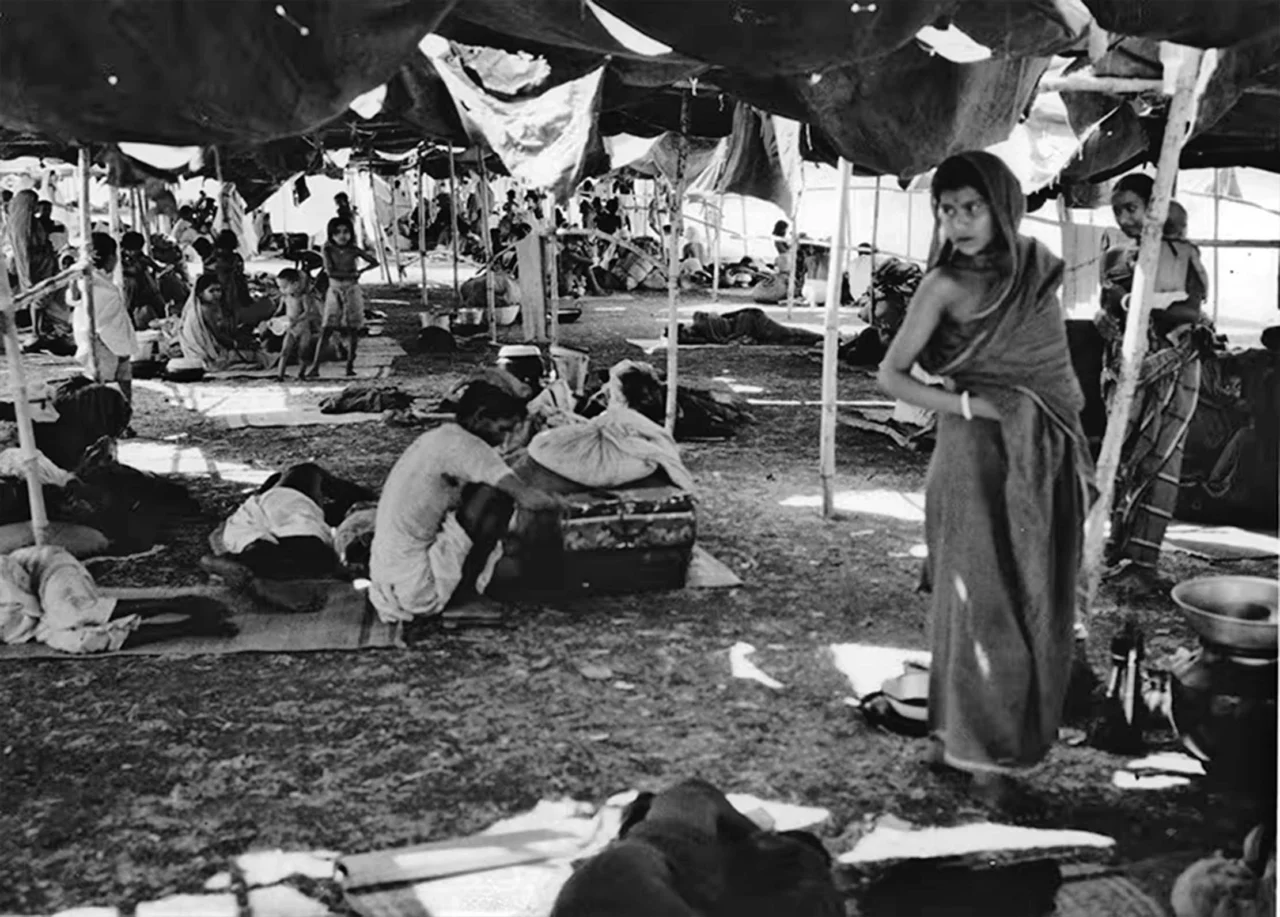
‘Direct Action Day’ due to Suhrawardy’s provocative actions resulted in uncontrollable violence never before seen in India. Suhrawardy’s intention was both communal and political. He was preparing Muslim public opinion, as leader of the Bengal Provincial Muslim League, for the creation of a Muslim Bengal, with Calcutta as its capital.
To this day, Suhrawardy is regarded as a national hero in Bangladesh. His role in the 1946 Great Calcutta Killings is shrouded in an embarrassing public silence by Bangladeshi interlocutors.
Noakhali then marked a definitive rupture in the syncretic culture of Bengal. Euphemistically described as ‘riots’ by the colonial administration, what occurred were the systematic and organised abductions and rapes of female Hindus and their forced conversion to Islam, and the organised massacres of the male Hindu population. This was accompanied by loot and arson of properties belonging to Hindus by the majority Muslim community. The events commenced on October, 10 1946, the day of Lakshmi Puja, celebrated by Bengali Hindus on the tenth day after Dussehra.
Of greater interest was Suhrawardy’s admission in his memoirs that on the eve of Partition, there were four times more Hindus in East Bengal than Muslims in Calcutta. Through this admission, one could ask the legitimate question: how could the Partition of Bengal be justified based on religion?
Suhrawardy remained in Calcutta till March 5, 1949. He then returned to Pakistan. After Jinnah’s death, given his discomfort with Liaqat, he re-invented himself politically, understanding that in Bengal, a Bengali cannot turn away from his language, culture and civilisational heritage. He left the Muslim League and joined other Bengali nationalists to found the Awami League in 1949.
Muslim League’s Divisive Role
In the background of such bitterness—territorial, religious and communal—the All India Muslim League, which was the sole representative of the Muslim community, put forward extreme and maximalist demands. The League’s representatives demanded that all territory, East of the Hooghly and Bhagirathi rivers, populated by a vast two-thirds Hindu majority population, should go to Pakistan.
The Radcliffe Line, showing the final demarcation, demonstrates that Radcliffe, in his desire to please Mountbatten and make political trade-offs on the Punjab border, ceded Jessore and Khulna, both Hindu-majority, as well as the Chittagong Hill Tracts to Pakistan. Calcutta remained with India.
The moot point was that the liberation struggle in former East Pakistan from 1947 onwards was based on language, culture and identity, and not religion. It was thus antithetical to the pre-Partition movement led by the All India Muslim League for division of territory based on the majority religious population.
The linguistic and cultural identity debate that emerged in East Bengal was a rejection and a negation of communalism and the communal divisive ideology of Jinnah’s two-nation theory. The creation of Bangladesh itself repudiates the so-called communal religion-based justification of Partition. History is replete with ironies. One of the greatest historical ironies is that the creation of Pakistan on the basis of religion was swiftly undone in the East, not due to religion but due to language.
The history of East Pakistan post its creation with a mass language movement, repression by the West Pakistan ‘Junta’, refusal by Pakistan to accept the results of a free and fair election that would have installed Mujibur Rahman as Prime Minister of all of Pakistan and the genocide of 1 million Bangladeshi Muslims and minority Hindus in 1971 is a narrative of a violent struggle for self-determination.
Clearly, Jinnah and his successors never appreciated the leitmotif of the Bengali identity, Hindu or Muslim. Was Partition inevitable? Was there a religious or communal divide before the East India Company’s conquest of India? The answer is a resounding no! The motherland was partitioned by the imperialists who used Muslim communalism to weaken and stymie her rise.