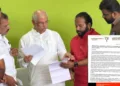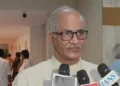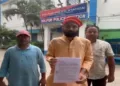
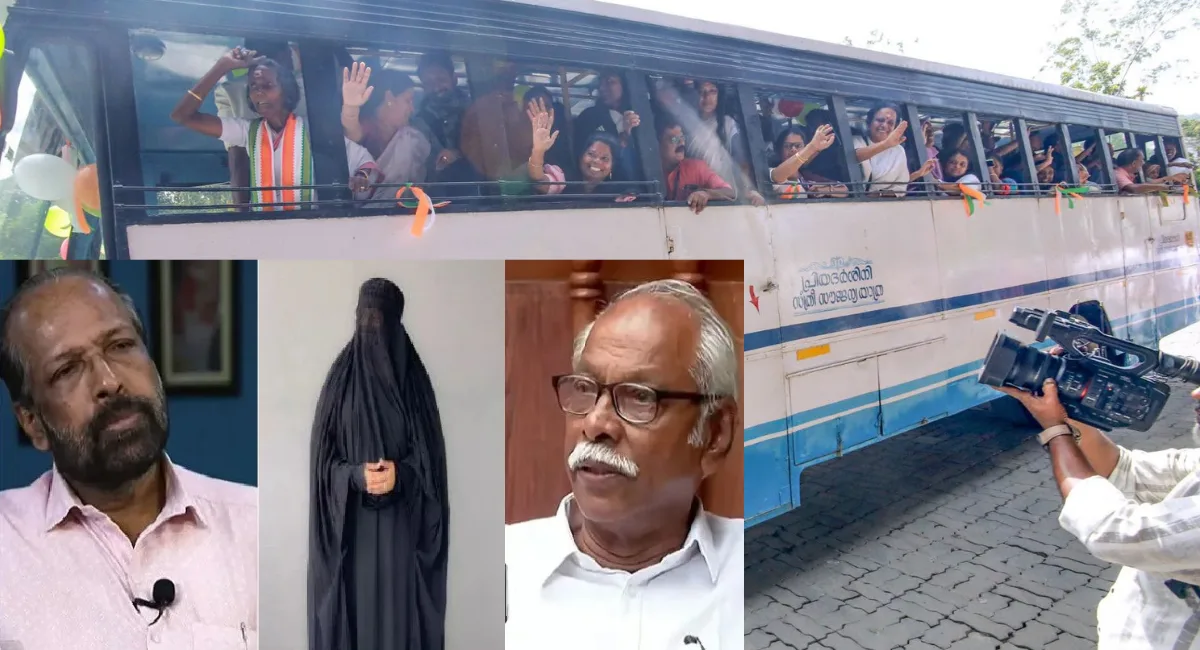
The Kerala Government’s free-for-women Priyadarshini bus scheme has come under scrutiny over passenger identification and possible misuse, with social reformer A.P. Ahmed Master on August 11 suggesting a ban on niqab and burqa on board the KSRTC-operated buses in order to ensure better identification of passengers and prevent misuse of the scheme. He also endorsed the view expressed by social observer Dr. (Prof.) M.N. (Mohiyudhin Nedungadiyil) Karassery Master, who had raised concerns that men could board the buses wearing niqab or burqa, making identification difficult.
A.P. Ahmed Master said that an Moulvi (Muslim cleric) asked him if anyone is going to buy burqa worth Rs 800 for the sake of saving Rs 10, the price of the bus ticket.
Ahmed Master shot back that those who are used to crimes will stock burqa and purdah permanently. He added that Kozhikode – Moonnar travel costs more than Rs 200. And, the buses are packed.
The Priyadarshini scheme is a free public bus travel initiative launched by the Government of Kerala on June 15, 2026 after Congress-led United Democratic Front (UDF) took over after defeating the CPM-led Left Democratic Front.
As per scheme, all women and transgender passengers are permitted to travel free of cost on eligible ordinary-class buses operated by the KSRTC (Kerala State Road Transport Corporation).
Salient features of the scheme.
Zero Cost: Eligible passengers pay no ticket fare. Conductors issue a zero-value ticket for the record’s sake.
ID not required: No registration, application, or proof of identity or income is needed to board.
Eligibility: Open to all women and transgender persons irrespective of age, income or state of residency.
Covered Bus Categories
The free travel applies to seven specific types of KSRTC ordinary services:
Ordinary and City Ordinary
Limited-Stop Ordinary
Fair-Stage Ordinary
Town-to-Town and Point-to-Point
Gramavandi services.
The Priyadarshini free travel scheme costs the KSRTC an estimated revenue loss of roughly Rs 2 crore to Rs 2.5 crore per day. Initial reports showed the first 16 days of implementation (June 15 – June 30) resulted in an expenditure and revenue shortfall of Rs 41.50 crore, which the state government sanctioned to compensate. The annual revenue loss is estimated at around Rs 800 crore to Rs 900 crore.
The free bus travel scheme is one of the flagship welfare initiatives of Congress-ruled states and is currently implemented in Telangana, Karnataka and Kerala. Critics argue that the scheme is aimed at winning the support of women and, indirectly, influencing their families in favour of the Congress party. However, they point to its potential adverse impact on public transport systems and the long-term financial viability of state-run transport corporations.