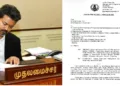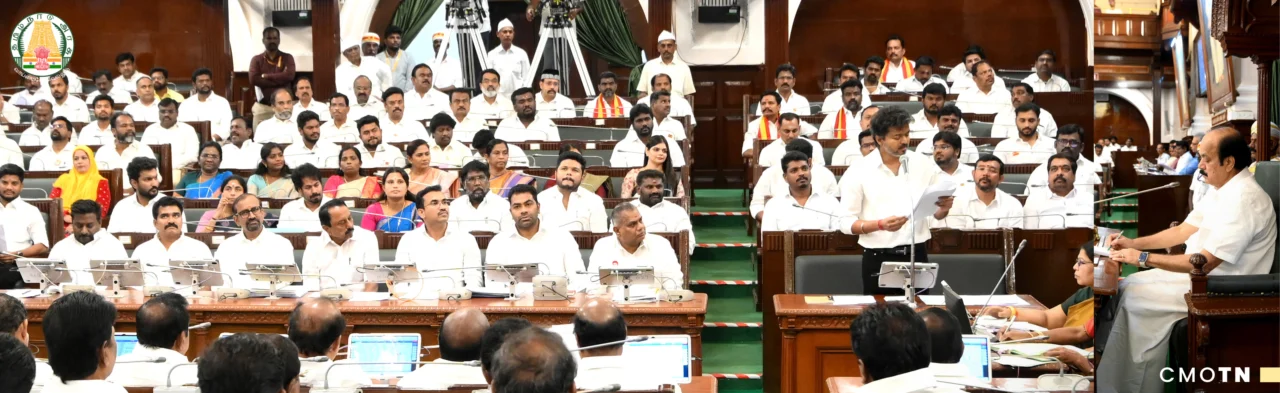
Tamil Nadu Assembly on Monday (August 8) unanimously passed a resolution asserting that the State song ‘Tamil Thai Vazhthu’ must be sung first before the commencement of programmes conducted by all educational institutions, including universities, government offices and public sector undertakings.
மாண்புமிகு தமிழ்நாடு முதலமைச்சர் திரு.ச.ஜோசப் விஜய் அவர்கள் இன்று (10.8.2026) தமிழ்நாடு சட்டமன்றப் பேரவையில், “தமிழ்த்தாய் வாழ்த்து” பாடலை தமிழ்நாட்டில் அமைந்திருக்கும் அனைத்து கல்வி நிறுவனங்கள், பல்கலைக்கழகங்கள், அரசு அலுவலகங்கள், பொதுத்துறை நிறுவனங்கள் உள்ளிட்ட பொது… pic.twitter.com/PWnad9jh3U
— CMOTamilNadu (@CMOTamilnadu) August 10, 2026
Chief Minister C Joseph Vijay moved the resolution, stating that “Tamil Thai Vazhthu”, an invocation to Mother Tamil, was taken from Manonmaniam, written by Manonmaniam Sundaranar in 1891. It was adopted unanimously through a voice vote.
The resolution said, “The practice of singing the state invocation song first at government functions was introduced through a government order on 23rd November 1970 (during the DMK’s first government led by M Karunanidhi). Through another GO issued on December 12, 2021, the practice was extended to educational institutions, universities, government offices, public sector undertakings and other public institutions in Tamil Nadu.”
The resolution moved on August 10, CM Vijay was necessitated after DMK and others raised objections to singing the state invocation third in the order at the Lok Bhavan functions like swearing-in ceremony and other functions attended by President, Governor.
At that time, TVK government said it would ensure that the state anthem would be sung first and steps would be taken.
தமிழ்த்தாய் வாழ்த்துப் பாடலை தமிழ்நாட்டின் அனைத்து நிகழ்ச்சிகளிலும் நிகழ்வு தொடங்குவதற்கு முன் கட்டாயம் முதலில் பாடப்படவேண்டும் என்ற அரசினர் தனித்தீர்மானத்தை தமிழ்நாடு சட்டமன்றப் பேரவையில் அனைத்துக் கட்சிகளும் ஒருமனதாக நிறைவேற்றி தந்தமைக்காக நன்றி தெரிவித்து மாண்புமிகு தமிழ்நாடு… pic.twitter.com/vfRfyCPRu3
— TN DIPR (@TNDIPRNEWS) August 10, 2026
What triggered the fresh bout of stir was the Central government’s (Union Home Ministry) issued notification on singing of state songs at functions on July 9 this year.
It said, “In some of the States, State Song is also sang and played along with National Anthem/National Song. It is stated that whenever State Song is sung or played with National Song/National Anthem, both the National Song and National Anthem shall be sung or played together; and National Song will be sung or played first followed by National Anthem.”
MHA has asked the States and Central Ministries to “strictly comply” with its directive that National Song Vande Mataram be played before Jana Gana Mana, the National Anthem, whenever both are performed at official events.https://t.co/03H8wAjqk2
— Vijaita Singh (@vijaita) July 12, 2026
The Home Ministry notification says “the protocol to be observed in functions that play a state song along with the National Song/Anthem, an official said: “In such cases, state songs should be sung first followed by the National Song and the National Anthem.”
Referring to the above notification, the resolution said, “Tamil Thai Vazhthu had been sung before the commencement of programmes conducted by the government and educational institutions as part of a long-standing tradition and in accordance with the relevant Government Orders. Underscoring the importance of the State song, the resolution said it was not merely a song but an expression of respect for the Tamil language and Tamil culture.”
The resolution said “Tamil Thaai Vaazhthu” is an expression of respect for the Tamil language and culture. It further stated that, consistent with the linguistic and cultural rights guaranteed by the Constitution and with the objective of preserving Tamil Nadu’s cultural identity, the song must be sung first at every event held by educational institutions, universities, government offices, public sector undertakings and other public bodies in the state, before any other proceedings begin.
மாண்புமிகு தமிழ்நாடு முதலமைச்சர் திரு. ச. ஜோசப் விஜய் அவர்கள் இன்று (10.8.2026) தமிழ்நாடு சட்டமன்றப் பேரவையில், “தமிழ்த்தாய் வாழ்த்து” பாடலை தமிழ்நாட்டில் அமைந்திருக்கும் அனைத்து கல்வி நிறுவனங்கள், பல்கலைக்கழகங்கள், அரசு அலுவலகங்கள், பொதுத்துறை நிறுவனங்கள் உள்ளிட்ட பொது… pic.twitter.com/6820oVSx1B
— TN DIPR (@TNDIPRNEWS) August 10, 2026
The resolution was welcomed by members cutting across party lines, including those from the DMK, AIADMK and Left parties. DMK member Kovi Chezhian and PMK member S Sivakumar emphasised that a separate law should be enacted to make the singing of Tamil Thai Vazhthu mandatory.
Meanwhile, on August 10, 2026, Additional Solicitor General AR.L. Sundaresan informed the Madras High Court that the Union Home Ministry hasn’t insisted that Tamil Thai Vazhthu must be sung last. The Ministry has only stated that when the national anthem and the national song Vande Matharam had to be sung together, the national song must be sung first.
He told a Division Bench comprising Chief Justice S.A. Dharmadhikari and Justice G. Arul Murugan that the petition had become infructuous as the Union Home Ministry had issued a fresh notification. Union Home Ministry has not insisted that Tamil Thai Vazhthu be sung last, but has only stated that when the national anthem and the national song Vande Mataram are sung together, Vande Mataram should be sung first. The bench thereafter adjourned the hearing of the case to next week.
The ASG told this when the HC was hearing a petition filed by Ananya Radhakrishnan, who contended that placing Tamil Thai Vazhthu in the third position during the ceremony caused deep anguish among the people and amounted to an unwarranted dilution of the ceremonial dignity traditionally accorded to the State Song.
The petitioner sought quashing of the Union Home Ministry circular dated January 28 and directed the authorities to issue appropriate protocol guidelines ensuring that Tamil Thai Vazhthu is rendered at the commencement of official State functions and constitutional ceremonies, and is not relegated to a position subsequent to Vande Mataram or the National Anthem in the absence of any express constitutional, statutory or binding executive mandate.