The relationship between Bharat’s Janajatiya (Scheduled Tribe) communities and the wider Hindu tradition has long been the subject of historical, anthropological, and political debate of interaction, cultural exchange, and shared sacred traditions. Across central, eastern, western, and Himalayan Bharat, many Janajatiya communities have historically worshipped Mahadev (Shiva), local manifestations of the Mother Goddess (Shakti), village deities, ancestral spirits, mountains, forests, rivers, and sacred groves. These traditions often exist alongside broader Hindu practices.
Among the oldest surviving cultural traditions of the extended Bharat are those preserved by its Janajatiya communities. Living in forests, hills, river valleys, and plateau regions for centuries, these communities developed religious systems deeply rooted in nature, ancestor veneration, sacred landscapes, and local deities. Long before organised temples became widespread, sacred groves, mountains, rivers, caves, and ancient trees served as places of worship.
Many historians have observed striking similarities between these practices and early forms of Shaiva and Shakta worship. Shiva is revered not only as a cosmic deity but also as the Bhagwan of forests, mountains, animals, ascetics, hunters, and Janajati peoples. His epithets — Mahadev, Pashupati, Girisha, Kirata, and Bhuteshwara — reflect associations with wilderness, pastoral life, and communities living beyond settled urban centres. Likewise, Shakti traditions celebrate the divine feminine through countless local goddesses associated with fertility, forests, rivers, disease protection, agriculture, and the earth itself.
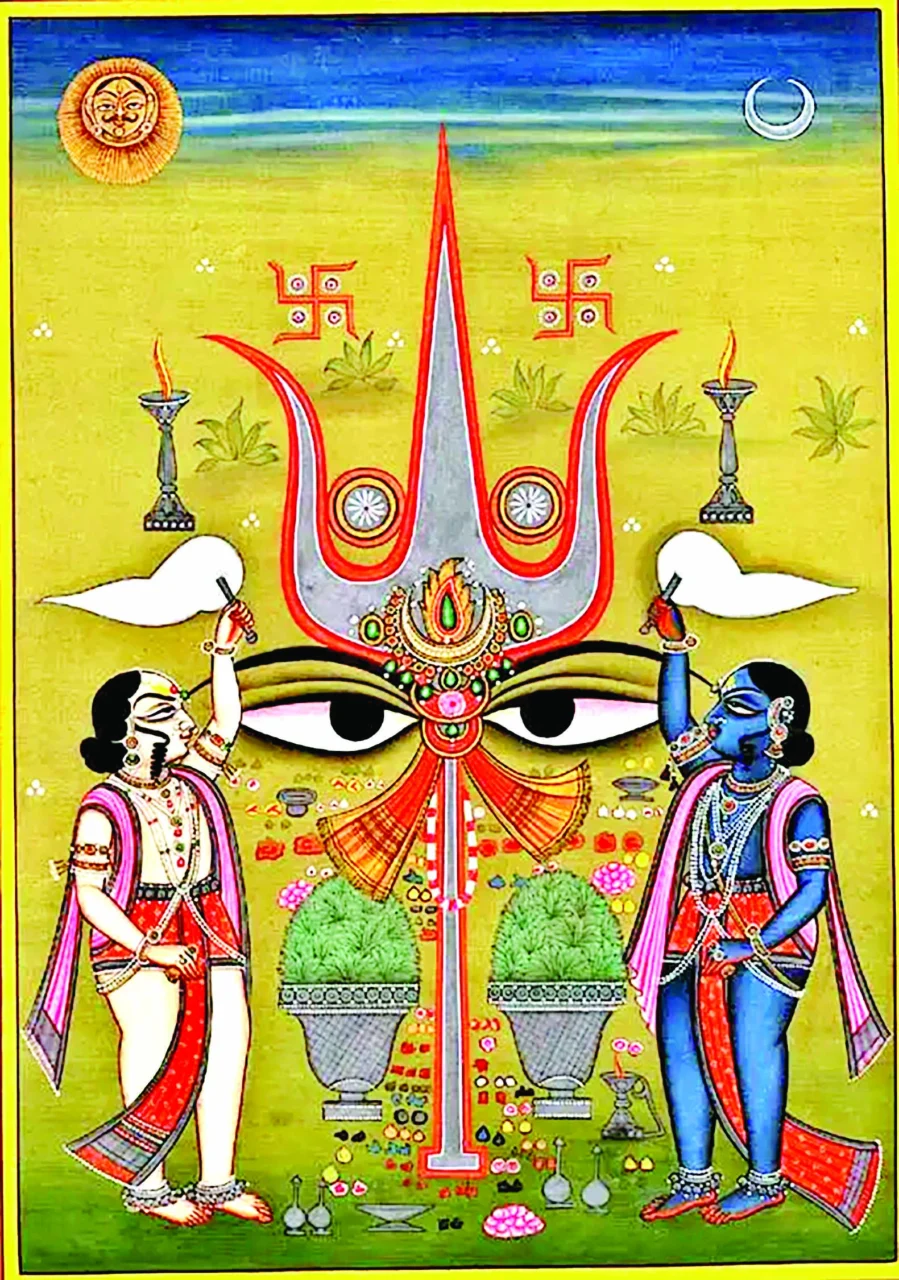
For many Janajati communities, such forms of worship have remained central to religious life. Among several Gond groups, Bada Deo (often identified with Mahadev) occupies a supreme position. Various Bhil communities revere Mahadev alongside regional deities. Koya, Maria, Muria, Halba, Baiga, and numerous other communities similarly incorporate forms of Shiva or local Mother Goddess traditions into their ritual lives, though practices vary significantly from region to region. This diversity is essential. Bharat is home to more than seven hundred Scheduled Tribes, and their beliefs differ considerably. Some communities identify themselves as Hindu. Others follow Sarna, Donyi-Polo, Bathou, Seng Khasi, or other indigenous traditions. Recognising this diversity strengthens the study of Janajati religious history.
Nature as First Sacred Space
Before emergence of large mandir complexes and formal religious institutions, the sacred geography of Bharat was shaped primarily by nature. Archaeological and ethnographic evidence suggests that mountains, rivers, trees, stones, serpents, animals, and fertility symbols were among the earliest objects of reverence across the extended Bharat. Many of these features remain central to Janajatiya religious life today.
Sacred groves continue to function as protected spaces where cutting trees or hunting animals is traditionally prohibited. Certain hills are regarded as the dwelling places of ancestral spirits or protective deities. Rivers are treated not merely as sources of water but as living beings deserving ritual respect. Agricultural cycles are marked by seasonal festivals expressing gratitude to the earth and the forces of nature.
These practices resonate strongly with themes found in Shaiva and Shakta traditions. Shiva is frequently portrayed as dwelling in mountains, forests, and cremation grounds. His companions include animals, serpents, ghosts, hunters, and ascetics — figures symbolically associated with the margins of settled society. Similarly, Shakti traditions often centre on local goddesses linked to forests, fertility, disease protection, and village welfare.
Among the many forms of Shiva, perhaps none is more significant for understanding Janajatiya traditions than Pashupati — the Bhawan of Animals. The title reflects a close relationship between humans, animals, forests, and ecological balance. For communities dependent on hunting, gathering, shifting cultivation, or pastoral life, such symbolism carries obvious cultural significance. Classical literature also preserves narratives in which Shiva appears in forms associated with forest peoples. In the Kiratarjuniya tradition, Shiva manifests as a kirata (mountain hunter) before revealing his divine identity to Arjuna. Likewise, numerous regional traditions depict Mahadev as approachable, austere, and closely connected with ordinary people rather than royal authority. Such characteristics have contributed to his enduring popularity among rural and Janajatiya populations across much of Bharat.
Unearthing Sacred Landscapes
The history of Shaiva and Shakta traditions cannot be understood solely through classical Sanskrit literature. Archaeology, anthropology, folklore, and living traditions together offer valuable insights into the religious landscape of ancient Bharat. While archaeology rarely identifies a deity with certainty, it reveals patterns of symbolism that later become central to Bharatiya religious life.
For contemporary Hindu society, the lessons offered by Janajatiya traditions are especially significant. In an era marked by climate change, the Janajatiya ethics of living in harmony with nature offers an insight into enduring value
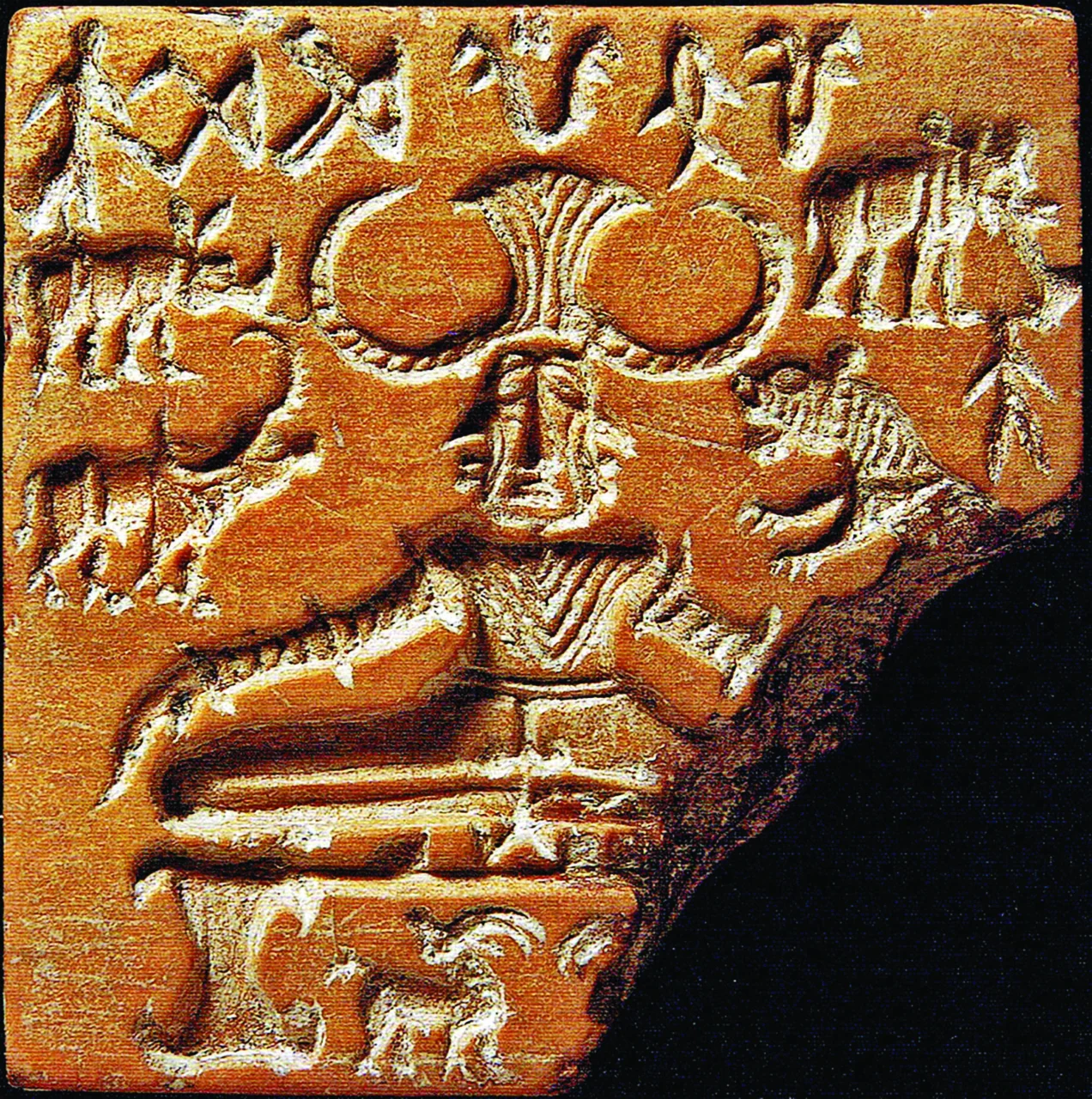
One of the most debated archaeological discoveries is the “Pashupati Seal” from the Indus Valley Civilisation (c 2600–1900 BCE). The seal depicts a horned figure seated in what appears to be a yogic posture. In the early twentieth century, archaeologist Sir John Marshall proposed that the figure represented a proto-Shiva or an early form of Pashupati.
Regardless of this debate, the symbolism is noteworthy. The association of a central figure with meditation, animals, and wilderness resembles themes that later become prominent in Shaiva traditions. Rather than proving a direct continuity, the seal illustrates that many ideas later associated with Shiva — asceticism, animals, and sacred authority over nature — have deep antiquity in the extended Bharat. Similarly, archaeological excavations across Bharat have uncovered numerous terracotta female figurines dating to prehistoric and protohistoric periods. While it is impossible to identify these figures with specific Goddesses such as Durga, Kali, or Parvati, they indicate that reverence for female fertility, motherhood, and protective powers existed long before the composition of the Puranas. These traditions likely contributed to the later development of regional Shakta worship.
Sacred Symbols in Nature
Long before elaborate mandirs became common, sacred geography defined religious practice across much of Bharat. Archaeological and ethnographic studies consistently demonstrate the ritual significance of sacred trees, standing stones, megaliths, hilltops, caves, rivers, and forest groves. These features remain remarkably prominent in many Janajati societies.
Among several Gond communities, sacred groves continue to function as spaces where community rituals are performed and ecological protection is maintained through customary law. Baiga priests traditionally conduct ceremonies in forests rather than temple complexes. Bhil communities often maintain shrines beneath ancient trees or near natural rock formations. Similar traditions are documented among Koya, Maria, Muria, and numerous central Bharatiya Janajatiya societies.
From the perspective of religious history, these practices reveal continuity in nature-centred spirituality. They also resonate strongly with the imagery surrounding Shiva, who is described in Hindu literature as residing in mountains, forests, caves, cremation grounds, and wilderness rather than in royal cities.
Traditions of Janajatiya
Among the largest Scheduled Tribe communities of Bharat, the Gonds possess a rich religious tradition that has attracted considerable anthropological attention. Although practices vary across regions of Madhya Pradesh, Chhattisgarh, Maharashtra, Telangana, and adjoining States, many Gond communities revere Bada Deo (also called Persa Pen in several traditions) as the supreme divine principle. The relationship between Bada Deo and Shiva has been interpreted differently by different scholars and by Gond communities themselves. In many regions, worshippers identify Bada Deo with Mahadev. These varying interpretations illustrate the dynamic relationship between local traditions and broader Hindu religious culture.
The Baigas have long been regarded as one of central Bharat’s most distinctive forest-dwelling communities. Traditionally dependent on forests and shifting cultivation, the Baigas developed an intricate cosmology centred upon forests, ancestors, medicinal plants, and sacred landscapes. Baiga ritual specialists perform ceremonies connected with agricultural fertility, healing, rain, and community welfare. Mahadev occupies an important place in many Baiga religious traditions, alongside numerous local spirits and ancestral beings. Anthropologists have often observed that Baiga religious life combines elements commonly identified with Shaiva philosophy — asceticism, respect for wilderness, and spiritual power—with indigenous ritual systems rooted in local ecology.
The Bhils, distributed across Rajasthan, Gujarat, Madhya Pradesh, and Maharashtra, present another significant example of Shaiva influence within Janajatiya religious life. Mahadev occupies a central place in the ritual calendar of many Bhil communities. Local shrines dedicated to Mahadev frequently coexist with the worship of clan deities, village guardians, ancestral heroes, and Mother Goddesses. The famous pilgrimage to Beneshwar Dham in Rajasthan illustrates this interaction between Janajatiya customs and broader Hindu traditions. Thousands of Bhils participate annually in rituals that combine ancestral remembrance, local traditions, and devotion to Hindu deities. Rather than representing two separate religious worlds, such festivals demonstrate centuries of cultural exchange.
Perhaps the strongest area of convergence between Janajatiya spirituality and Shakta traditions lies in the worship of the Divine Mother. Across central and eastern parts of Bharat, numerous Janajatiya communities revere female deities associated with fertility, forests, rivers, disease protection, hunting, agriculture, and village welfare. The names vary enormously: Danteshwari, Kankali Mata, Budhi Mai, Thakur Deviyan, Matai, Hinglaj Mata (in western part of Bharat), local gram devis, and numerous unnamed village Goddesses. Many of these deities later became identified with Durga, Kali, Parvati, or regional manifestations of Shakti. In other cases, they continue to be worshipped independently while existing alongside Hindu Goddess traditions.
One striking feature shared by many Janajatiya traditions and Shaiva symbolism is the sacred status accorded to animals. The bull, serpent, tiger, peacock, elephant, monkey, wild boar, and numerous birds occupy important positions in Janajatiya folklore. Similarly, Shiva’s iconography prominently features: Nandi (Bull), cobra, tiger skin, deer, mountains, rivers, and crescent moon. Likewise, Shakti is frequently depicted riding lions or tigers while accompanied by wild animals. Anthropologists generally interpret these parallels as evidence of shared ecological symbolism rather than proof of a single historical origin. Communities living close to forests naturally developed religious systems in which animals became sacred companions, protectors, clan symbols, or manifestations of divine power.
Colonial Classification
The nineteenth century marked a turning point in the study of Bharatiya society. Before British rule, identities were often expressed through region, clan, language, occupation, lineage, kingdom, sect, or local religious traditions. Although these identities certainly existed, they were rarely organised into rigid administrative categories across the entire extended Bharat. The expansion of British colonial administration transformed this situation. Taxation, policing, forest administration, and legal governance required detailed classifications of Bharat’s population. Beginning with the decennial censuses of the late nineteenth century, administrators sought to categorise millions of people into fixed groups based on religion, caste, tribe, language, and occupation.
These classifications were not merely descriptive; they also shaped how communities came to be viewed by Governments, scholars, and sometimes by the communities themselves. Many historians have argued that colonial censuses simplified identities that had previously been more fluid. Others caution that census officials often recorded distinctions that local communities themselves recognised.
Competing Colonial Narratives
British administrators and anthropologists produced thousands of pages describing Janajatiya communities. Their observations remain conflicting sources, but they also reflect the intellectual assumptions of their time. Some writers viewed Janajatiya societies as representing an earlier stage of human civilisation and terming them as “savage,” others emphasised their cultural distinctiveness from caste society and kept them outside Bharatiya context. Still others documented extensive interaction between Janajatiya populations and neighbouring Hindu communities. These differing conclusions continue to influence contemporary debates such as other religions and persuasions (ORP) in census. For example, some colonial ethnographers observed that many Janajatiya communities worshipped Hindu deities while simultaneously maintaining distinctive ancestral rituals. Modern anthropologists describe such systems as examples of religious pluralism, syncretism, or layered identities, where multiple traditions coexist without contradiction.
Scholarly Perspectives
Among twentieth-century Bharatiya sociologists, GS Ghurye argued that many Janajatiya communities should not be viewed as isolated from Hindu civilisation. In his influential work The Scheduled Tribes, he described numerous examples of long-standing interaction between tribal societies and neighbouring Hindu populations through trade, pilgrimage, marriage alliances, festivals, and shared sacred sites. According to Ghurye, the distinction between “tribe” and “caste” was often less rigid than colonial administrators had assumed. In many regions, communities gradually entered broader regional social networks while preserving important aspects of their traditional culture.
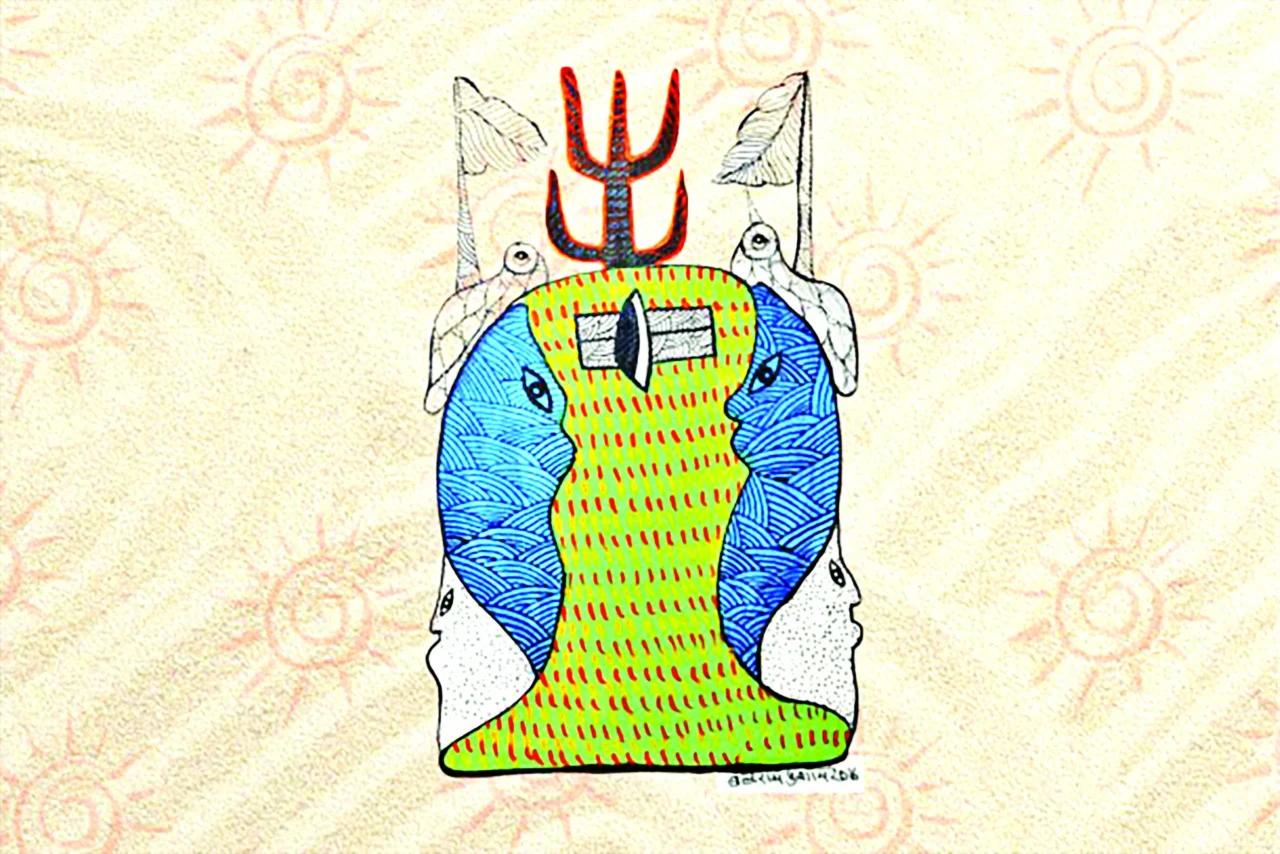
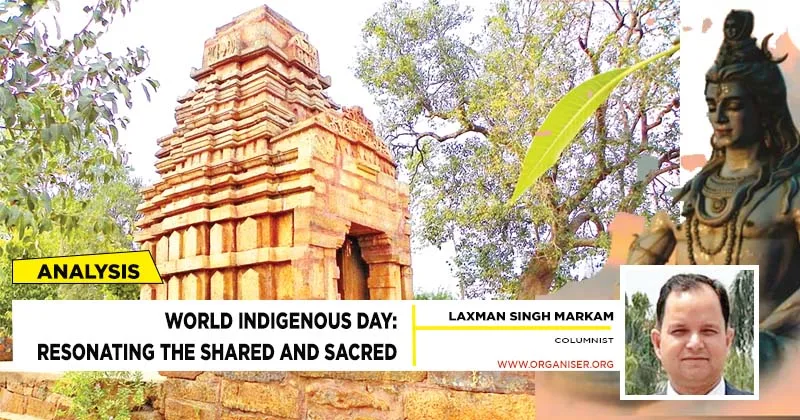
painting representing Bhagwan Shiv
A contrasting perspective emerged from the writings of an evangelist Verrier Elwin, the British-born anthropologist who spent decades living among central Bharatiya Janajatiya communities. Elwin admired the richness of Janajatiya culture, indigenous knowledge, ecological ethics, folklore, music, oral literature, and customary institutions, and argued that their traditions should not simply be absorbed into mainstream society. At the same time, Elwin did not portray Janajatiya societies as entirely isolated from Hindu civilisation. His ethnographic work documents extensive cultural interaction while also stressing the importance of preserving Janajatiya languages, customs, and social institutions.
Anthropologist Nirmal Kumar Bose proposed another influential framework. Rather than viewing Bharatiya civilisation as composed of completely separate cultural blocks, Bose emphasised continuous interaction between local communities and wider civilisational traditions. In his analysis, cultural exchange occurred in multiple directions. Local deities entered regional Hindu traditions, while Sanskritic ideas influenced village and Janajatiya rituals. This process was gradual, uneven, and differed from one region to another. From this perspective, Shaiva and Shakta traditions can be understood not as exclusively urban or exclusively tribal but as religious systems shaped through centuries of interaction among many communities.
Identity and Public Discourse
Questions surrounding the religious identity of Bharat’s Scheduled Tribe communities have become increasingly prominent in public discourse. Census classifications, demands for recognition of indigenous faiths, political mobilisation, legal provisions relating to personal laws, and debates over cultural heritage have all contributed to renewed attention to the subject. These discussions are not merely academic. They influence how communities understand themselves, how governments collect demographic data, and how religious and political organisations engage with Janajatiya populations. For many Janajatiya communities, identity is layered rather than exclusive. A person may identify with a Janajatiya clan, participate in the worship of a local ancestral deity, celebrate festivals associated with Mahadev or the Mother Goddess, and also participate in broader regional Hindu customs.
In recent years, public discussion has intensified regarding the religious identity of Scheduled Tribe communities. Statements by religious organisations, political parties, tribal associations, and social activists have generated widespread debate. For example, remarks attributed to representatives of the All India Muslim Personal Law Board (AIMPLB) questioning whether Janajatiya communities should be regarded as Hindus prompted responses from political leaders, Janajatiya organisations, and commentators holding differing views. Most respondents argued that many Janajatiya communities have historically participated in Hindu religious life and therefore should be recognised as part of the broader Hindu tradition.
Recognition Under the Constitution
The Constitution of India adopts a distinctive approach to Janajatiya communities. Rather than defining Scheduled Tribes in religious terms, the Constitution recognises them as a category based on historical, social, geographical, and administrative considerations. Article 342 empowers the President of India, in consultation with the Governors of the States, to specify which communities are recognised as Scheduled Tribes for constitutional purposes. Parliament alone may subsequently modify these lists. Importantly, the constitutional status of a Scheduled Tribe is independent of religious affiliation. Members of Scheduled Tribe communities may identify as Hindu, Christian, Bauddha, Muslim, Sikh, followers of indigenous religions, or otherwise.
The relationship between Scheduled Tribes and the Hindu Code Bills is often misunderstood. The Hindu Marriage Act, 1955, and certain related personal-law statutes include provisions stating that they do not automatically apply to members of Scheduled Tribes unless the Central Government directs otherwise. Similar provisions appear in other major Hindu personal-law enactments. Legal scholars have offered several explanations for this legislative approach. One influential view is that Parliament sought to respect the diversity of Janajatiya customary laws governing marriage, inheritance, adoption, and family relations. Many Janajatiya societies had long-established customary legal systems that differed significantly from those prevailing in Hindu society. Automatically replacing these customs with a uniform statutory framework might have disrupted established social institutions. Another interpretation emphasises constitutional pluralism. Independent Bharat retained space for certain customary legal traditions alongside statutory law, particularly where communities possessed well-developed customary institutions. This approach reflected a broader recognition of Bharat’s legal diversity.
Recognising Janajatiya
The history of Bharatiya civilisation is not the history of a single community, language, or religious school. It is the cumulative outcome of continuous interaction among forest dwellers, pastoral communities, agricultural societies, urban settlements, ascetic traditions, philosophers, sants, artisans, and kingdoms over thousands of years. Within this long civilisational journey, the contribution of Vanvasi communities has often remained underappreciated despite the remarkable continuity of their cultural and spiritual traditions.