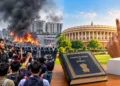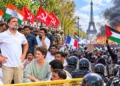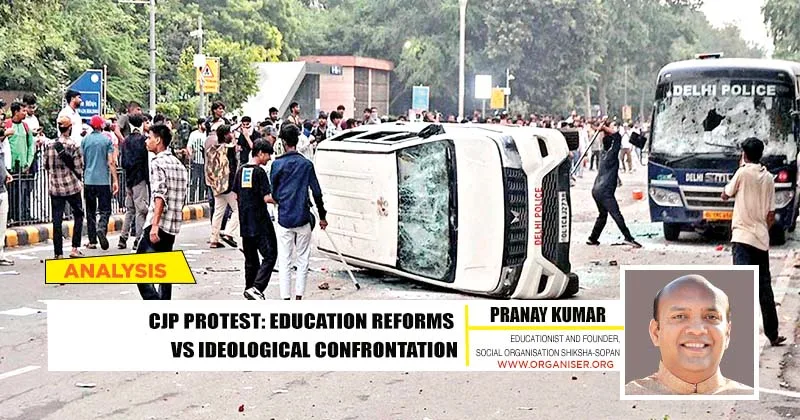
One of the greatest strengths of democracy is that it empowers citizens to express their views, question the Government, and engage in peaceful protest. Dissent is not anti-national; rather, it is an indispensable feature of a healthy democratic order. Whenever incidents such as paper leaks, impersonation, or other irregularities occur in public examinations, it is entirely legitimate for affected students and their families to demand justice. In such situations, the Government, examination-conducting agencies (such as the National Testing Agency), and the investigating authorities have a responsibility to ensure a prompt, impartial, and transparent inquiry, bring those responsible to justice, and introduce systemic reforms to prevent such incidents from recurring.
PM: Exam Paper Leak a ‘Grave Sin’
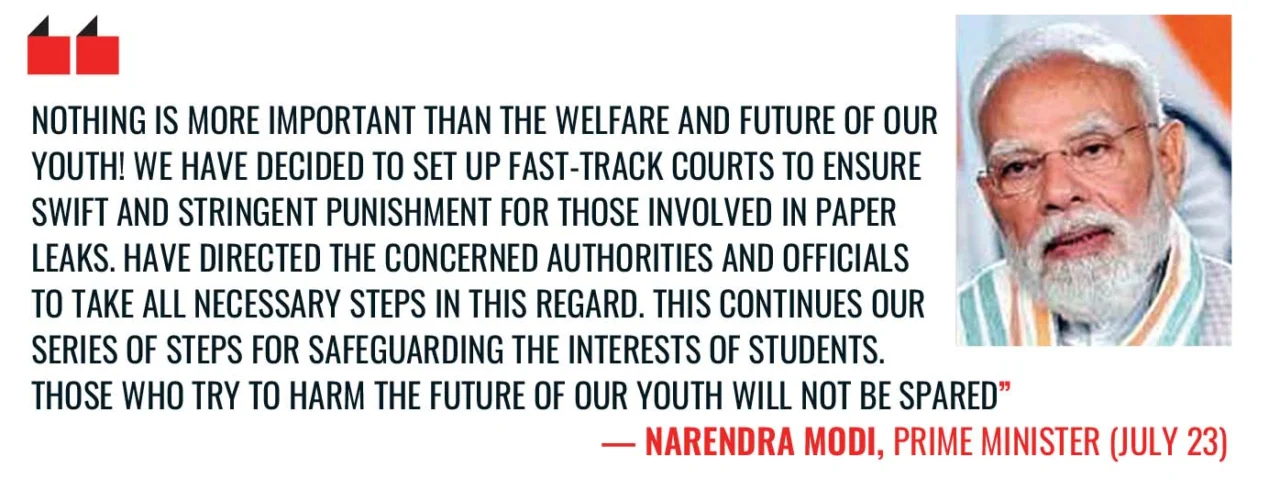
Prime Minister Narendra Modi has rightly described paper leaks as a “grave sin.” His position has been unequivocal: whether it concerns NEET or any other competitive examination, no individual, organised racket, or institution that compromises the future of students should be spared. Ensuring transparency, technological safeguards, accountability, and credibility in the examination system is a primary obligation of the Government. If students, parents, or civil society organisations raise their voices peacefully and constitutionally in pursuit of these objectives, such engagement is both legitimate and welcome in a democracy. However, there is a fundamental distinction between democratic protest and political agitation. The purpose of any public movement should be to seek solutions, improve institutions, and safeguard the larger public interest. When a movement gradually shifts away from its stated objective and becomes a platform for political polarisation, regime change, ideological confrontation, or unrelated causes, legitimate questions inevitably arise about its direction and intent.
Hijacking the Agitation
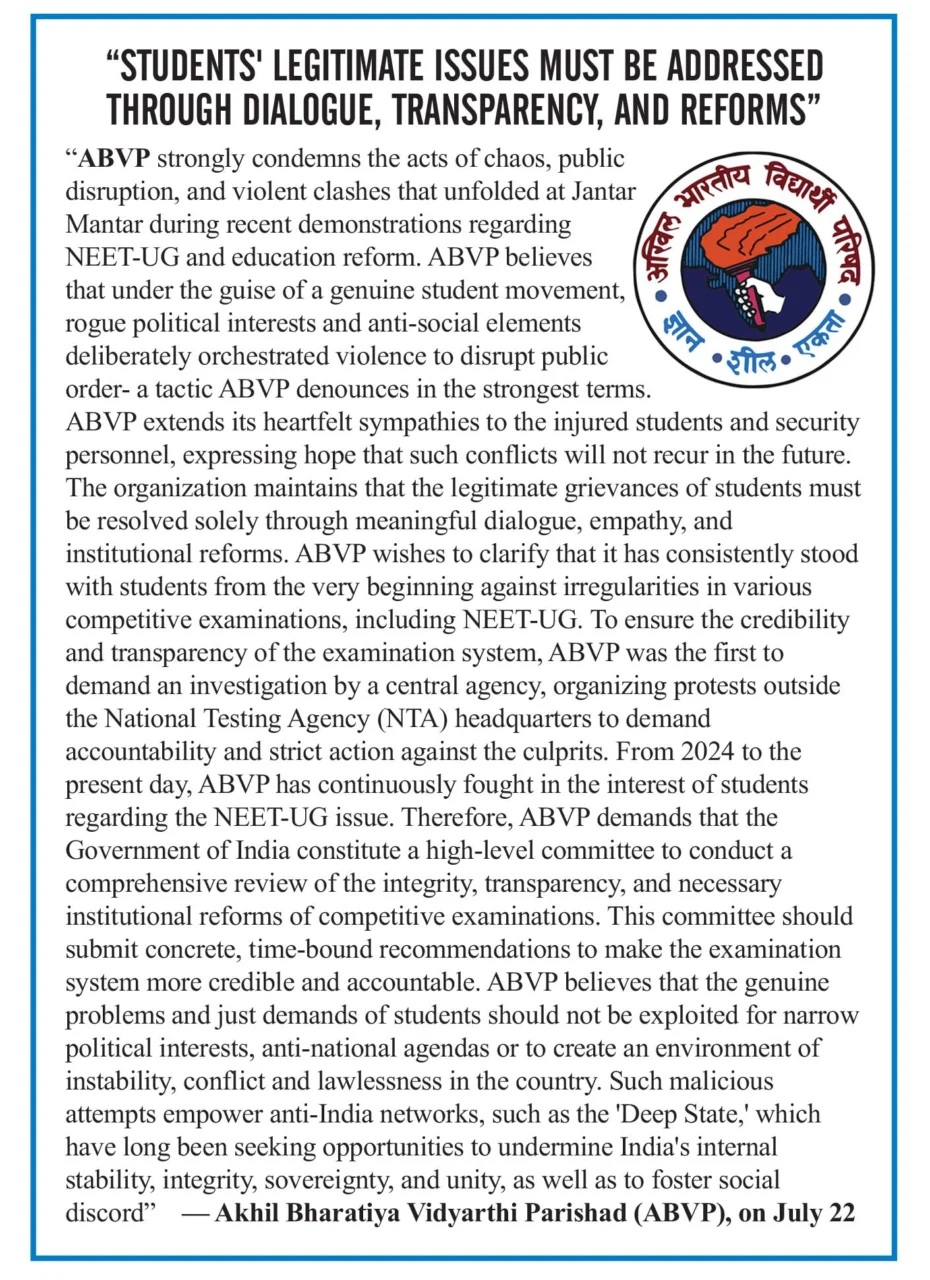
It is precisely these questions that many sections of society are now raising in the context of the ongoing protest at Jantar Mantar. The agitation was initially projected as a campaign for examination reforms and the protection of students’ interests. Over time, however, the visible participation of political parties, ideological organisations, Left-wing student groups, and various pressure groups has led many observers to question whether the movement has remained faithful to its original purpose. Significantly, many of the same organisations and faces that have featured prominently in previous anti-Government protests have once again emerged at the forefront of this mobilisation. This has strengthened the perception among many that the primary objective is no longer educational reform, but the pursuit of a broader political agenda, creating an atmosphere of confrontation and disorder in the national capital in order to attract domestic and international attention. A more fundamental question also deserves consideration. If a movement that claims to be centred around examination reforms begins to provide space for slogans demanding the “liberation of Kashmir,” restoration of Article 370, release of Umar Khalid, campaigns such as “My Gender, My Choice,” anti-RSS and anti-Hindutva rhetoric, derogatory remarks against Hindu deities, slogans perceived as supporting terrorists, calls for freedom from “Brahminism” and “Manuvad,” demands relating to LGBTQ rights, slogans advocating that India should become like Nepal or Bangladesh, objectionable remarks against Premanand Maharaj and Shankaracharya, or slogans directed against the Indian Armed Forces, it is natural for people to question the movement’s actual objectives and ideological orientation. Similarly, serious questions arise if such a platform accommodates performances of songs such as Bas Naam Rahega Allah Ka, speeches by activist Arundhati Roy advocating greater autonomy for Kashmir, making remarks considered offensive towards Hindu saints, symbols, and deities, satirical performances by Kunal Kamra mocking Bhagwan Ram and Goddess Sita, or statements by individuals such as Syed Qasim Rasool Ilyas-father of Umar Khalid – which critics have characterised as anti-India. Can such interventions reasonably be regarded as consistent with a movement dedicated to examination reforms? If not, then the question naturally follows: Is the movement genuinely about improving India’s examination system, or has it evolved into a vehicle for advancing a much broader political and ideological agenda?
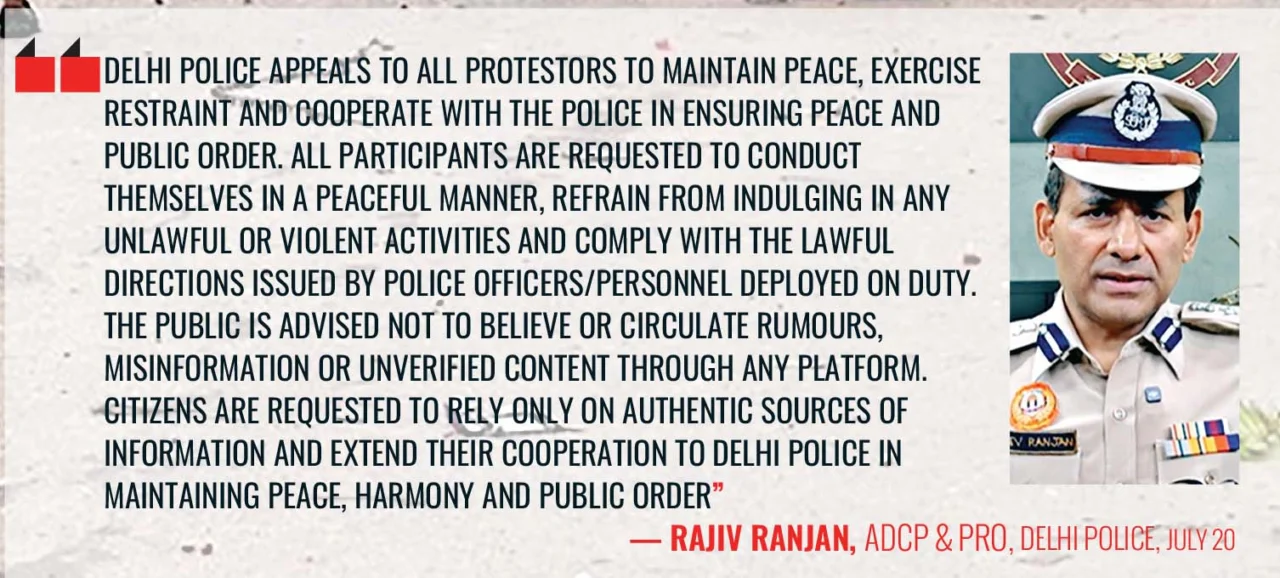
The greatest strength of any public movement lies in its moral credibility and the clarity of its purpose. Public support endures only so long as a movement remains anchored to its stated objective, maintains its moral discipline, and pursues legitimate demands. However, when slogans and narratives unrelated to educational reform, examination integrity, or students’ welfare begin to dominate its platform; when political parties, ideological organisations, pressure groups, or even elements perceived as anti-national seek to advance their respective agendas through it; or when the movement appears to foster social discord, confrontation, and ideological polarisation, its moral legitimacy inevitably begins to erode. The greatest loss is ultimately borne by thousands of sincere students whose only aspiration is a fair, transparent, and credible examination system. Likewise, if a protest results in damage to public property, attacks on security personnel, incitement to violence or disorder, or slogans that undermine social harmony and national unity, such actions fall outside the accepted boundaries of democratic dissent. In such circumstances, the impartial, prompt, and firm enforcement of the law becomes the true test of a democratic state. Freedom of expression cannot be construed as a licence for anti-national activities, violence, hatred, attempts to besiege Parliament, the systematic delegitimisation of public institutions, or the normalisation of anarchy.
Questioning the Agenda
Students, therefore, must recognise that the greatest challenge in any mass movement is distinguishing between its declared objectives and the forces operating behind it. If a student-led agitation begins to receive open support from organisations or individuals with a publicly documented history of separatism, anti-India activities, or violent agendas, it is only natural that serious questions will be raised about the movement’s broader implications. For instance, reports that the pro-Khalistan organisation Sikhs for Justice (SFJ) and its leader, Gurpatwant Singh Pannun, publicly announced financial support of nearly US$1 million for the movement are deeply disturbing. If such claims are indeed accurate, the issue ceases to be merely a student protest and assumes the dimensions of a matter concerning national security and foreign interference. In such circumstances, it would not be unreasonable to suspect that a broader political or even international agenda may be operating under the cover of students’ legitimate concerns. If foreign or anti-India actors are attempting to encourage, finance, or exploit such a movement for their own purposes, a fair and transparent investigation becomes essential, not only in the interest of democratic accountability, but also in safeguarding national security. Ultimately, it is the students themselves who pay the highest price when their aspirations and future are reduced to instruments in larger political or ideological contests.
Prompt action by the Govt
May 3
NEET examination conducted
Within four days, the NTA detected fraud
The very next day, it informed the police
The investigation began
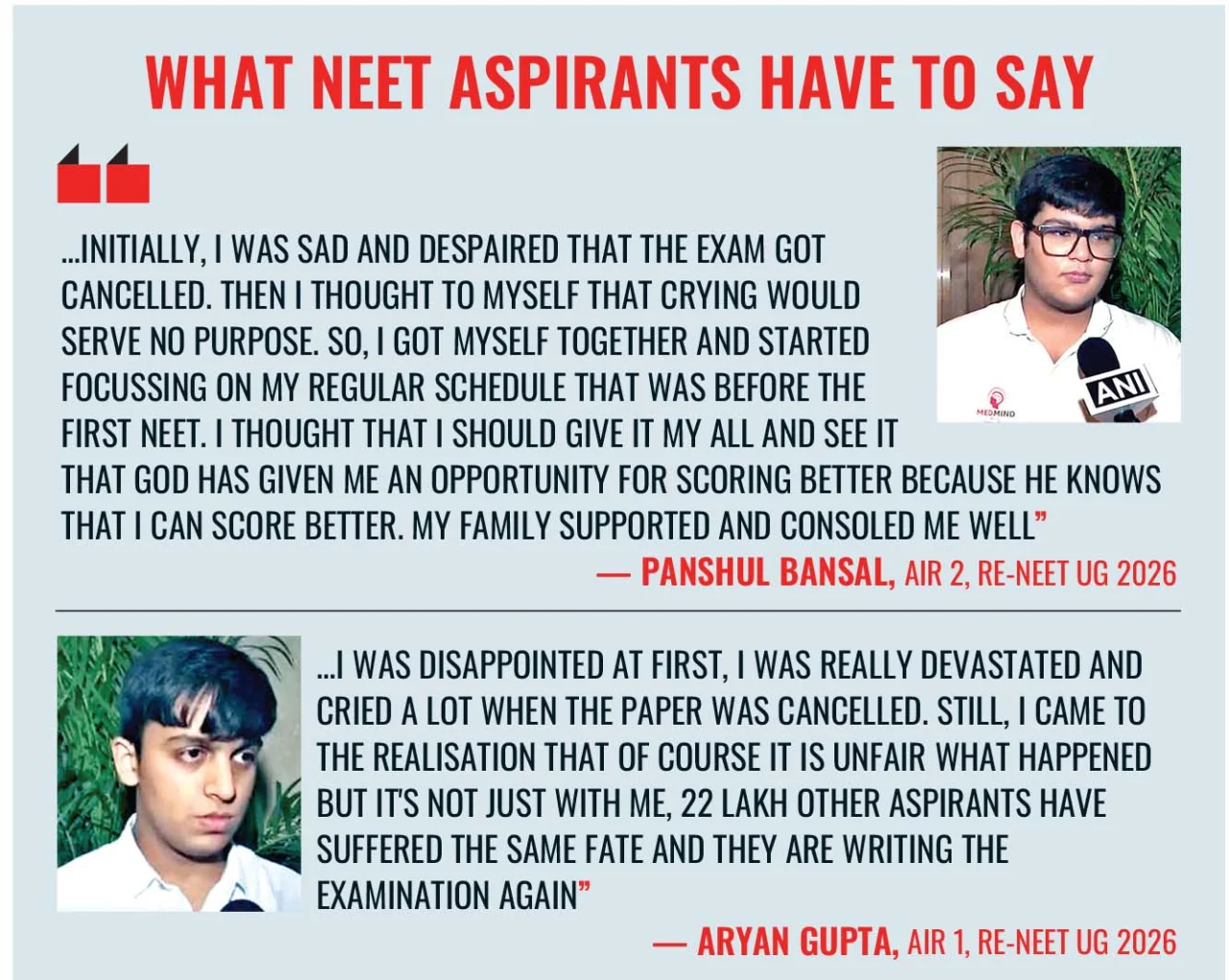
The Government cancelled the May 3 examination
May 12
The Ministry of Education filed a written complaint
The CBI registered the case
Special Investigation Team (SIT) was formed immediately
May 15
Education Minister Dharmendra Pradhan addressed the nation
He apologised
Accepted moral responsibility
Announced the re-NEET schedule
Then came the bigger announcement. From next year, major national examinations would move towards
computer-based, multi-encrypted testing (CBT)
CBI moved fast
Arrests began
The network expanded
Soon, 13 accused were behind bars
June 21
Fresh NEET examination conducted successfully
July 16
Results declared
Now students wait for counselling
Govt Undertaken Several Measures
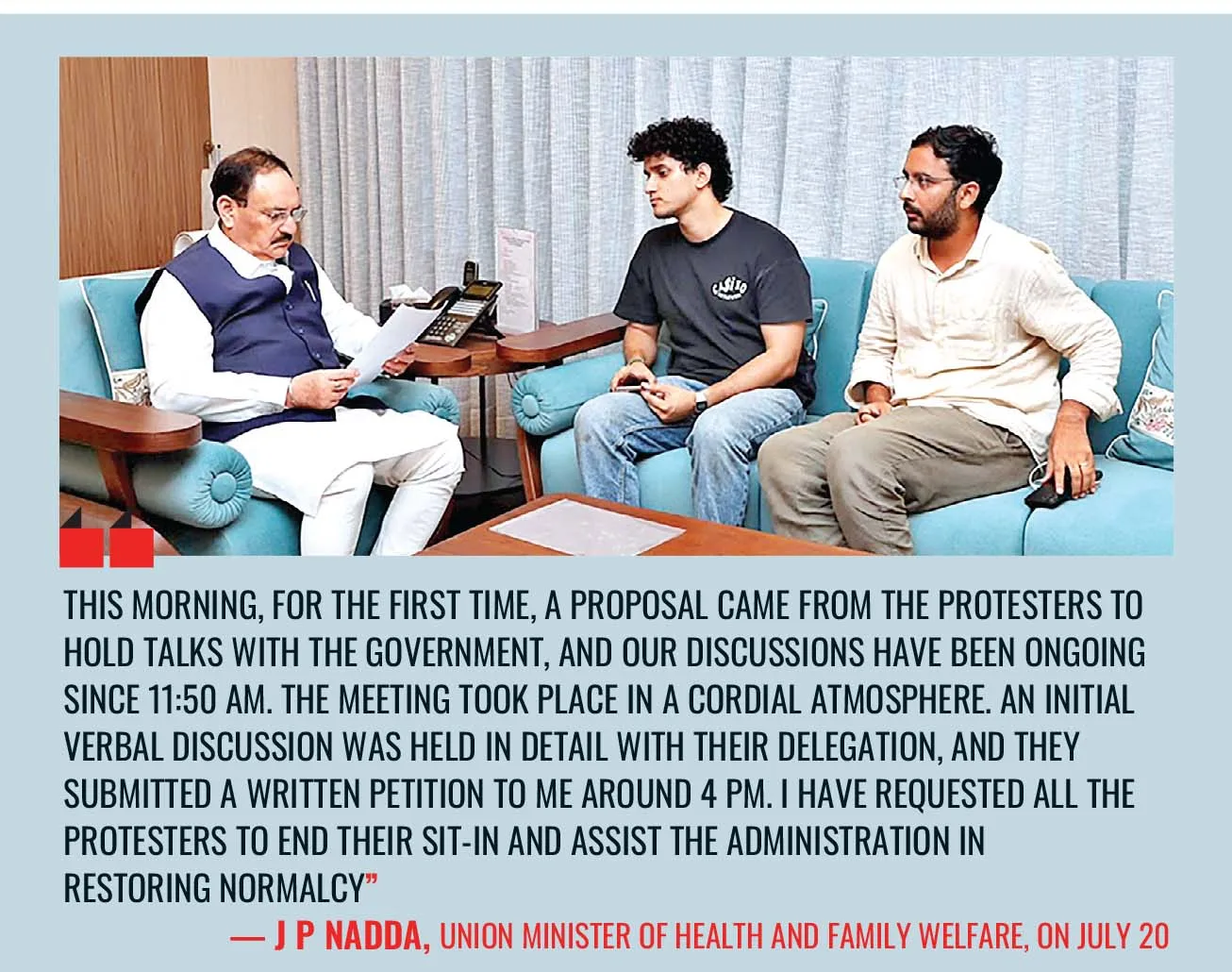
Viewed objectively, another important question naturally arises: Is the protest still centred around examination reforms, or has it gradually evolved into a vehicle for a broader political agenda – or what some describe as a political “toolkit”? Following the controversies surrounding the NEET examination, the present Government has announced or undertaken several measures, including conducting re-examinations where necessary, strengthening transparency and integrity in the examination process, initiating policy interventions to regulate the unchecked influence of coaching institutes, introducing curriculum and textbook reforms in accordance with the National Education Policy, and addressing anomalies reported by students in CBSE examination results. Opinions may legitimately differ regarding the effectiveness of these initiatives.
Opposition’s Track Record
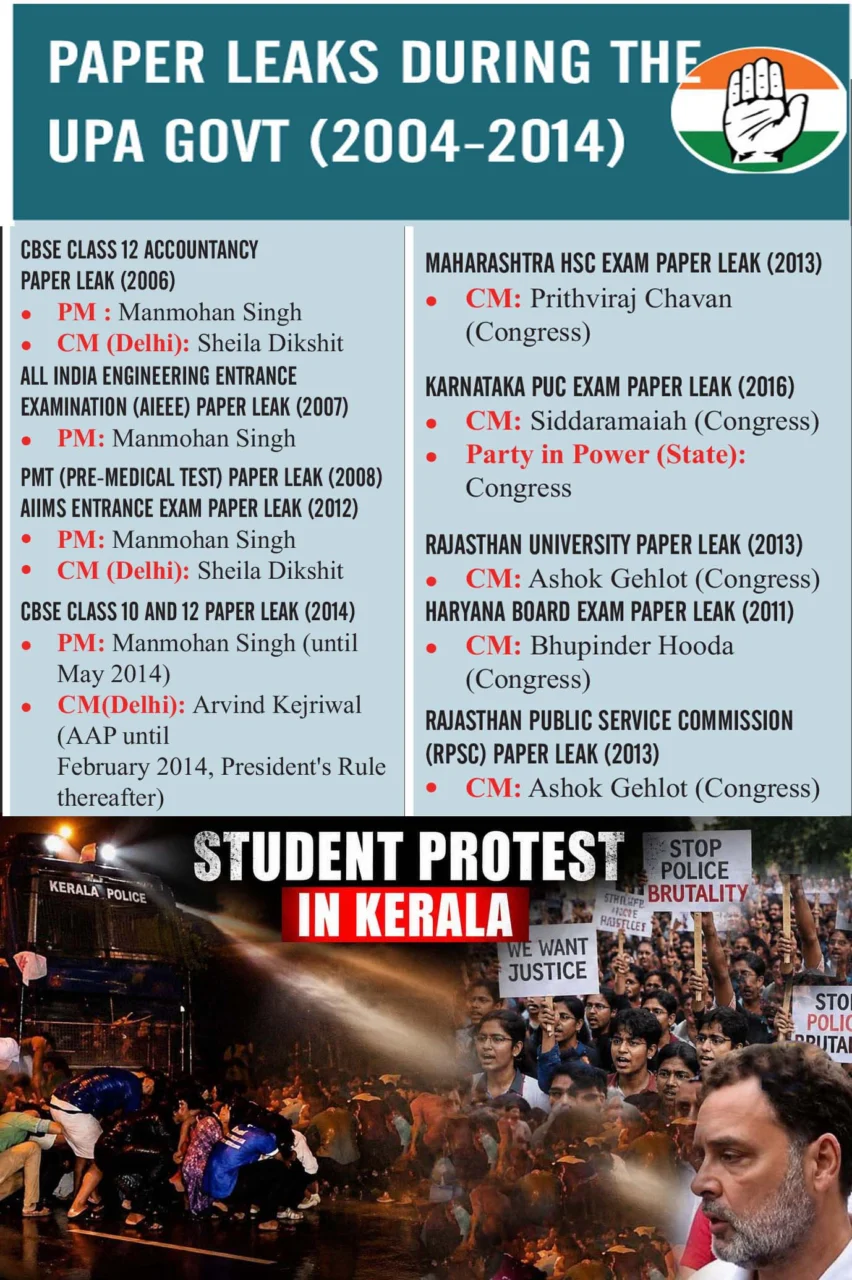
However, the same standard of accountability should equally apply to all political parties and State Governments. If the stated objective of the movement is to establish a transparent, corruption-free, and credible examination system, then the political parties supporting the agitation should demonstrate their commitment by developing exemplary examination systems in the States they govern – models worthy of emulation across the country. Since education falls under the Concurrent List of the Constitution, responsibility for both its successes and its failures rests not only with the Union Government but equally with the State Governments.
The reality is that paper leaks and irregularities in recruitment examinations are not confined to any single political party, State, or Government. During the Congress government in Rajasthan, controversies surrounding the REET examination, police constable recruitment, senior teacher recruitment, Sub Inspector recruitment, and forest guard examinations attracted widespread public attention. In West Bengal, under the Trinamool Congress Government, the School Service Commission (SSC) recruitment scam and disputes relating to D.El.Ed. examinations became major public controversies.
In Bihar, during the Mahagathbandhan government, the BPSC Teacher Recruitment Examination (TRE-3), police constable recruitment, and the Intermediate examination paper controversy remained in the headlines. Jharkhand witnessed serious allegations concerning the JSSC CGL recruitment examination, Punjab faced controversy over pharmacy recruitment examinations, Telangana grappled with the 2023 TSPSC recruitment examination scandal, Maharashtra saw the MAHA TET examination controversy during the Maha Vikas Aghadi Government, and Himachal Pradesh faced serious questions over the JOA (IT) recruitment examination conducted by the State Staff Selection Commission. Similar allegations of paper leaks and irregularities in competitive examinations and recruitment processes have also surfaced periodically in Karnataka, Tamil Nadu, Kerala, and Andhra Pradesh. These instances clearly demonstrate that malpractice in public examinations is not the failure of any one government or political party. It has evolved into a nationwide structural challenge. In such circumstances, a more constructive approach would have been for the political parties supporting these protests not merely to criticise the Union Government, but also to establish transparent, technology-driven, and malpractice-free examination systems in the states they govern, thereby presenting a model worthy of national emulation. Such an approach would undoubtedly have made their criticism more credible and constructive.
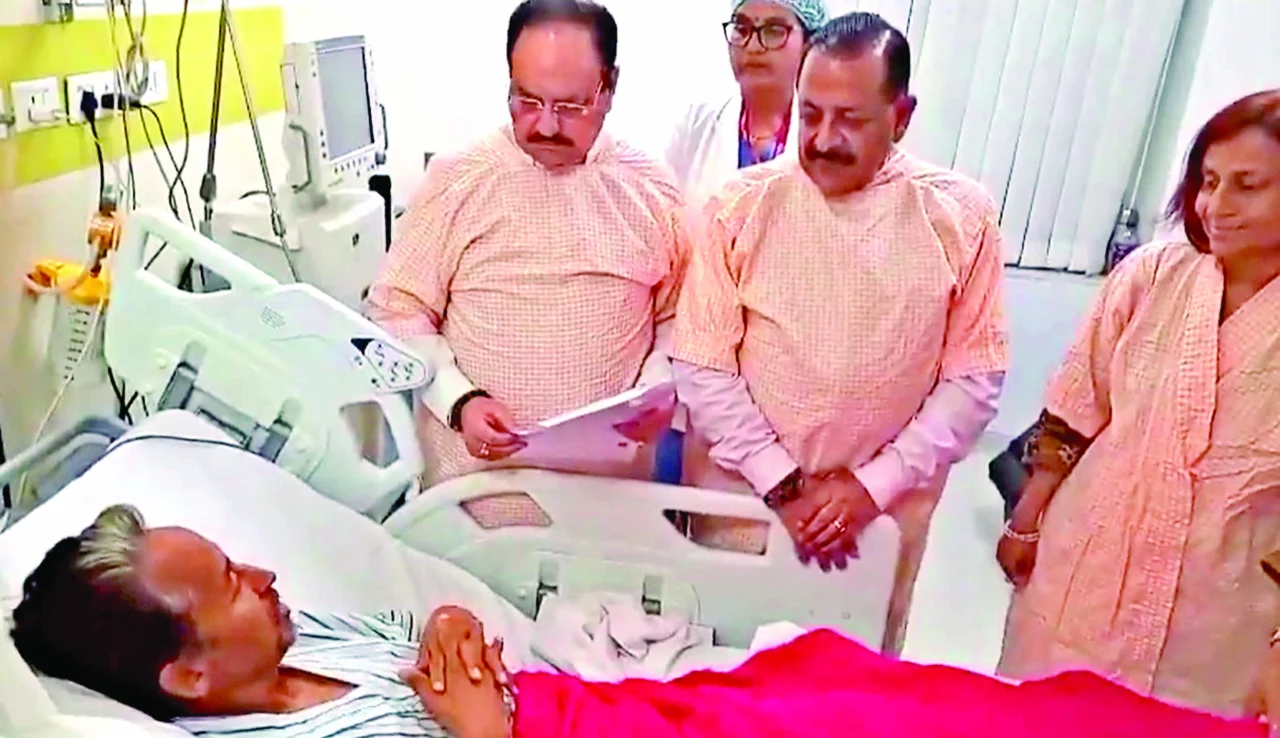
and Jitendra Singh on July 24
Another important question also deserves careful consideration. Is the present agitation genuinely confined to examination reforms, or does it also represent resistance to the ideological changes currently taking place in the education sector? The National Education Policy, curriculum and textbook revisions, the three language policy, and the renewed emphasis on India’s knowledge system have for years remained subjects of opposition within Left intellectual circles. The Left has traditionally regarded education as an effective instrument for establishing ideological influence. Through educational institutions and curricula, it has sought to promote narratives centred around secularism as interpreted by its ideological framework, the Aryan Dravidian divide, the perceived North South binary, the concept of India as a multicultural nation, critiques of Brahminism, and identity based discourses that divide society along caste, class, and other social categories. It is therefore argued that any attempt to redefine the philosophy, objectives, or direction of education is bound to evoke the strongest resistance from those who perceive such changes as a challenge to their long standing intellectual influence. For this reason, some observers believe that Union Education Minister Dharmendra Pradhan has emerged as a principal target of ideological Opposition because of these policy initiatives. It is also a matter of record that almost every Education Minister belonging to the Bharatiya Janata Party, both past and present, has faced sustained criticism and campaigns from Left leaning groups. Even a scholar of the stature of Dr. Murli Manohar Joshi was not spared such opposition. Consequently, many analysts argue that even if the present Education Minister to resigns, the movement in its current form might not come to an end, since the political aspirations of Opposition parties appear to have become increasingly intertwined with it.
At the same time, the youth of the country, students, and all well meaning citizens must recognise that if a universally accepted objective such as examination reform is transformed into an instrument of ideological conflict or political power struggle, the greatest casualty will be the credibility of the education system and the confidence of students. Neither will the examination system improve, nor will public trust in people’s movements survive. The experience of the Anna Hazare movement and the political developments that eventually led to the emergence of the Aam Aadmi Party demonstrates that once political ambitions begin to dominate public movements, their original purpose gradually recedes and public confidence suffers lasting damage. The need, therefore, is not to stand either for or against any particular Government or political personality, but to keep education, examinations, and the future of students above ideological confrontation and partisan politics. That alone would serve the larger interests of democracy, education, and the nation. Furthermore, if the Government continues to publicly reaffirm its commitment to conducting malpractice-free examinations and to strengthening transparency and integrity through concrete institutional reforms, prolonging the agitation indefinitely merely to sustain the protest can scarcely be regarded as serving either the interests of students or those of the education system.