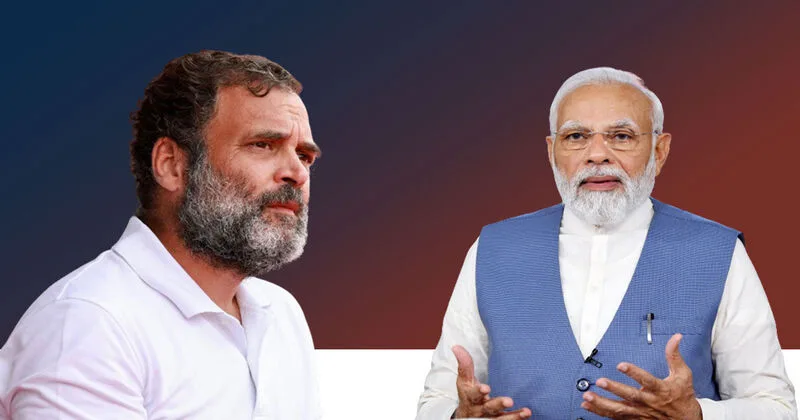
Political slogans may dominate headlines, but governments are ultimately judged by the opportunities they create. From education and entrepreneurship to manufacturing, technology and sports, PM Narendra Modi’s decade in office reflects a sustained strategy to prepare India’s young population for the challenges and opportunities of the twenty-first century.
Rahul Gandhi’s assertion that Prime Minister Narendra Modi is “the most anti-youth prime minister in India’s history” may be an effective political slogan, but it collapses under the weight of evidence. In a democracy, criticism of the government is both legitimate and necessary. Yet criticism must be rooted in facts rather than rhetoric. Governments are not judged by speeches alone; they are judged by the opportunities they create, the institutions they build and the futures they enable.
By those measures, PM Narendra Modi’s record on youth empowerment is arguably unmatched in independent India. The Modi government has approached governance with one central conviction: India’s demographic dividend is a once-in-a-civilisation opportunity that cannot be wasted. Nearly 65 per cent of India’s population is below the age of 35, making it one of the youngest nations in the world.
However, this advantage is temporary. Countries such as Japan, China, South Korea, and much of Europe have already witnessed the economic consequences of ageing populations. India, too, will eventually face a similar demographic transition. The coming two decades therefore represent a narrow but historic window to convert youthful numbers into productive national strength.
Prime Minister Modi has repeatedly argued that India must emerge not merely as the world’s most populous country but as the world’s most skilled workforce, largest entrepreneurial hub, and strongest innovation ecosystem before this demographic advantage disappears. Viewed through this lens, almost every major reform undertaken since 2014 reflects a coherent long-term strategy centred on India’s youth.
The first pillar of this strategy has been an unprecedented expansion of educational opportunities.
When PM Modi government assumed office in 2014, India had approximately 387 medical colleges. Today, that number has crossed 780. MBBS seats have increased from around 51,000 to over 1.30 lakh, while postgraduate medical seats have expanded from nearly 31,000 to more than 74,000. These are not merely administrative achievements; they represent lakhs of additional opportunities for aspiring doctors who would otherwise have faced limited access to professional education.
The expansion has extended to India’s premier institutions as well. The number of Indian Institutes of Technology (IITs) has increased from 16 to 23, Indian Institutes of Management (IIMs) from 13 to 21 and Indian Institutes of Information Technology (IIITs) from just nine to twenty-six. Simultaneously, the National Education Policy 2020 has attempted to modernise India’s education system by promoting multidisciplinary learning, greater academic flexibility, multiple entry and exit options and stronger integration between education, research and industry.
The objective has been clear: produce graduates equipped not merely with degrees but with the adaptability demanded by a rapidly changing global economy.
Recognising that formal education alone cannot guarantee employment, the government simultaneously expanded apprenticeship programmes through the National Apprenticeship Promotion Scheme (NAPS) and the National Apprenticeship Training Scheme (NATS). Millions of young Indians are now able to gain practical industrial exposure before entering the workforce, reducing the persistent disconnect between classrooms and workplaces.
Complementing these reforms has been the ambitious Skill India Mission.
For decades, employers consistently highlighted a paradox within India’s labour market: millions of graduates, yet a shortage of industry-ready skills. Skill India sought to bridge this gap systematically. Through the Pradhan Mantri Kaushal Vikas Yojana (PMKVY) and allied initiatives, more than four crore young Indians have received skill training across diverse sectors ranging from manufacturing and healthcare to logistics, hospitality and emerging technologies.
In an economy increasingly shaped by automation and digital transformation, employability depends as much on skills as on academic qualifications. The Modi government recognised this reality early and sought to align workforce development with industry requirements.
Skilling alone, however, is meaningful only when employment opportunities exist.
This explains the government’s parallel emphasis on reviving manufacturing. Through the Production Linked Incentive (PLI) schemes spanning fourteen strategic sectors, nearly ₹2 lakh crore has been committed to encourage domestic manufacturing and attract global investment. The results are already visible. Investments exceeding ₹1.7 lakh crore have translated into production worth over ₹16 lakh crore while generating more than 12 lakh direct and indirect jobs, with significantly higher employment expected as projects mature.
Industries such as electronics, mobile manufacturing, pharmaceuticals, telecom equipment, automobiles, batteries and semiconductors have emerged as major employment generators. India, once heavily dependent on imports for electronics, has become one of the world’s largest mobile phone manufacturers. These developments are not abstract macroeconomic statistics; they directly create employment opportunities for millions of young Indians entering the labour market each year.
Perhaps the Modi government’s most enduring contribution, however, lies in reshaping the aspirations of India’s youth. For decades, success was largely equated with securing a government job. Modi sought to redefine this mindset by encouraging young Indians to become entrepreneurs rather than merely job seekers.
When Startup India was launched in 2016, India’s startup ecosystem remained relatively small. Today, the country has over 1.8 lakh DPIIT-recognised startups, making India the world’s third-largest startup ecosystem. Collectively, these enterprises have created more than 19 lakh direct jobs while producing over one hundred unicorns valued at over one billion dollars each.
This remarkable transformation did not occur spontaneously. It was enabled through simplified regulations, easier access to funding, tax incentives, incubation support and institutional reforms that lowered barriers for first-generation entrepreneurs. Thousands of young innovators who may never have considered entrepreneurship now view it as a realistic career path.
Equally significant has been the government’s decision to open entirely new sectors to private enterprise.
India’s space sector, once the exclusive domain of government agencies, now welcomes private participation. Companies such as Skyroot Aerospace have already demonstrated that Indian startups can compete in one of the world’s most technologically sophisticated industries. Similar policy support has been extended to drones, renewable energy, green hydrogen, semiconductor manufacturing and artificial intelligence.
The India AI Mission reflects an understanding that future economic leadership will belong to nations that dominate frontier technologies. Preparing India’s youth for AI-driven industries is therefore not merely an economic priority but a strategic necessity.
Youth development extends beyond classrooms and workplaces.
The transformation of India’s sporting ecosystem under the Khelo India Programme deserves equal attention. For decades, talented athletes struggled due to inadequate infrastructure, limited coaching and inconsistent financial support. Khelo India has fundamentally altered this landscape through investments in grassroots talent identification, scientific coaching methods and world-class sports infrastructure.
Thousands of young athletes today receive structured support, scholarships and competitive exposure. The impact has become increasingly visible through India’s improved performances at the Olympics, Asian Games and Commonwealth Games. As India pursues its ambition to host the 2036 Olympic Games, the country is investing not simply in stadiums but in nurturing an entire generation of sporting talent.
The government’s youth-centric approach also extends into democratic participation.
The Women’s Reservation Act, once implemented following delimitation, will substantially increase opportunities for women in legislatures. Equally important, the forthcoming delimitation exercise itself will expand parliamentary representation, creating space for more first-generation political leaders and young Indians from outside traditional political families.
Ironically, many opposition parties that claim to champion youth empowerment have resisted delimitation and questioned the implementation of women’s reservation. Genuine democratisation requires expanding participation rather than preserving existing political monopolies. A larger Parliament, greater representation and broader opportunities for emerging leaders can only strengthen Indian democracy.
None of this suggests that every government policy is beyond criticism. Democracies thrive on debate, accountability and constructive scrutiny. There remain genuine challenges relating to unemployment, quality of education, labour force participation and regional disparities that require sustained policy attention. However, acknowledging these challenges is entirely different from claiming that the government has been “anti-youth”.
No previous government has simultaneously expanded higher education on this scale, invested so extensively in skilling, built one of the world’s largest startup ecosystems, opened sunrise sectors such as space and artificial intelligence to private innovation, revitalised manufacturing through PLI incentives, transformed grassroots sports development, and initiated structural reforms that could widen political participation.
Rahul Gandhi’s allegation may generate headlines and energise political rallies, but it does not withstand serious examination. The evidence points in precisely the opposite direction.
PM Narendra Modi recognised early that India’s demographic dividend was both a historic opportunity and a ticking clock. Much of his governance over the past decade has been dedicated to ensuring that India’s youth are educated, skilled, entrepreneurial, technologically capable and globally competitive before that window begins to close.
Political slogans come and go. Institutions endure. Opportunities endure. The measure of any Prime Minister lies not in the accusations of political opponents but in the legacy left for the next generation. Judged by that standard, it is difficult to argue that any Indian Prime Minister has placed India’s youth more consistently at the centre of national policy than PM Narendra Modi.