Kolkata: A protest in the name of students should remain a protest for students. Every citizen has the democratic right to assemble peacefully and raise genuine concerns. However, when a movement begins to borrow unrelated political causes and international narratives, it ceases to be merely a student movement and becomes a political platform.
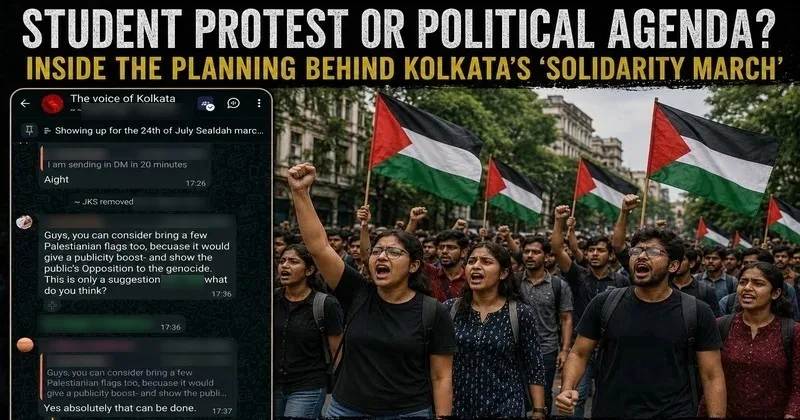
An authentic screenshot from the planning group of the proposed student solidarity march in Kolkata raises precisely this concern. The internal conversation reveals that organisers discussed carrying Palestinian flags during the march—not because the protest concerns Palestine, but because, as one participant openly suggested, it would “give a publicity boost” and demonstrate opposition to the conflict in Gaza. Another member immediately supported the proposal, replying, “Yes absolutely that can be done.”
This is no longer a matter of speculation. The discussion clearly indicates an attempt to attach an international political issue to a protest that is publicly being presented as a solidarity march for students. The obvious question is: if the march is genuinely about students, why is there a deliberate attempt to introduce the Palestine issue?
Student movements have historically been powerful instruments for democratic change. But history also shows that political organisations often use student platforms to advance broader ideological objectives. What begins as a movement over campus issues can quickly become a stage for unrelated political campaigns.
India has witnessed this pattern before. During several protests in Delhi over the past few years, issues initially projected as student or civil-rights concerns gradually expanded into wider ideological battles. Political groups and activists attempted to transform local grievances into larger national and international campaigns. Those developments sparked widespread debate over whether genuine student concerns were being overshadowed by organised political interests. Now, similar signs appear to be emerging in Kolkata.
The planning group’s discussion is particularly concerning because the proposal was not about supporting student demands. Instead, it was about using Palestine-related symbolism to attract greater publicity. That reflects a conscious communication strategy rather than spontaneous solidarity.
This development also deserves attention from a national security perspective. Importing highly polarising international conflicts into domestic protests risks creating unnecessary social tension and diverting attention from legitimate local issues. While expressing opinions on global events is protected under democratic freedoms, using a student protest as a vehicle for unrelated geopolitical messaging raises valid questions about the organisers’ priorities and intentions.
The concern is not about whether individuals may hold opinions on Palestine or any other international issue. They certainly may. The concern is whether a protest announced in the name of students is being used to pursue a broader political agenda without clearly informing participants and the public. Students who attend believing they are joining a march solely for educational concerns deserve transparency. Parents, educational institutions, and the wider public also deserve to know whether the event is genuinely about students or whether it is being shaped into an ideological mobilisation.
The authentic planning-group conversation speaks for itself. It suggests that sections of the organisers are willing to shift the focus from student issues to an international political narrative for greater visibility. That is a serious development and one that should invite public scrutiny. If this march is truly for students, then let it remain about students. Genuine student concerns should not become a convenient backdrop for unrelated political messaging. Public trust depends on honesty, transparency, and keeping a movement faithful to the cause it claims to represent.