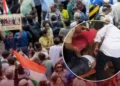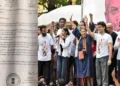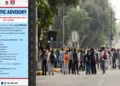

NEW DELHI: A protest organised by the Cockroach Janta Party (CJP) at Jantar Mantar on July 20, which was initially projected as a demonstration against the NEET paper leak and a demand for the resignation of Union Education Minister Dharmendra Pradhan, turned violent after clashes broke out between protesters and the police.
According to reports, some protesters pelted stones and vandalised police vehicles, resulting in injuries to more than 50 police personnel. An independent journalist present at the site also reportedly stated that stone-pelting had taken place from the protesters’ side. The incident has triggered a wider political controversy, with questions being raised about the composition of the gathering and whether it remained a students’ protest throughout.
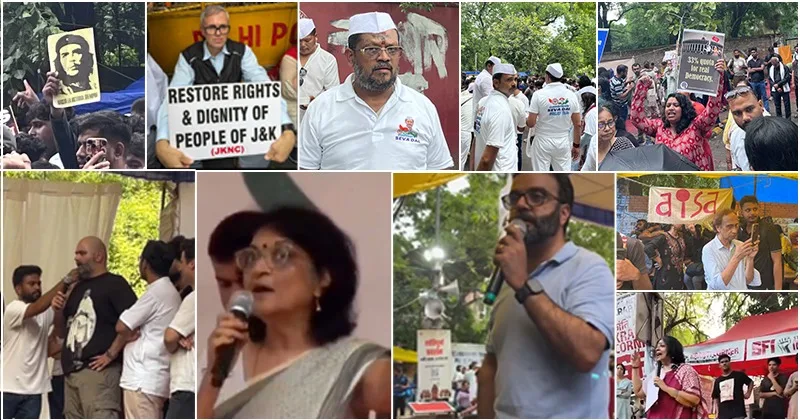
The protest reportedly began over alleged irregularities in the NEET examination and demands for accountability in the education system. However, videos circulating on social media appeared to show participants raising a range of political and religious slogans that were not directly connected to the NEET issue.
Some clips allegedly included chants such as “Bas naam rahega Allah ka.” Comedian Kunal Kamra, who has previously been involved in controversies over remarks criticised as anti-Hindu, was also seen making the statement, “Sita ke pati ka naam lekar Nita ke pati ka kaam kar rahi hai ye sarkar.”
Photos of Che Guevara were also being waved there. Che Guevara is widely viewed by his critics as a villain and a brutal ideologue due to his role in establishing a repressive dictatorship in Cuba and his support for the execution of political dissidents.
Another viral clip purportedly showed a participant saying that “Muslims are a hundred thousand times better than Hindus and that it was better to have Muslim friends than Hindu friends”. Critics have cited such videos that the gathering had moved beyond the issue of students’ concerns. Members of the protest were also accused of making derogatory remarks about spiritual guru Premanand Ji Maharaj during the demonstration.
Some independent journalists present at the site reportedly stated that stone-pelting by protesters led to the subsequent police lathi-charge. Critics have argued that, if the protest was entirely peaceful, questions arise about where the stones came from and whether the violence had been pre-planned. Videos from the protest site showed the presence of members of AISA, the student organisation associated with CPI(ML), and SFI, the student wing of CPI(M). Critics alleged that slogans using abusive language against Prime Minister Narendra Modi were raised during the protest, including remarks such as “Bharat inki mata hai… par ye baap dhoond rahe hain” and other offensive slogans which cannot be written. Some participants were also heard saying, “Mandir banwa kar kya kar loge?” These developments have led to questions about whether the protest was primarily a gathering of NEET aspirants or a broader mobilisation involving organised political groups.
Apart from examination-related issues, some participants reportedly raised demands related to women’s reservation, gender rights, and other social issues. Slogans such as “Mera Ling, Meri Marzi,” “Mera Gender, Meri Marzi,” and “Mere Kapde, Meri Marzi” were allegedly heard from the stage. Instead of questioning the political parties that didn’t vote in the favour of Women’s Reservation Bill in the parliament, they were linking that issue with this protest.
And for those claiming that no political party was involved in the protest, active Congress members were also reportedly present at the site, raising further questions about the extent of political participation in what was initially presented as a students’ movement.
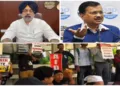
The protest also drew reactions from several political figures. Arvind Kejriwal and Manish Sisodia demanded that Sonam Wangchuk be considered for the post of Education Minister of India. Critics pointed out that the AAP government in Punjab had earlier ordered a lathi-charge on MGNREGA workers, accusing the party of adopting contradictory positions.
NCP leader Sharad Pawar visited the protest site, while Aga Syed Ruhullah Mehdi, MP from Srinagar, raised the issue of the restoration of Article 370. Umar Abdullah, Chief Minister of Jammu and Kashmir, also reportedly raised the demand for statehood for Jammu and Kashmir from the protest platform. These interventions indicated that the protest had expanded far beyond the concerns of NEET aspirants.
Delhi Police maintained that the protest was held without permission and that prohibitory orders under Section 163 of the Bharatiya Nagarik Suraksha Sanhita (BNSS) were in force at the time. Meanwhile, a social media post that has gone viral that claimed that Bangladesh’s Jamaat-e-Islami had expressed support for the protest.
The presence of political figures at Jantar Mantar has shifted attention from the original issue of the NEET paper leak to the broader character of the protest. While the demonstration which allegedly began as a campaign focused on examination grievances and accountability, the presence of political organisations, the raising of unrelated political demands, and the participation of political leaders have fuelled debate over whether it remained a genuine students’ protest or evolved into a wider political platform.