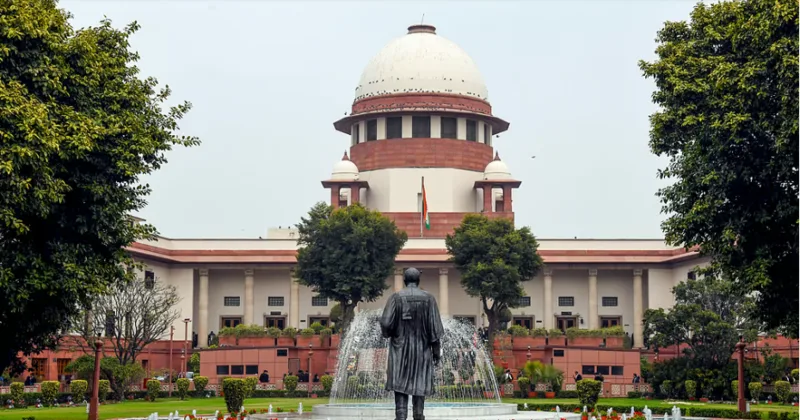
The Central government on July 20, introduced the Supreme Court (Number of Judges) Amendment Bill, 2026 in the Lok Sabha to replace the ordinance that increased the sanctioned strength of the Supreme Court by four judges.
The Bill, introduced by Union Law and Justice Minister Arjun Ram Meghwal, seeks to provide legislative approval to the ordinance under which the strength of the apex court was increased from 34 to 38 judges, including the Chief Justice of India.
The legislation was introduced amid slogan-shouting by Opposition members over the NEET paper leak controversy and the alleged theft of donations at the Ram Janmabhoomi Temple.
According to the Statement of Objects and Reasons attached to the Bill, the increase in the number of judges is aimed at addressing the growing backlog of cases in the country’s highest court.
The government stated that 92,101 cases were pending before the Supreme Court as of January 1, 2026, highlighting the urgent need to strengthen judicial capacity.
The Bill notes that despite the Supreme Court functioning at or near its sanctioned strength of 34 judges since 2019, the inflow of fresh cases has consistently exceeded the number of matters disposed of each year.
During the period cited in the Bill, the apex court received 75,410 fresh cases, while 65,615 cases were disposed of, resulting in a widening gap between new filings and case disposal.
According to the government, this continuing imbalance has contributed to the growing pendency of cases, particularly older matters and those requiring adjudication by larger Constitution Benches.
The government has argued that increasing the sanctioned strength of judges is one of the most practical and immediate measures to improve the functioning of the Supreme Court.
It stated that a larger judge strength would enable the Chief Justice of India to constitute Constitution Benches on a regular basis to hear cases involving substantial questions of constitutional and legal interpretation, while allowing other benches to continue hearing routine matters.
The Union Cabinet had approved the proposal to increase the number of Supreme Court judges in May this year. Subsequently, the Centre promulgated an ordinance to implement the decision while Parliament was not in session.
Following the ordinance, the sanctioned strength of the apex court increased to 38 judges, including the Chief Justice of India, and five judges were appointed under the revised strength.
The Bill introduced in Parliament now seeks to replace the ordinance and provide it with statutory backing.
The Lok Sabha has also admitted a statutory resolution moved by Opposition members opposing the ordinance.
Under parliamentary procedure, ordinances issued by the President when Parliament is not in session must be approved by both Houses within six weeks of Parliament reconvening. If not approved within the prescribed period, the ordinance ceases to operate.
The Bill requires only a simple majority for passage, as it does not involve any amendment to the Constitution.
If enacted, the legislation will formally increase the sanctioned strength of the Supreme Court to 38 judges, a move the government says is necessary to reduce judicial delays, improve case disposal and facilitate regular hearings by Constitution Benches.