Bhubaneswar: The annual Rath Yatra in Puri continues to unfold its rich tapestry of rituals and traditions, with Hera Panchami emerging as one of the most emotionally symbolic observances. This unique ritual captures the divine interplay between Mahaprabhu Jagannath and Maa Lakshmi, blending spiritual beliefs with deeply human emotions.
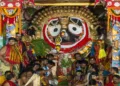
Earlier in the festival, Mahaprabhu Jagannath, accompanied by his elder brother Balabhadra and sister Subhadra, embarked on the grand journey to the Gundicha Mandir, considered their maternal aunt’s abode. However, Mahaprabhu did not take Maa Lakshmi along, nor inform her about the yatra, setting the stage for the dramatic observance of Hera Panchami.
Maa Lakshmi’s Symbolic Anger Takes Centre Stage
Maa Lakshmi, revered as a symbol of dignity and self-respect, is believed to feel slighted by Mahaprabhu Jagannath’s departure without her. The Hera Panchami ritual, observed on the fifth day of the Rath Yatra, depicts her emotional response in a symbolic yet powerful manner.
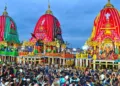
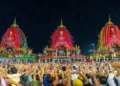
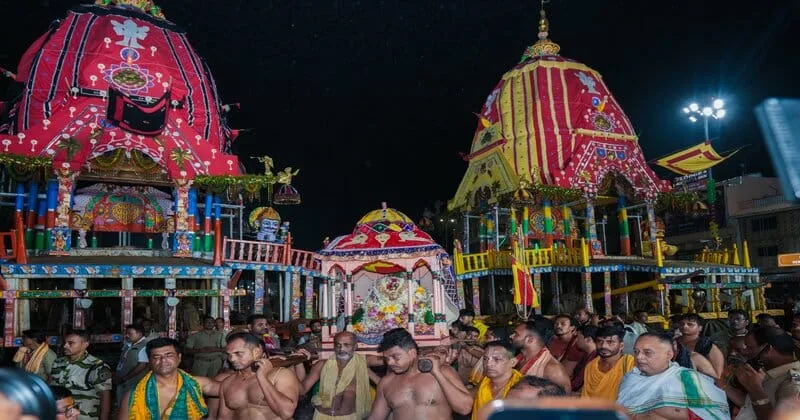
Adorned in traditional attire and accompanied by servitors and attendants, Maa Lakshmi ceremonially proceeds from the Jagannath Mandir toward the Gundicha Mandir. The procession draws large crowds, with devotees gathering along the Grand Road (Bada Danda) to witness the divine spectacle.
ପବିତ୍ର ହେରା ପଞ୍ଚମୀ ଉପଲକ୍ଷେ, ମା' ମହାଲକ୍ଷ୍ମୀ ଶ୍ରୀମନ୍ଦିରରୁ ଶ୍ରୀଗୁଣ୍ଡିଚା ମନ୍ଦିର ଅଭିମୁଖେ ବିଜେ ହେଉଥିବାର ଓ ନନ୍ଦିଘୋଷ ରଥ ନିକଟରେ ନୀତି ସମ୍ପାଦନର ଅପରୂପ ଦୃଶ୍ୟ। pic.twitter.com/yQMXX37XbN
— Shree Jagannatha Temple, Puri (@JagannathaDhaam) July 20, 2026
Before beginning her journey, tradition holds that Mata Lakshmi visits Maa Vimala to seek guidance. According to temple lore, Maa Vimala offers Mohachurna (love potion), which Maa Lakshmi takes with her to Gundicha Temple on Hera Panchami.
Rituals at Gundicha Mandir and the Symbolic Breaking of Nandighosha
Upon reaching Saradhabali, the sandy stretch near the Gundicha Mandir, elaborate rituals are performed. Offerings such as Prasad, Bandapana, Chamara Seva, and Alata rituals mark the ceremonial welcome of the Maa. Traditional offerings including Ghassa, Bidiya, and Dahipati Manohi are also presented.
— Shree Jagannatha Temple, Puri (@JagannathaDhaam) July 20, 2026
Mata Lakshmi proceeds to the Jay-Vijay Dwara of the Jagamohan at the Gundicha Mandir, where servitors offer her the Agyan Mala from Mahaprabhu Jagannath, symbolising acknowledgement and a subtle reconciliation. The temple doors are then ceremonially closed, maintaining the sanctity of the divine interaction.
The highlight of Hera Panchami is the symbolic act of anger. As part of the ritual, servitors break a portion of the Hansapata—a decorative element of Mahaprabhu Jagannath’s chariot, Nandighosha. This act represents Maa Lakshmi’s displeasure at being left behind during the Rath Yatra.
Return Journey Through Nakachana Gate
Despite the symbolic reconciliation, the ritual retains its dramatic essence. Mata Lakshmi exits through the Nakachana Dwara of the Gundicha Mandir, still expressing her displeasure in a ceremonial manner.
During her return to the Jagannath Temple, rituals such as Bandapana and Dahipati Manohi are once again performed. The act of breaking a part of the chariot during her return remains a powerful visual and spiritual moment, leaving devotees deeply moved.
Delay in Rituals, Devotees Remain Undeterred
This year, the Hera Panchami rituals experienced a delay of over three hours due to the extended Mahaprabhu Jagannath rituals at the Gundicha Temple. Consequently, the ceremonial procession of Mata Lakshmi took place late into the night.
Earlier, the Banakalagi ritual was followed by the Mahasnan and other morning rituals, concluding at 7:35 am. The day’s schedule at Gundicha Temple commenced with Mangal Alati at 8:15 AM, followed by Abakash, Gopal Ballav Puja, Sakal Dhupa, Bhog Mandap, Yatrangi Mahasnan, Ghanta Chhata, and Nua Lagi Besha, which extended into the evening. Subsequent rituals, including Madhyahna Dhupa and the second Bhog Mandap, further prolonged the schedule, causing the significant delay.
Despite the late hours, thousands of devotees lined the Bada Danda, expressing spiritual fulfilment and gratitude for witnessing the sacred ritual.
Hera Panchami is also associated with the preparation of Phuluri Oil, an important element in temple traditions. This oil is utilised during the Anasara period when Mahaprabhu Jagannath and his siblings are said to fall ill after Snana Purnima.
Notably, the oil prepared on Hera Panchami is buried underground to mature and is subsequently used in the following year’s rituals. This practice underscores the cyclical and deeply rooted traditions of the Jagannath culture.
Dakshina Moda: Preparing for the Return Journey
As Hera Panchami concludes, preparations begin for the Bahuda Yatra—the return journey of the deities to the Jagannath Temple. A pivotal ritual in this phase is Dakshina Moda, or the southward turning of the chariots.
Unlike the main Rath Yatra, where chariots are pulled only forward, Dakshina Moda involves attaching ropes to both the front and rear to reposition the chariots toward the Nakachana Gate. This careful manoeuvring ensures their proper alignment for the return journey.
Another notable variation is the change in the pulling order. While Balabhadra’s chariot (Taladhwaja) leads during Rath Yatra, Dakshina Moda commences with Subhadra’s chariot, followed by Taladhwaja and Nandighosha.
Historically, elephants assisted in turning the massive chariots by pushing them from behind. This practice has since been discontinued, with trained servitors now managing the process using ropes and coordinated effort.
Modern Improvements Ease the Process
In earlier decades, the Dakshina Moda ritual could take up to two days due to uneven terrain and waterlogging near the Gundicha Mandir. Today, improved infrastructure has streamlined the process, allowing for completion within a single day. Servitors such as Ghantua (bell ringers) and Dahuka (traditional announcers) play crucial roles in guiding the chariot movements. Unlike the main Rath Yatra, general devotees do not participate in this ritual.
A Festival of Faith and Living Tradition
The observance of Hera Panchami and the subsequent Dakshina Moda highlight the depth of tradition embedded within the Rath Yatra. These rituals not only preserve centuries-old customs but also offer devotees a glimpse into the divine leela—where gods express emotions akin to human relationships.
As preparations for the Bahuda Yatra gather pace, the spiritual fervour in Puri continues to intensify, reaffirming the festival’s enduring significance in India’s cultural and religious landscape.