
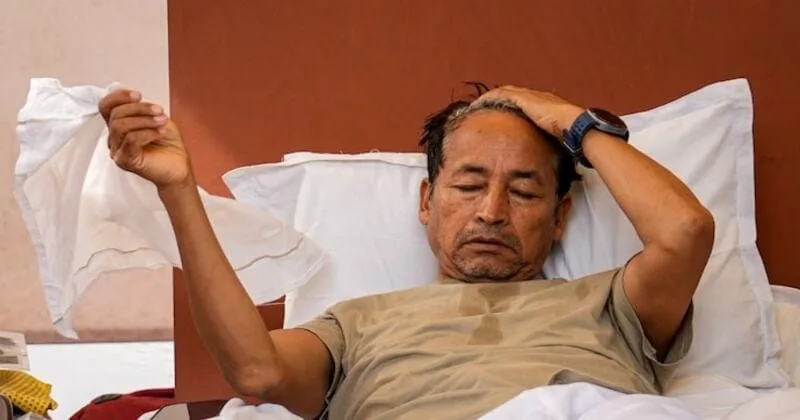
New Delhi: Sonam Wangchuk has become a controversial figure in India’s public discourse, with his activism, associations with foreign funding, political campaigns, and links to international philanthropic networks facing increasing scrutiny. Questions have been raised over the funding ecosystem surrounding organisations linked to him, his advocacy positions and the broader influence of overseas networks.
Sonam Wangchuk Files (Thread)
Sonam Wangchuk is neither a scientist, nor educationalist, nor inspiration behind 3 Idiots. All of it is carefully crafted propaganda.
In truth, Wangchuk is a Ford Foundation (CIA) asset
In this thread, a complete, evidence-backed exposé
1/22 pic.twitter.com/awXKftJI5T— STAR Boy TARUN (@Starboy2079) July 16, 2026
Sonam Wangchuk was born in Ladakh in 1966. He studied Mechanical Engineering at the National Institute of Technology (then Regional Engineering College), Srinagar, and graduated in 1987. Unlike a conventional engineering career path, Wangchuk focused on education and community initiatives in Ladakh. In 1988, he co-founded the Students’ Educational and Cultural Movement of Ladakh (SECMOL), an organisation established to address challenges in the region’s education system.
From Education Reform to Ladakh Activism
Over the years, Wangchuk expanded his public role from education reform to environmental and political advocacy. His Ice Stupa project, which focuses on creating artificial glaciers to store winter water for agricultural use, brought him attention. The initiative also became part of discussions around climate adaptation in the Himalayan regions.
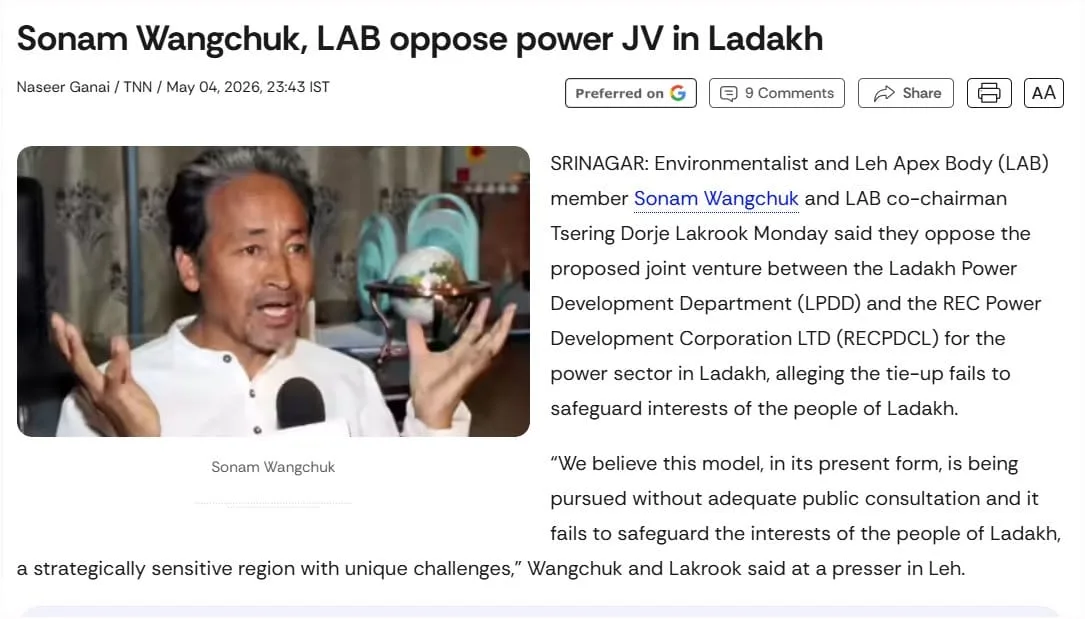
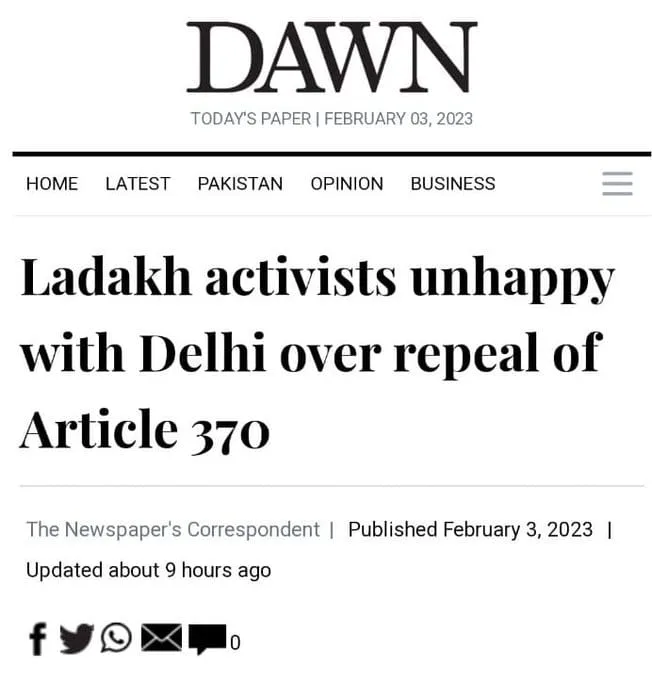
After Ladakh became a Union Territory following the abrogation of Article 370, Wangchuk began campaigning for constitutional safeguards under the Sixth Schedule of the Constitution. He argued that such protections were needed to safeguard Ladakh’s ecology, tribal identity, land rights and local decision-making powers. Critics have questioned whether additional constitutional protections could affect infrastructure development and strategic projects in a sensitive border region.
Another major area of controversy has been the foreign funding received by organisations associated with his work and whether international philanthropic networks influence advocacy campaigns in India.
Foreign Funding Raises Questions
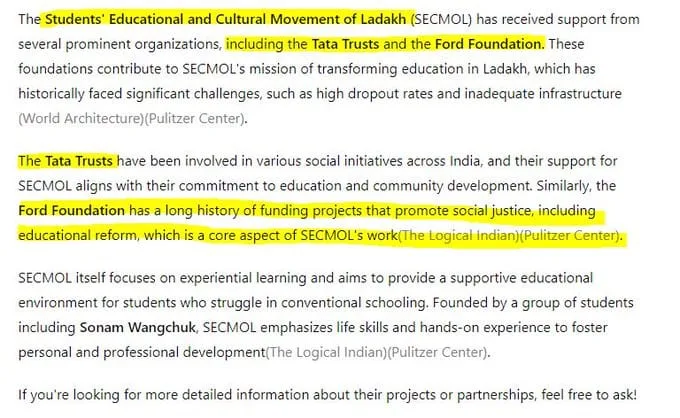
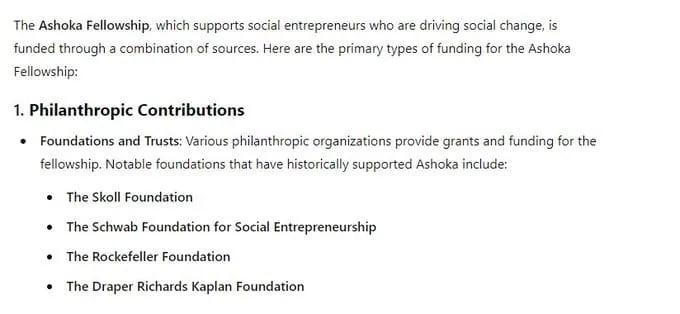
Organisations connected with Wangchuk’s work have received grants, fellowships and institutional support from several Indian and international organisations over the years, including Ford Foundation-linked initiatives, Tata Trusts, Ashoka Foundation, DanChurchAid and other development organisations.
The presence of international funding has led political commentators and critics to question whether foreign-funded networks can influence public campaigns, especially when organisations become involved in issues relating to governance, environment and constitutional reforms.
Foreign contributions to Indian NGOs are regulated under the Foreign Contribution (Regulation) Act (FCRA), which requires organisations to maintain registration, reporting and financial compliance. However, receiving foreign funding or working with international organisations does not by itself establish political influence or external control.
A major debate surrounding Wangchuk’s organisations involves alleged links with George Soros and the Open Society Foundations (OSF). Claims assigning a specific Soros-to-Wangchuk funding amount are not supported by publicly available evidence.
What exists instead is a broader funding ecosystem involving partner organisations, intermediary institutions and global philanthropic networks that, at different levels, include organisations connected with both the Ford Foundation and Open Society Foundations.
How Global Philanthropic Funding Networks Operate
Large international foundations such as the Open Society Foundations do not necessarily fund grassroots organisations directly. Instead, they often channel support through intermediary NGOs, umbrella organisations, capacity-building institutions and international development networks, which in turn provide assistance to projects operating in different countries. As a result, tracing philanthropic funding frequently involves multiple institutional layers rather than identifying a single direct grant.
At the same time, such indirect connections should be interpreted with caution. Given the global reach of organisations such as the Open Society Foundations and the Ford Foundation, many NGOs with a history of foreign funding may be linked to these foundations through shared partners or intermediary institutions. An ecosystem connection can warrant scrutiny, but by itself it does not establish coordination, influence or direct financial support. Distinguishing between documented evidence and indirect institutional links is essential when assessing such funding relationships.
The DanChurchAid Connection: A Documented Historical Link
The clearest documented connection involving SECMOL relates to the Danish humanitarian organisation DanChurchAid. In 1994, SECMOL launched Operation New Hope, an initiative focused on improving government school education in Ladakh.
In 1995, the project received support through Denmark’s Operation Day’s Work programme, which raises funds through Danish students. DanChurchAid administered the grant between 1996 and 2001 and continued some support thereafter. SECMOL lists DanChurchAid among its past donors.
DanChurchAid’s published donor information includes George Soros’s Open Society Foundations among various supporters, along with governments, international agencies and other philanthropic organisations. However, publicly available records do not show that Open Society funding was specifically transferred to SECMOL. This represents an indirect and historical institutional connection, not evidence of direct Soros funding to Wangchuk’s organisations.
India’s Long-Running Dispute with Open Society Foundations
The Indian government’s concerns regarding George Soros’s Open Society Foundations (OSF) long predate the current controversy surrounding Sonam Wangchuk.
In 2016, the Ministry of Home Affairs placed Open Society Foundations under the Prior Reference Category, requiring prior government approval before its funds could be transferred to organisations in India.
In February 2023, George Soros, speaking at the Munich Security Conference, said he believed political developments surrounding the Adani Group could weaken Prime Minister Narendra Modi’s government and lead to what he described as a “democratic revival” in India. His remarks drew strong criticism from the Union government and supporters of the ruling party.
In March 2025, the Enforcement Directorate conducted searches at premises in Bengaluru linked to entities alleged to have received Open Society funding as part of an investigation under foreign exchange laws.
These developments indicate a long-standing institutional dispute between Indian authorities and the Soros network, rather than one arising specifically from Wangchuk’s activities.
Government Action Against SECMOL and HIAL
On September 25, 2025, the Ministry of Home Affairs cancelled SECMOL’s registration under the Foreign Contribution (Regulation) Act (FCRA). According to reports citing official findings, authorities identified several alleged irregularities, including deposits into the designated FCRA account in violation of statutory provisions, discrepancies in reported foreign contributions, mixing of domestic funds with foreign contributions, undeclared bank accounts and a grant of approximately Rs 4.93 lakh from a Swedish organisation for programmes involving migration, climate and sovereignty-related issues, which authorities considered contrary to national interest.