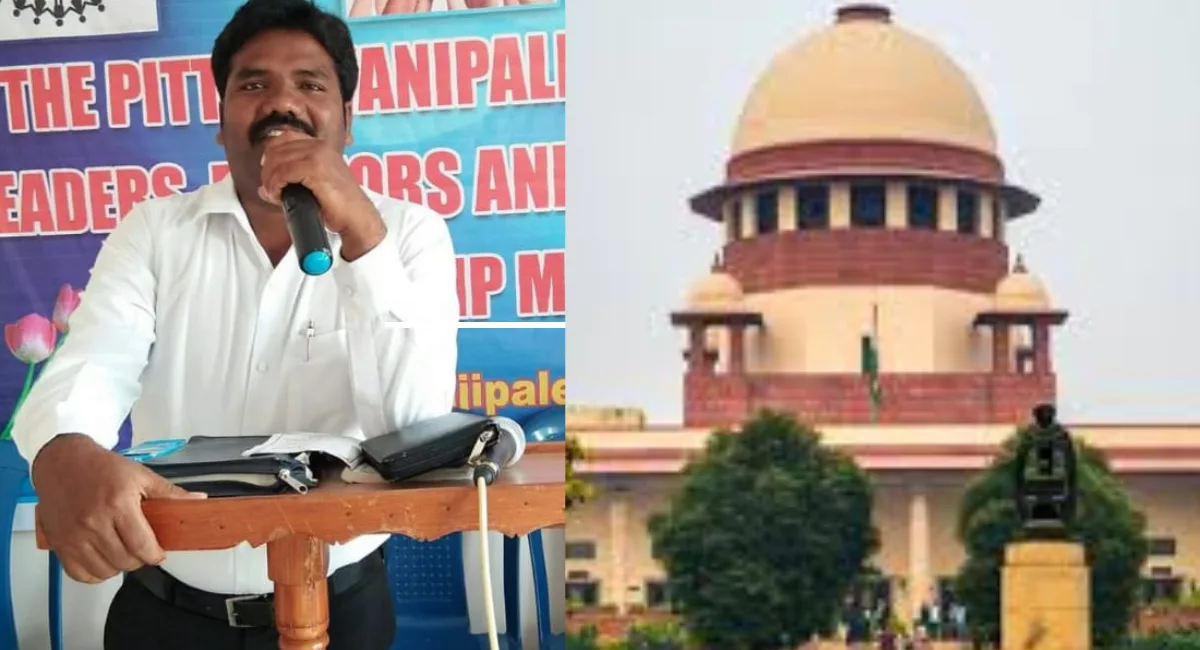
In a setback to claims seeking Scheduled Caste (SC) benefits after conversion to Christianity, the Supreme Court has dismissed the review petition filed by Andhra Pradesh-based pastor Chinthada Anand, refusing to revisit its March 24, 2026 judgment that upheld the cancellation of his Scheduled Caste certificate.
A Bench comprising Justice Prashant Kumar Mishra and Justice Manmohan held that there was “no error apparent on the record” in its earlier judgment. The Court waived the procedural defects in the petition, rejected the application seeking an oral hearing, and dismissed the review petition.
The order, passed on July 15, 2026, also disposed of all pending applications connected to the review petition.
Background
The case stems from the Andhra Pradesh government’s decision to cancel the Scheduled Caste certificate issued to Pastor Chinthada Anand following the Supreme Court’s landmark judgment in March 2026 concerning the applicability of the Scheduled Castes and Scheduled Tribes (Prevention of Atrocities) Act to Christian converts.
In its earlier ruling, the Apex Court held that individuals who have converted to Christianity cannot claim Scheduled Caste status solely on the basis of their caste origin, reaffirming the constitutional position that SC status is linked to the religions specified under the Constitution (Scheduled Castes) Order, 1950.
Following that verdict, the Andhra Pradesh government cancelled Anand’s Scheduled Caste certificate, holding that he had embraced Christianity and therefore could not continue to avail himself of SC status or its associated constitutional benefits.
Anand subsequently approached the Supreme Court seeking a review of its March 24 judgment. However, the Court has now declined to interfere with its earlier decision, observing that the review petition disclosed no error warranting reconsideration.
The dismissal of the review petition is being viewed as a significant judicial setback for claims by crypto-Christians seeking to retain or claim Scheduled Caste benefits despite professing Christianity, while reinforcing the legal position laid down in the Court’s March 2026 judgment.