

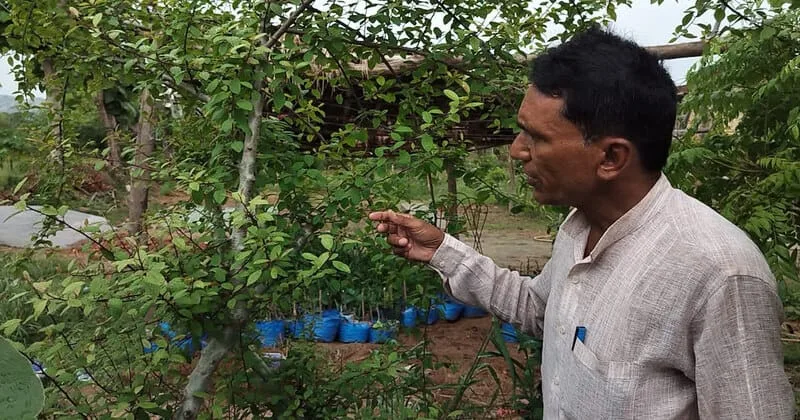
Gaya: Leaving behind a lucrative career in the automobile industry, Gaya resident Gopal Sharan chose an unconventional path, returning to his native village to create one of Bihar’s largest private medicinal plant conservation centres. What began as a dream nurtured over two decades has now evolved into a thriving herbal plantation that is inspiring farmers across the state.
A nature enthusiast with a passion for sustainable farming, Sharan has spent the last five years developing a medicinal plant garden in Jethian Naya Nagar village in Mohra block of Gaya district. Established in a drought-prone, rocky region where agriculture is considered challenging, the project has transformed barren land into a flourishing herbal ecosystem.
Leaves Global Automobile Career for Sustainable Farming
Having worked in senior marketing and project roles for leading automobile companies across more than 16 countries, Sharan decided to leave his well-paying job and return to farming. While the decision was met with resistance from most of his family and scepticism from villagers, his father encouraged him to pursue medicinal cultivation.
“In the beginning, people believed I was wasting my time and money growing plants in sandy soil because they only associated farming with conventional crops. Today, many of those same farmers are adopting medicinal cultivation themselves,” Sharan says.
Home to 2,200 Plants Across 400 Medicinal Species
Today, his three-acre Centre for Medicinal Plant Conservation is home to over 2,200 trees and plants representing nearly 400 species. Along with medicinal herbs, the plantation also features aromatic plants, fruit trees and premium timber species. The success of the project has attracted farmers from different parts of Bihar and neighbouring states, who visit the farm to study the model and purchase saplings. Encouraged by the response, Sharan is now expanding the initiative to an additional 12 acres.
According to farmer Amod Kumar from Muzaffarpur, the plantation is unlike any other private medicinal collection in Bihar. He says several species preserved at the centre have become rare or are on the verge of extinction, making the project an important conservation effort.
Rare and Endangered Medicinal Plants Conserved
The conservation centre houses a wide variety of medicinal plants, including Kachnar, Nag Kesar, Amaltas, White Sandalwood, Red Sandalwood, White Bansa, Red Amla, Guggul, Chia Seed, Garud, Gudmar, Hadjod, and seven varieties of Tulsi. Many species have been sourced from West Bengal, Madhya Pradesh, Assam, other Indian states and even overseas.
These plants are widely used in Ayurvedic, Unani and Homoeopathic systems of medicine. Among them, chia seed is one of the centre’s key crops, valued for its high Omega-3 content, dietary fibre and protein. It is associated with digestive health, weight management, heart health, blood sugar regulation and bone strength.
Similarly, Kachnar is considered an important Ayurvedic herb believed to support thyroid health, digestion, skin care and wound healing, while White Bansa is traditionally used in herbal formulations for treating cough and respiratory ailments.
A Two-Decade Dream Turned Reality
Although the plantation officially began in 2022, Sharan says the idea had been in his mind for nearly 20 years. “Ever since I joined the private sector, I was interested in organic and biological farming. I chose medicinal cultivation because many valuable medicinal plants are disappearing from forests and hills due to habitat loss and smuggling. We are currently functioning as a Medicinal Plant Conservation Centre, but the project will expand into a larger initiative next year,” he says.
Beyond Herbs: Diversifying with High-Value Crops
In addition to medicinal plants, Sharan has diversified into high-value horticulture by cultivating dragon fruit, apples, exotic mango varieties that flower in July, Indonesian red bananas, and several varieties of Indian gooseberry (amla). He notes that dragon fruit becomes commercially productive within two years and can continue yielding fruit for up to four decades with relatively low maintenance, making it an attractive option for farmers seeking sustainable income.
From a global corporate career to preserving India’s medicinal biodiversity, Gopal Sharan’s journey demonstrates how passion, perseverance and innovation can transform not only landscapes but also rural livelihoods.