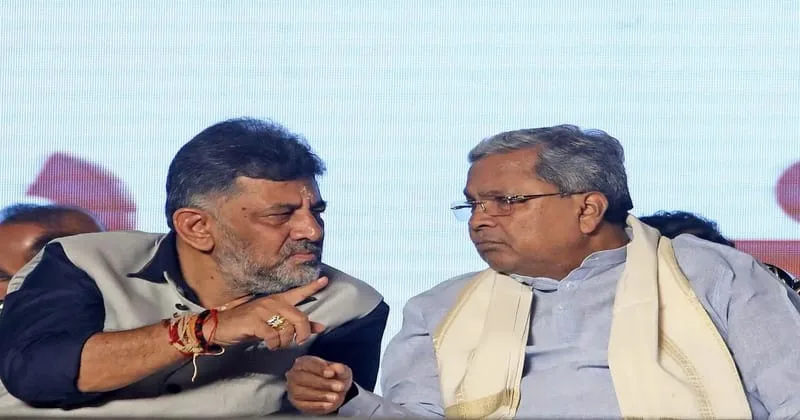
Bengaluru: The Karnataka government’s spending priorities have come under scrutiny after Right to Information (RTI) documents revealed that more than Rs 19 crore was spent on renovating and upgrading the official residences of the Chief Minister, Deputy Chief Minister and several ministers over the last three years, even as proposals for repairing government schools, constructing classrooms and improving student hostels were reportedly rejected citing a shortage of funds.
According to records obtained from the Public Works Department (PWD), a total of Rs19.01 crore was spent between 2023-24 and May 2026 on repairs, renovations, furniture, electrical works, security infrastructure and other improvements at official government residences. The disclosures assume significance as several departments have informed legislators and officials that financial constraints have delayed or prevented sanction of funds for dilapidated government school buildings and hostel infrastructure.
The RTI documents indicate that the Chief Minister’s official residence ‘Cauvery’ alone accounted for nearly Rs 8.09 crore. The expenditure covered the construction of a new conference hall, structural glazing, conference furniture, modular kitchen, servant quarters, storage rooms, police bunker rooms, security lighting, flooring, bathrooms, UPVC windows, guard room renovation, dog kennel, cattle shed and several other civil and electrical works.
The Chief Minister’s office-cum-residence ‘Krishna’ also underwent extensive renovation costing about Rs 1.29 crore. The works included interior painting, kitchen renovation, flooring replacement, waterproofing, office furniture, CCTV room, public grievance cabins, police dressing room, water supply improvements and several maintenance works.
The RTI records further show that nearly Rs 69 lakh was spent on repairs and furnishing at the Deputy Chief Minister’s official accommodation at Kumara Krupa Guest House. The expenditure included painting, furniture, fabrication works, sanitary fittings, compound repairs and electrical improvements.
Several ministers’ official residences also received substantial allocations. Around Rs 73 lakh was spent on the residence allotted to Housing Minister B.Z. Zameer Ahmed Khan, while residences allotted to ministers Priyank Kharge and Satish Jarkiholi received renovation works worth approximately Rs 68 lakh each. Additional expenditure was incurred on the residences occupied by M.B. Patil, Dr H.C. Mahadevappa, Assembly Speaker U.T. Khader and other ministers.
The RTI documents also reveal purchases of furniture and household items for several ministers’ residences. However, complete expenditure details are yet to emerge because another PWD division has reportedly not furnished information despite the expiry of the statutory RTI deadline.
The expenditure has raised questions because the government has repeatedly cited financial constraints while declining or delaying proposals for repairing government school buildings, constructing additional classrooms and upgrading student hostels. Hundreds of schools across Karnataka continue to function with ageing infrastructure, while several hostels still operate from rented or inadequate buildings, despite repeated demands for additional funding.
Critics argue that while students in many government schools continue to study in damaged classrooms and hostel residents struggle with inadequate facilities, crores of rupees have been spent on improving VIP residences, including conference halls, modular kitchens, luxury interiors and landscaping.
The disclosures are expected to intensify the political debate over the state’s fiscal priorities. Opposition parties are likely to question whether scarce public funds should have been diverted towards the renovation of official residences when educational infrastructure continues to face severe resource constraints. The issue also comes amid a broader debate over the state’s finances and competing expenditure commitments.
With the RTI records now in the public domain, pressure is expected to mount on the government to explain its spending priorities and clarify why proposals for essential public infrastructure, particularly government schools and student hostels, were reportedly put on hold due to lack of funds while substantial amounts were sanctioned for renovation and furnishing of official residences occupied by top political executives.