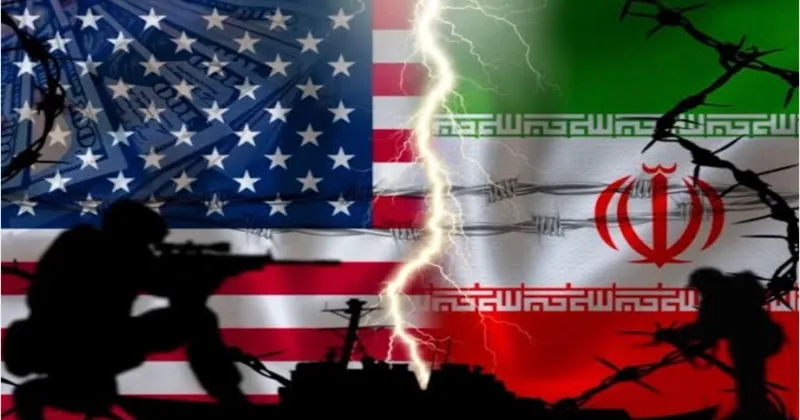
West Asia once again stands at a critical crossroads where the distance between war and peace has become alarmingly narrow. The peace process initiated in Burgenstock and Lucerne, Switzerland, with the objective of ending decades of hostility between the United States and Iran, virtually collapsed on July 8, 2026 following attacks on three commercial vessels in the Strait of Hormuz. The targeted ships reportedly included a Qatari liquefied natural gas (LNG) tanker and a major Saudi crude oil tanker. The incident not only shattered the fragile foundation of trust between Washington and Tehran but also demonstrated that a ceasefire alone cannot guarantee lasting peace in one of the world’s most volatile regions.
The American response was swift and forceful. The United States launched large-scale strikes against more than eighty Iranian military installations. Shortly thereafter, President Donald Trump, addressing the NATO Summit in Ankara, declared that the ceasefire was over and dismissed the peace memorandum as “a waste of time.” The geopolitical repercussions were immediate. Global crude oil prices surged by more than five percent, international financial markets experienced renewed volatility, and concerns regarding global energy security intensified.
This episode represents far more than a conventional military confrontation. It reflects the complex interplay of global power politics, energy security, maritime trade, regional rivalries, and strategic competition among major powers.
Why Did the Peace Process Fail?
The memorandum signed in Bürgenstock and Lucerne had generated cautious optimism that nearly five decades of hostility between the United States and Iran could finally begin to ease. The framework envisioned phased sanctions relief, enhanced monitoring of Iran’s nuclear programme, the establishment of technical working groups, and cooperative mechanisms to ensure the security of maritime traffic through the Strait of Hormuz.
However, the process suffered from one fundamental weakness from the very beginning: mutual distrust. The two countries possessed fundamentally different perceptions of security. The United States continued to view Iran’s nuclear ambitions and expanding regional influence as the principal threat to regional stability. Iran, on the other hand, remained convinced that Washington’s ultimate objective extended beyond nuclear restrictions to the eventual overthrow of the Islamic Republic.
Consequently, despite progress on technical issues, political confidence was never successfully established. A single crisis proved sufficient to derail the entire peace initiative.
Iran’s Strategy: The Success of Asymmetric Warfare
The conflict has once again demonstrated the changing nature of modern warfare. The United States and Israel possess some of the world’s most advanced military technologies, including satellite surveillance, artificial intelligence-enabled intelligence systems, stealth aircraft, long-range precision missiles, and highly sophisticated defence infrastructure. Yet these overwhelming technological advantages have failed to produce a decisive strategic victory over Iran.
Instead, Iran has relied upon relatively inexpensive drones, cruise missiles, proxy networks, and asymmetric warfare tactics to challenge militarily superior adversaries. Low-cost Iranian drones have repeatedly compelled American and Israeli forces to deploy interceptor missiles costing many times more than the attacking systems themselves. This has enabled Iran to achieve considerable strategic and economic leverage despite limited resources.
Although Iran has suffered substantial human and material losses—including senior military commanders, thousands of Islamic Revolutionary Guard Corps (IRGC) personnel, and significant destruction of military infrastructure—its political resolve has remained largely intact. Rather than weakening the regime, the conflict appears to have strengthened domestic nationalism and ideological cohesion.
The Limits of American Military Power
Despite possessing the world’s most powerful military establishment, the United States has struggled to convert battlefield superiority into a sustainable political outcome.
Continuous military operations, mounting financial costs, international criticism, and growing pressure on regional allies have exposed important limitations in American strategy. Estimates suggest direct military expenditures approaching US$50 billion, while the broader economic impact could exceed US$100 billion. Meanwhile, disruptions to Gulf energy production and maritime trade have adversely affected the economies of America’s regional partners.
The central lesson is unmistakable: military power alone cannot produce lasting political solutions.
Why Was This Opportunity So Important for Iran?
Had the peace process succeeded, Iran would have gained a historic opportunity to emerge from nearly five decades of international economic isolation. International sanctions could have been gradually lifted, foreign investment restored, oil exports normalised, and comprehensive economic reconstruction initiated.
Yet Tehran ultimately chose confrontation over reconciliation.
This decision cannot be explained solely by ideology. Iranian leaders believe that abandoning their strategic deterrent would leave the country vulnerable to future military intervention by the United States or Israel. Consequently, military resistance is viewed not merely as a strategic choice but as an existential necessity.
President Trump’s Negotiating Style and the Crisis of Trust
One of Tehran’s deepest concerns has been the belief that American diplomacy was primarily intended to buy time rather than genuinely resolve the dispute.
Iranian officials have repeatedly argued that previous diplomatic engagements were accompanied by simultaneous military preparations. President Trump’s negotiating style—characterised by unpredictability, economic pressure, strategic ambiguity, and repeated threats—may prove effective in commercial negotiations. In international diplomacy, however, such an approach has often weakened credibility and undermined confidence.
When one party no longer believes that signed agreements will be honoured, the prospects for durable peace become extremely limited.
Israel’s Security Concerns
The confrontation between Iran and Israel extends far beyond conventional geopolitical rivalry; it has evolved into an existential security dilemma.
Israel regards Iran’s nuclear programme and its network of allied militant organisations as the most serious threat to its national security. Conversely, Iran views Israel as the principal instrument of Western influence in the region.
This explains why Israeli military operations reportedly continued even during periods of diplomatic engagement between Washington and Tehran. Unless this fundamental security dilemma is addressed, no future peace agreement is likely to remain sustainable.
China’s Expanding Strategic Role
China’s influence across West Asia continues to expand through energy partnerships, Belt and Road Initiative investments, and growing economic cooperation with regional states, including Iran.
This indirect strategic support has strengthened Iran’s ability to withstand American and Israeli pressure. Consequently, West Asia has become not merely a regional theatre of conflict but also an important arena in the broader strategic competition between the United States and China.
The Unresolved Nuclear Question
Many influential voices within Iran continue to argue that a credible nuclear deterrent represents the most reliable safeguard against future foreign intervention.
Such thinking raises serious concerns regarding nuclear proliferation across West Asia. Should Iran ultimately acquire nuclear weapons capability, countries such as Saudi Arabia, Türkiye, and other regional powers may feel compelled to pursue similar capabilities, significantly increasing long-term regional instability.
The Strategic Importance of the Strait of Hormuz
The Strait of Hormuz remains one of the world’s most vital maritime chokepoints. A substantial proportion of global seaborne crude oil and liquefied natural gas exports passes through this narrow waterway.
Any prolonged disruption would affect not only West Asia but the global economy through higher energy prices, increased shipping costs, rising insurance premiums, accelerating inflation, and slower economic growth. Ensuring freedom of navigation in Hormuz is therefore a matter of international concern rather than merely a regional issue.
Implications for India
As one of the world’s largest energy importers, India remains highly vulnerable to instability in the Gulf region. A prolonged conflict could significantly increase crude oil prices, fuel domestic inflation, widen the current account deficit, slow economic growth, raise maritime transportation costs, and create security challenges for millions of Indians living and working across the Gulf.
India must therefore continue diversifying its energy sources, expanding its strategic petroleum reserves, accelerating investments in renewable energy, and maintaining balanced diplomatic relations with all major stakeholders in West Asia.
India’s Diplomatic Opportunity
India enjoys cordial relations simultaneously with the United States, Iran, Israel, Saudi Arabia, the United Arab Emirates, and Qatar. This unique diplomatic position provides New Delhi with an opportunity to contribute constructively to regional dialogue, confidence-building measures, and maritime security cooperation.
Achieving this objective, however, will require India to complement its growing economic influence with stronger strategic capabilities, greater institutional agility, and a more proactive foreign policy.
The Road to Lasting Peace
Lasting peace in West Asia cannot be achieved through temporary ceasefires alone. Sustainable stability will require addressing several fundamental challenges:
– Restoration of mutual trust between the United States and Iran.
– A transparent, credible, and verifiable agreement on Iran’s nuclear programme.
– A multilateral security framework for the Strait of Hormuz.
– Institutionalised regional security dialogue.
– The gradual reduction of proxy conflicts.
– Phased sanctions relief linked to economic reconstruction.
– Greater restraint in great-power competition across the region.
Without addressing these structural issues, every ceasefire is likely to remain only a temporary pause before renewed confrontation.
Conclusion
The collapse of the U.S.–Iran peace process demonstrates that the crisis in West Asia cannot be understood solely through the lens of military confrontation. It is deeply rooted in history, ideology, national security, energy geopolitics, regional rivalries, and great-power competition. Modern conflicts are not determined by military strength alone; trust, political credibility, and sustained diplomacy are equally decisive.
Unless the international community learns from this failure, West Asia is likely to remain a persistent source of global instability. For emerging powers such as India, the challenge extends beyond responding to crises. It requires developing a long-term strategic vision based on energy security, strategic autonomy, diplomatic engagement, and resilient national capabilities. Only through such a balanced and forward-looking foreign policy can India’s vision of becoming a developed nation by 2047 be effectively safeguarded in an increasingly uncertain geopolitical environment.