Over the past few years, security agencies in J&K have achieved significant successes against terrorism and separatism, a result of the firm stance taken by the PM Modi government at the Centre. Cross-border infiltration has declined, terrorist networks have weakened, the financial activities of separatist organisations have been curtailed, and bans have been imposed on several such groups. However, amidst this, an FIR has been registered under the UAPA regarding two books procured for libraries in government schools across J&K.
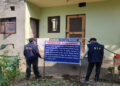
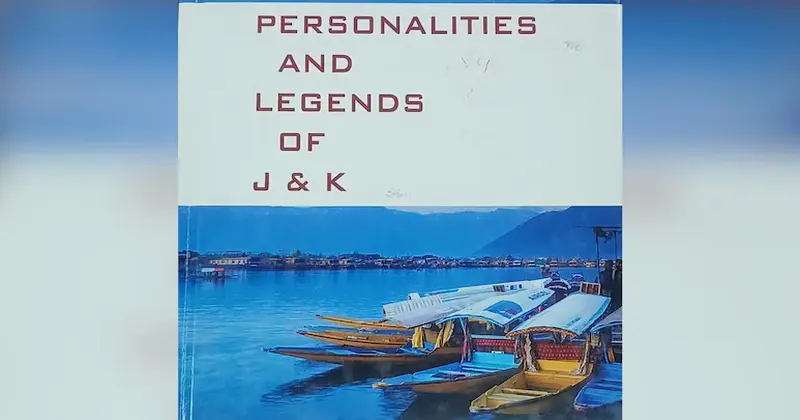
These books portray the Mumbai attacks mastermind and terrorist Hafiz Saeed, as well as separatist leader Maqbool Bhat, as great figures. The Counter-Intelligence Wing of the police has registered an FIR and initiated raids. Meanwhile, the J&K administration has immediately banned these books, which had been distributed to government schools, and ordered their recall.
Beyond glorifying individuals linked to terrorism and separatism, these books employed Pakistan-backed terminology and included statements contrary to India’s constitutional position. Viewing the matter seriously, the government has suspended eight officials, terminated the services of a contractual employee, blacklisted the author and publisher and ordered a high-level inquiry into the entire procurement and approval process. Yet, a major concern has emerged amidst all this: is there an attempt to propagate separatist ideology among the new generation in Jammu & Kashmir through education and literature?
Issue raised through JKPF’s efforts
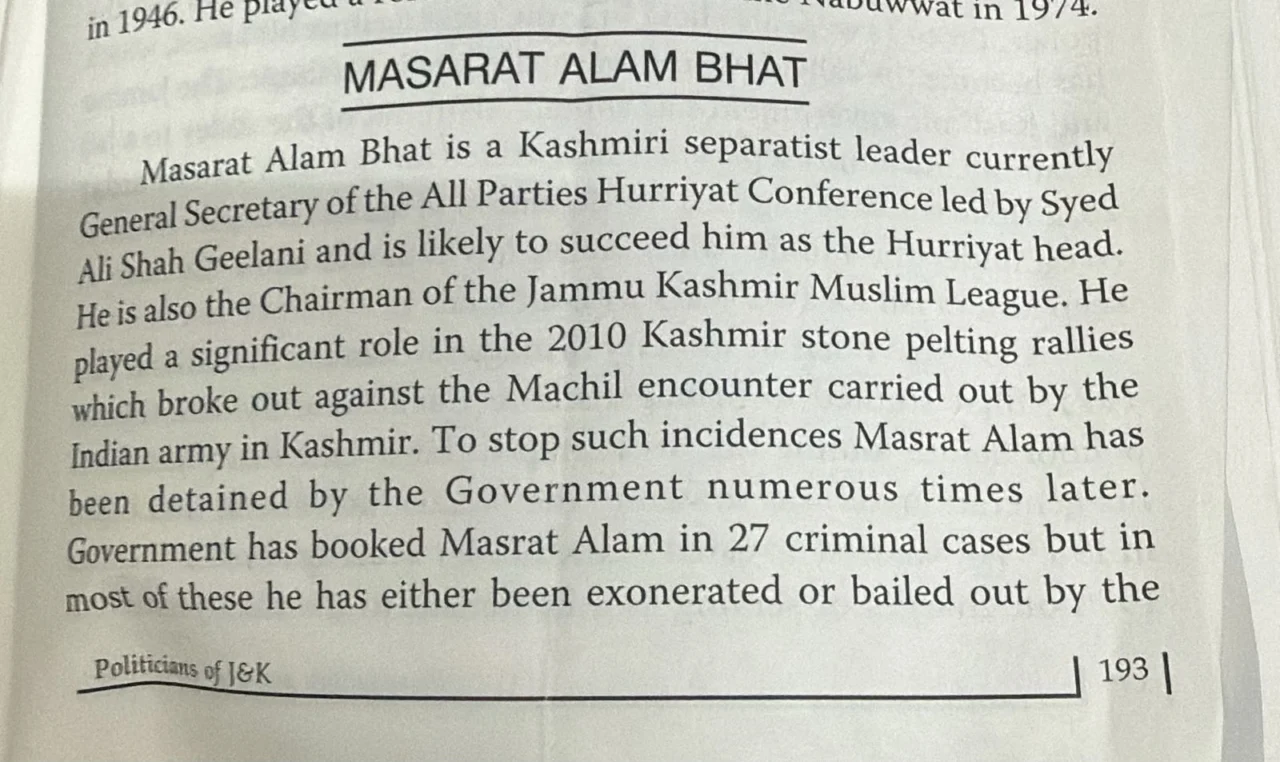
The matter came to light when the Jammu & Kashmir Peoples Forum (JKPF) alleged that, under the Samagra Shiksha scheme for the year 2025-26, books portraying separatist leaders and individuals linked to terrorism in a positive light had been distributed to government school libraries. These books highlight the views of separatist leaders such as Syed Ali Shah Geelani, Masarat Alam and Mirwaiz Umar Farooq. In some instances, terrorists and stone-pelters have also been depicted in a manner that could negatively influence the minds of children.
A book co-authored by CSDS political scientist Hilal Ahmed has been made available in government school libraries in Jammu & Kashmir under the Samagra Shiksha Scheme.
The book describes separatist figures such as Maqbool Bhat, Syed Ali Shah Geelani, Shabir Shah, Masarat Alam,… pic.twitter.com/7DqHtcAjWT
— Amit Malviya (@amitmalviya) July 4, 2026
Which books were banned?
During a government inquiry, an expert committee reviewed a total of 463 books. Two of these, “Personalities and Legends of J&K” and “Great Personalities of Jammu and Kashmir”- became the center of controversy. According to the government order, 123 copies of the first book had reached government schools in the Jammu, Ramban, and Udhampur districts, while 128 copies of the second book had been distributed in the Jammu and Baramulla districts. All copies of both books are now being recalled with immediate effect.
What is the main point of contention?
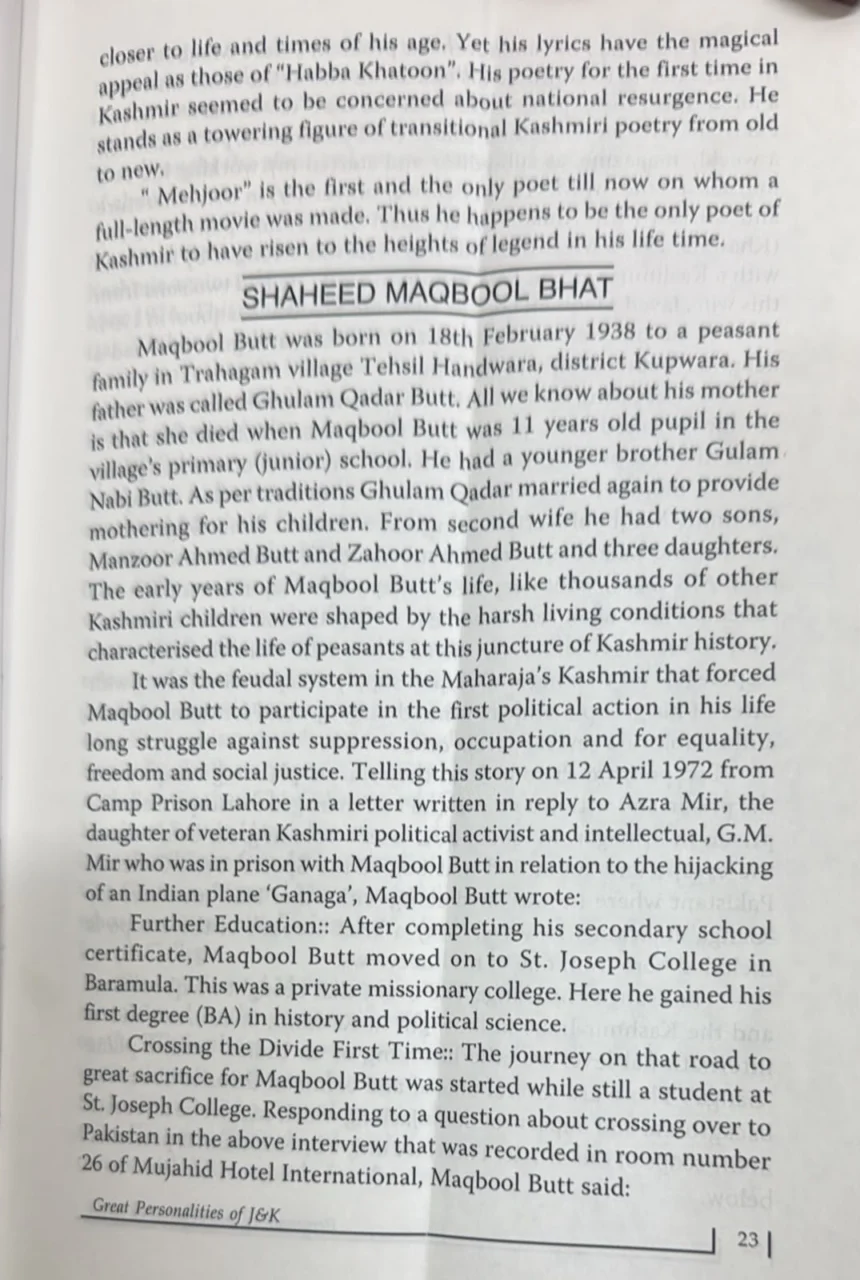
The primary cause of the controversy is the content regarding Maqbool Bhat. According to a report by the “Jammu-Kashmir Study Centre,” the chapter dedicated to him in the book is titled “Shaheed Maqbool Bhat”. Furthermore, he is allegedly referred to using epithets such as “Shaheed-e-Azam”, “Great Revolutionary of Modern Kashmir”, and “Father of the Nation of Kashmir”.
The report claims that while the book mentions the judicial proceedings and the sentence passed against him, it nonetheless portrays him in respectful terms. Opposition leader Sunil Sharma argues that presenting a convicted individual in this manner in a school-level textbook could convey a distorted image of the judicial system and history to children. The book also states that an era of “armed revolution” began in Kashmir following Maqbool Bhat’s execution and that his mission remains incomplete, statements deemed highly objectionable.
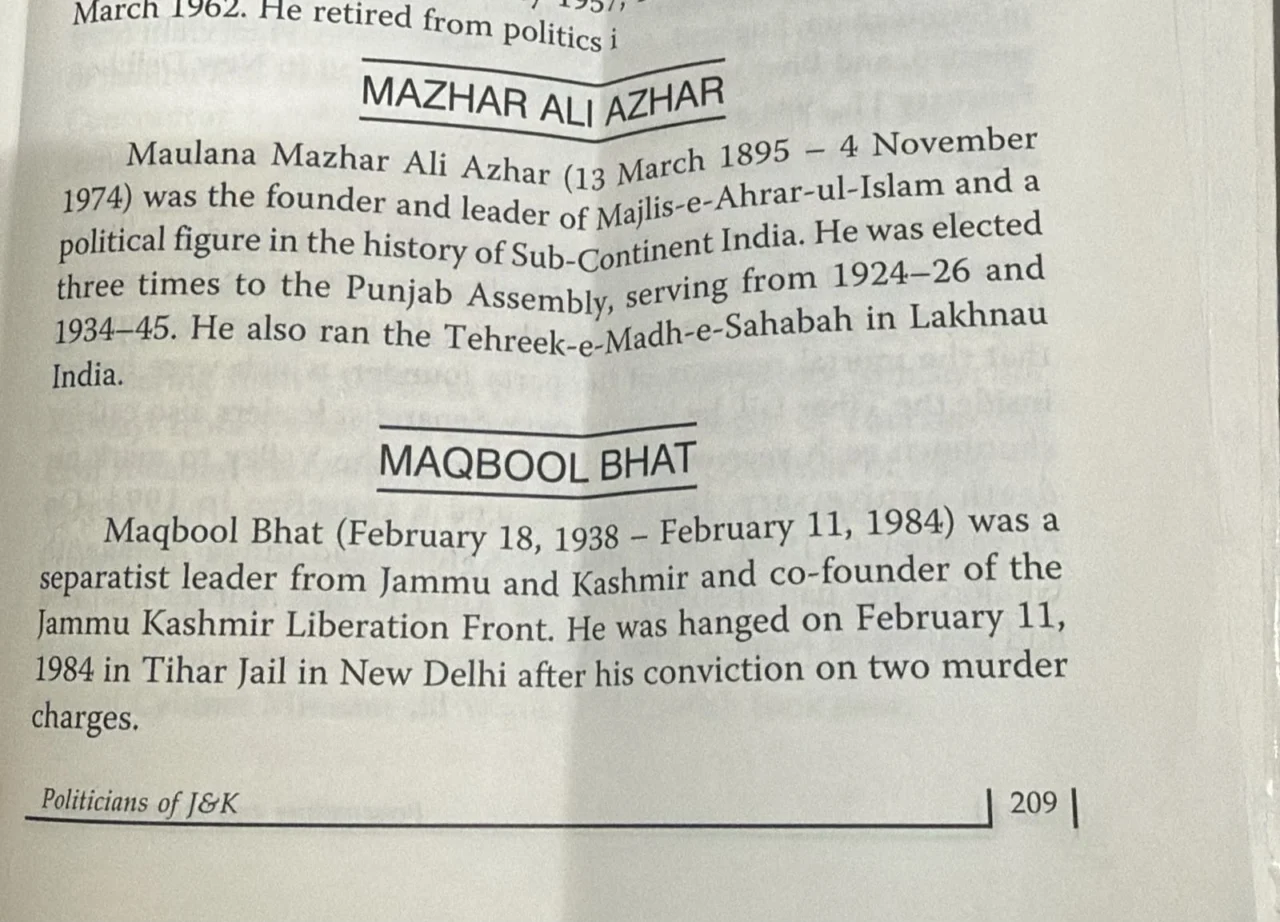
It is noteworthy that Maqbool Bhat was convicted in cases involving terrorist activities and multiple murders. He was a founder of the Jammu and Kashmir Liberation Front (JKLF). He was executed following charges related to the murder of a CID officer and aircraft hijacking incidents, as well as circumstances surrounding the abduction and murder of Indian diplomat Ravindra Mhatre.
Which figures were given prominence?
Prominent figures featured in separate chapters of the controversial books include Maqbool Bhat, Syed Ali Shah Geelani, Masarat Alam, Shabir Shah and Mirwaiz Umar Farooq, all of whom have been associated with separatist politics or the Hurriyat Conference in some capacity. The books present Syed Ali Shah Geelani’s views in detail and portray separatist leaders like Geelani, Shabir Shah and Mirwaiz Umar Farooq as influential personalities.
In this context, the Jammu Kashmir Study Centre holds the view that while the books mention these individuals’ political perspectives, they fail to address the separatist movements led by them, their pro-Pakistan stance, or their opposition to India’s constitutional framework. Naturally, these books present a one-sided narrative that favors the separatists.
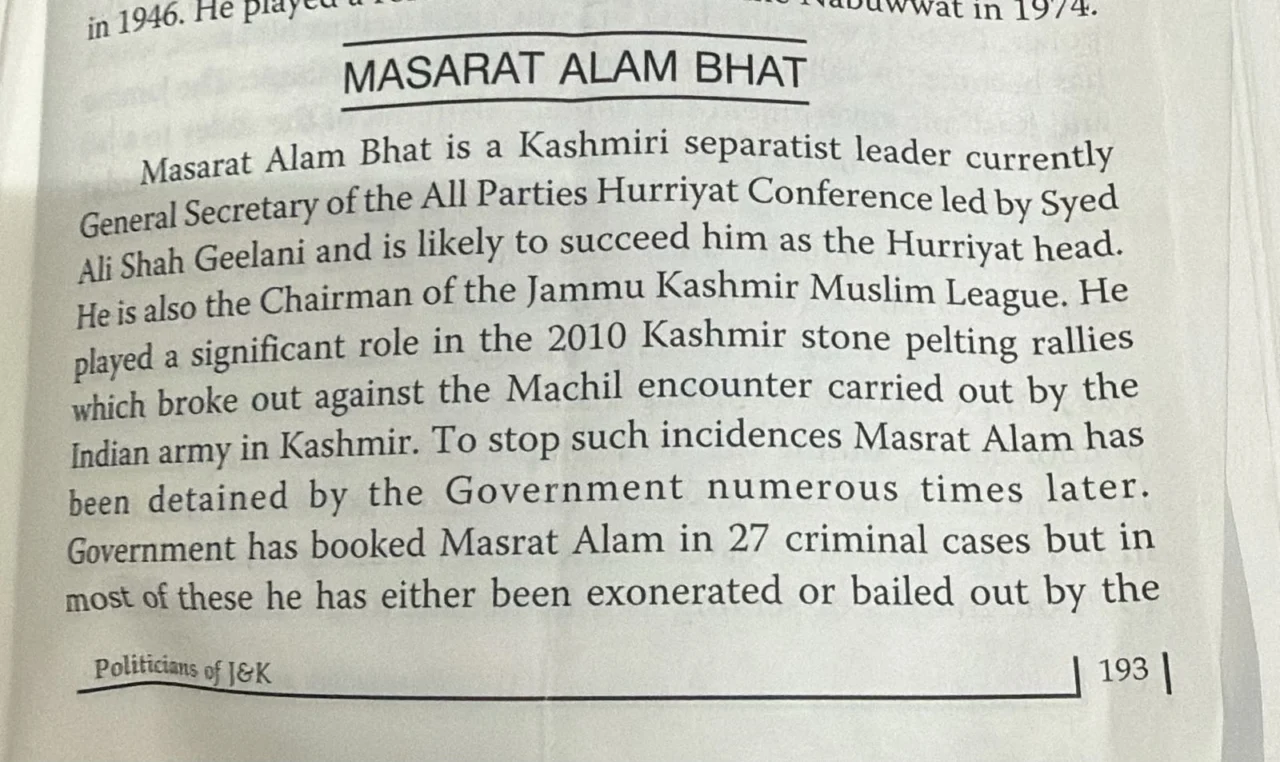
Masarat Alam also receives extensive coverage in the books, with numerous statements quoted and a biographical account written in a relatively sympathetic tone. This is despite the fact that multiple criminal cases have been registered against him; he has faced detention on several occasions and action was subsequently taken against his organization. Similarly, the chapters dedicated to Shabir Shah and Mirwaiz Umar Farooq are also mired in controversy. Both leaders are portrayed primarily as representatives of the separatist movement, while the controversies, investigations and legal proceedings associated with them have not been given adequate attention.
Look at the ingenuity of the “deep state” in Kashmir. Two books cleverly slipped into government school curriculum — one’s author Hilal Ahmad and Santosh Meena. Profiling personalities of J&K, from authors to politicians. And quietly including profiles of terrorists. Now removed.… pic.twitter.com/eOn28HTQpi
— Rahul Pandita (@rahulpandita) July 4, 2026
Why is the full context of the Hurriyat significant?
The report dedicates an entire chapter to the All Parties Hurriyat Conference (APHC). Most of the individuals mentioned in the book have, at some point, been associated with this platform. The stated objectives of the Hurriyat have included advocating for self-determination, projecting Kashmir as a disputed territory and challenging India’s constitutional position.
Controversy over terms like ‘IOK’ and ‘IHK’
The controversy is not limited merely to the glorification of individuals. According to a report by the “Jammu & Kashmir Study Centre,” terms such as “Indian Occupied Kashmir” (IOK) and “Indian Held Kashmir” (IHK) have been used in several places in the book to refer to Jammu and Kashmir. Notably, these are the very terms Pakistan has long employed in its official propaganda. India’s official and constitutional stance is that Jammu and Kashmir is an integral part of India.
Allegations of portraying India as an ‘oppressive state’
In certain sections, the book characterizes India as an “occupier” and an “oppressive state” in the context of Kashmir. It draws parallels between Indian rule and colonial governance and questions India’s commitment to democratic values and human rights.
Brahmins targeted through the narrative on Lalleshwari
The controversy extends beyond political ideology. The book makes claims regarding Lalleshwari, the revered Kashmiri saint and devotee of Shiva, that have been contested by many historians. It asserts that Lalleshwari was dissatisfied with Brahmins and subsequently embraced Islam; however, this claim lacks historical substantiation. Within Kashmir’s shared cultural heritage, Lalleshwari is revered equally by both Hindu and Muslim communities. The Muslim community refers to her as “Lal Arifa,” while Hindus venerate her as a saint-poetess and a devotee of Shiva.
No book should glorify terrorism separatism or violence Our children should learn abt the real heroes of 🇮🇳 who served the nation not those who spread fear and division
Shame on JKNC for supporting such books.Teach our children abt 🇮🇳's heroes not people linked to violence. pic.twitter.com/pKI2JAc5bI— Thakur Abhi (@Thakur3880) July 5, 2026
History or Ideological Narrative?
The most serious debate centers on whether this material was presenting history or attempting to establish a specific ideological viewpoint, effectively propagating a form of “academic jihad.” The entire controversy now hinges on the question: how did such material make its way into schools through the government system?
It has been reported that an expert committee recommended these books, deeming them “age-appropriate”. Subsequently, they were purchased using public funds under the ‘Samagra Shiksha’ scheme and distributed to government school libraries. In other words, this was not an individual decision by a teacher or a school; the books reached the children only after passing through a comprehensive administrative process.
Books or ideological documents?
This is the most critical question in the entire controversy. Were these books merely presenting history and biographies, or did they contain a political narrative intended for school students? This question is now the primary focus of the government inquiry. Eight officials have been suspended with immediate effect, and the services of a contractual employee have been terminated. The books’ author and publisher have been blacklisted.
Report requested within 30 days
The responsibility for the investigation has been entrusted to Additional Chief Secretary (Finance) Ashwini Kumar. He has been directed to submit a detailed report within 30 days. Ram Niwas Sharma, Commissioner-Secretary of the School Education Department, stated, “Every stage of the selection, procurement and distribution of these books is being investigated. We will examine the specific roles played by various officials, and departmental action will be taken against them”.
The changing face of separatism
Security experts have long maintained that in modern times, ideological influence, digital platforms, social media, cultural discourse and education have become crucial arenas of conflict. If an organization fails to succeed through direct violence, it may attempt to influence the mindset of the younger generation; consequently, the impartiality and factual accuracy of educational material in schools have become more critical than ever.
The Jammu Kashmir Study Centre has expressed its opposition to the inclusion of terrorists, separatists and anti-national elements in the books titled ‘Personalities and Legends of J&K’ and ‘Great Personalities of Jammu and Kashmir,’ which were supplied to school libraries. The Centre has demanded that the government take strict legal action against those responsible.
https://twitter.com/lokeshkdhar/status/2073392339163517339?s=20
Chief Minister Omar Abdullah’s reaction
In his initial response, Chief Minister Omar Abdullah stated that he had neither read the controversial book nor was previously aware of it. He remarked that he would offer a final comment only after reviewing the entire content and examining the facts.
S.P. Vaid expresses grave concern
Former Director General of Police (DGP) of Jammu and Kashmir, S.P. Vaid- whose name was also reportedly included in the book, reacted strongly to the entire episode. He stated that having his name included in such a book was a matter of concern for him, not an honor. According to him, if material that provides an ideological basis for separatism, terrorism and anti-India sentiment reaches schools, it could pose a serious threat to the future generation.
Vaid believes, “Terrorism spreads not just through weapons but also through ideas. If children are exposed to incorrect historical and political contexts, the impact can persist for years.”
Sunil Sharma, the Leader of the Opposition in the Legislative Assembly, described the entire matter as an attempt to propagate anti-national sentiment in schools. He demanded that the mere suspension of officials would not suffice; instead, a fair investigation into the entire process must be conducted and strict action taken against the guilty. If such material can find its way into books purchased with public funds, it is not only an administrative error but also a sign of institutional failure.
Maqbool Bhat – Terrorist
Shabir Shah – Separatist
Abdul Gani Lone – Separatist
Masarat – Stone Pelter
Hashim Qureshi – Terrorist
Mirwazi Maulvi – Separatist
Sayed Ali Shah Geelani – Hurriyat Separatist.But according to Academic Book of J&K they are Personalities and Legend… pic.twitter.com/Dj61tJ6OkW
— Ashish K 🇮🇳 (@KpNationalist) July 4, 2026
What questions did the JKPF report raise?
The Jammu & Kashmir People’s Forum (JKPF), which brought this controversy to light, has raised several serious questions in its report. The report asks: Who commissioned the book? On what criteria did the expert committee approve it? Did the committee read the book’s entire content? How much were the authors and the publisher paid? What was the total number of copies purchased? To which schools were they distributed? What was the total amount of public funds utilized? The report also demands an independent review of other books purchased under the ‘Samagra Shiksha’ scheme to ensure that such content has not been included elsewhere.
It is noteworthy that ‘Samagra Shiksha’ is a centrally sponsored scheme of the Government of India, through which financial assistance is provided to states and Union Territories for education ranging from pre-primary level to Class 12. In a Union Territory like Jammu & Kashmir, the Central Government’s share of funding is particularly high.