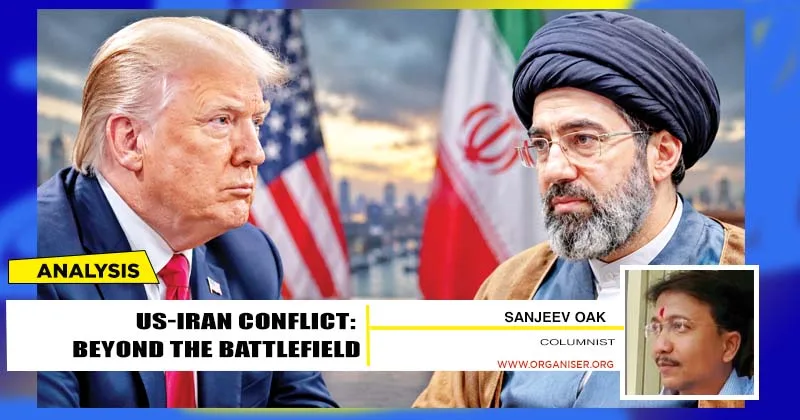
An enduring feature of modern geopolitics is the close relationship between military power, energy security and the global financial system. Whenever tensions rise in West Asia, oil prices react immediately, financial markets become volatile and the role of the US Dollar in international trade once again comes into focus. While military interventions are often justified in terms of national security, regional stability or the protection of allies, many analysts argue that economic interests also play an important role.
The conflict between the United States and Iran that unfolded between February and May 2026 reignited this debate. Beyond the immediate military consequences, the conflict created significant economic disruptions across the world. Oil exporting nations benefited from rising prices, defence companies witnessed increased demand and oil importing countries such as Bharat faced mounting economic pressure. Understanding these developments requires a closer look at the historical foundations of the modern global economic order.
Origins of Petrodollar System
Following the Second World War, the United States emerged as the dominant global power. In February 1945, President Franklin D. Roosevelt met Saudi King Abdulaziz aboard the USS Quincy. The meeting laid the foundation for a strategic partnership that linked American security guarantees with Saudi Arabia’s vast oil reserves.
A major turning point came in 1971. Under the Bretton Woods system, the US Dollar was backed by gold and served as the anchor of the international monetary order. However, mounting economic pressures arising from the Vietnam War and domestic spending forced President Richard Nixon to suspend the Dollar’s convertibility into gold on August 15, 1971. The decision, known as the Nixon Shock, marked the beginning of the modern era of fiat currencies.
In the years that followed, Washington worked to preserve the Dollar’s international status. Agreements negotiated with Saudi Arabia and other major oil producers ensured that global oil transactions would continue to be conducted primarily in US Dollars. This arrangement became known as the Petrodollar system.
The implications were profound. Any nation wishing to import oil required access to Dollars. Oil exporting countries accumulated large Dollar reserves and invested substantial portions of their revenues in American financial markets and government securities. As a result, the Dollar maintained its position as the world’s principal reserve currency.
Challenges to Dollar Dominance
Over the years, several countries have explored alternatives to the Dollar based financial order. Iraq under Saddam Hussein proposed selling oil in Euros. Libya’s Muammar Gaddafi advocated a gold backed African currency. More recently, China, Russia and Iran have expanded efforts to conduct energy trade using local currencies, particularly the Chinese Yuan.
Supporters of these initiatives argue that reducing dependence on the Dollar would create a more balanced and multipolar financial system. Others contend that the existing framework provides stability and efficiency for global trade. Regardless of these competing viewpoints, efforts toward de dollarisation have become increasingly visible in recent years. The expansion of trade arrangements outside the Dollar system has generated significant debate regarding the future of the international monetary order.
The 2026 Iran conflict unfolded against this backdrop. As military tensions escalated, concerns grew over the security of the Strait of Hormuz, a critical maritime route through which approximately one fifth of the world’s oil supply passes. Fears of disruption sent crude oil prices sharply higher and triggered anxiety across global markets.
Economic Beneficiaries
Periods of geopolitical instability often create economic winners alongside economic losers. Among the primary beneficiaries were major oil exporting nations. Higher crude oil prices generated substantial additional revenues for countries such as Saudi Arabia, the United Arab Emirates and Kuwait. As global demand remained strong and supplies faced uncertainty, energy exporters enjoyed a significant financial windfall. The defence industry also benefited from rising geopolitical tensions. Military operations require enormous quantities of advanced equipment, missiles, aircraft systems and logistical support. Governments across the region increased defence spending and replenished military inventories. Major American defence companies, including Lockheed Martin, Boeing, RTX Corporation, General Dynamics and Northrop Grumman, experienced increased demand for their products. Critics of contemporary geopolitics frequently point to this relationship between conflict and defence procurement as evidence of the powerful economic incentives that accompany military confrontations.
While energy exporters and defence manufacturers benefited, developing countries faced considerable challenges.Bharat imports approximately 85 per cent of its crude oil requirements, making it particularly vulnerable to fluctuations in global energy prices. The sharp increase in oil prices during the conflict significantly increased the country’s import bill and placed additional pressure on public finances. Higher energy costs affected every sector of the economy. Transportation became more expensive, production costs rose and inflationary pressures intensified. Essential goods and services became costlier for ordinary citizens. At the macroeconomic level, rising oil prices widened Bharat’s current account deficit and increased pressure on the rupee. Resources that could have been directed toward infrastructure development, manufacturing expansion, healthcare and education were instead absorbed by higher energy costs. For developing economies, geopolitical conflicts in distant regions often translate into very real domestic economic challenges.
Lessons for the Global South
The events of 2026 underline the continuing importance of energy security, monetary power and geopolitical influence in shaping global affairs. They also demonstrate how interconnected the modern world has become. Supporters of the existing international financial order argue that the Dollar centred system has contributed to decades of economic stability and market liquidity. Critics maintain that it concentrates excessive power in the hands of a single nation and leaves developing countries vulnerable to decisions beyond their control.
Countries such as Bharat often bear a significant share of these economic costs despite having little influence over the geopolitical decisions that trigger them. As long as oil remains a critical component of the global economy and the US Dollar retains its dominant position in international trade, the relationship between energy, finance and power will continue to shape world affairs. The conflict of 2026 serves as a reminder that behind many geopolitical crises lie broader economic interests whose effects are felt across continents and by millions of people far removed from the battlefield itself.