
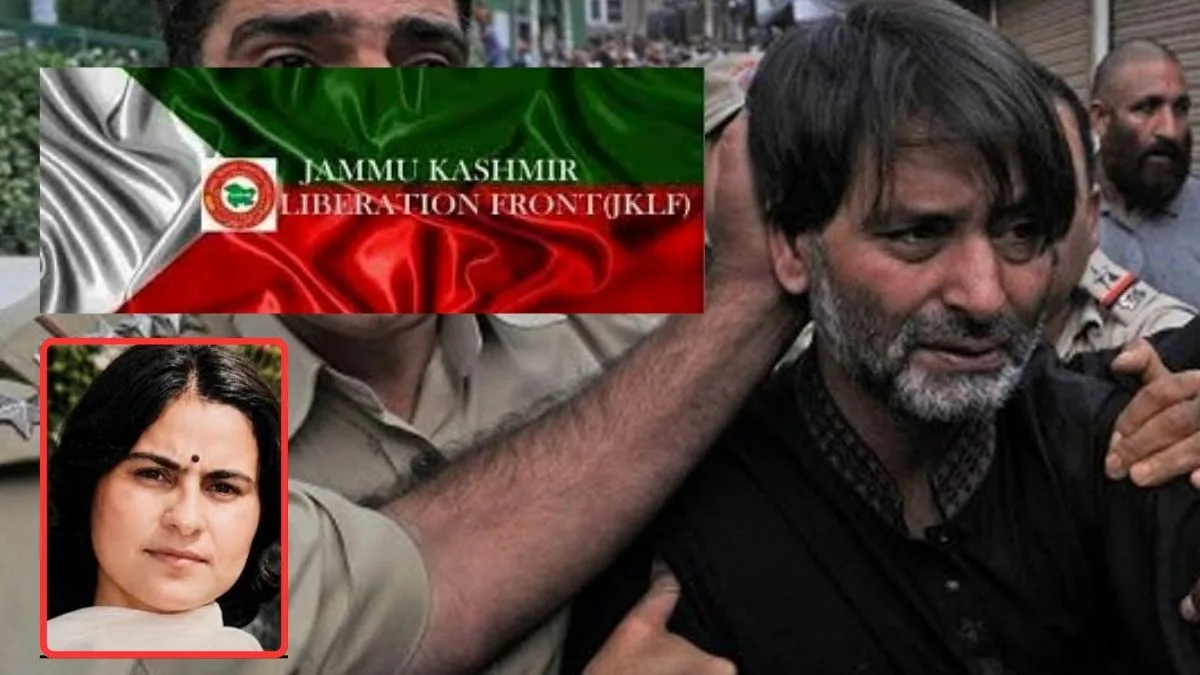
The new revelation by the Jammu and Kashmir State Investigation Agency (SIA) on the death of Sarla Bhat in 1990 doesn’t come as a shock to anyone with even a shred of intellectual honesty. The team has conclusively established what was long obvious to those who bothered to look: the 27-year-old Kashmiri Pandit nurse, working at Srinagar’s Sher-i-Kashmir Institute of Medical Sciences (SKIMS), was abducted, brutally tortured, and killed by the Jammu Kashmir Liberation Front (JKLF) on April 18, 1990.
The Murder of Sarla Bhat
In April 1990, Shambhu Nath Bhat, a schoolteacher, had not yet left the Valley. Neither had his eldest daughter, Sarla, a twenty-seven-year-old staff nurse at the Sher-i-Kashmir Institute of Medical Sciences (SKIMS) in Srinagar. Much of her family had already left the Valley: an uncle, cousins, and the familiar faces that once filled the mohalla. But Sarla kept catching the bus to Srinagar every morning. She put on her uniform and walked the wards of SKIMS, where patients needed care, no matter what was happening outside the hospital gates. She was, without choosing the role, one of the last of her community still showing up to work in a city that was emptying of people like her.
On the night of 15 April, that ordinary defiance ended. Men came for her at her hostel in Srinagar and took her away. Investigators later pieced together the events from testimonies and medical evidence. These included captivity, torture, and rape at the hands of men who had already labeled her as an informer, a ‘Mukhbir’, a convenient tag for a Hindu nurse in a valley where being Hindu was becoming an accusation in itself.
Sarla’s family did not know where she was for four days. On the morning of 19 April, her body was found by the roadside in Mallabagh, mutilated, with a note pinned to her claiming responsibility for the killing in the name of the Jammu and Kashmir Liberation Front. The group’s initials were carved into her skin, to leave no doubt about who wanted credit- This was intended to make it clear that the JKLF had deliberately targeted her, sending a message to others.
The Kashmiri Pandit exodus
Sarla’s killing is widely cited as one of several targeted killings in early 1990 that triggered mass panic among Kashmiri Pandits, contributing to the exodus of more than tens of thousands from the Valley. Kashmiri Pandit group’s view Bhat’s murder as emblematic of the targeted violence that displaced over tens of thousands of community members, and for many it symbolises the broader pain and unresolved trauma of that era.
Her murder didn’t happen in isolation. It landed in the middle of a six-month stretch that reshaped Kashmir’s demography for a generation.
“The Pattern” Before Sarla Bhat Murder
On January 19, 1990, radical slogans blared from mosque loudspeakers across the valley, threatening Kashmiri Pandits and calling for their exodus, with posters and leaflets warning Pandits to convert, leave, or be killed. This was days before Sarla Bhat’s murder — and it wasn’t the first killing either.
Tika Lal Taploo, a lawyer and prominent BJP leader, was gunned down in September 1989, and retired judge Neelkanth Ganjoo — who had sentenced JKLF founder Maqbool Bhat to death — was assassinated that November. By January and February 1990, IB officers ML Bhan and Tej Kishen Razdan were among four intelligence officials shot dead — killings so unsettling that colleagues avoided even attending the wreath-laying ceremony for one of them, fearing it wasn’t safe.
Then came February 2: Satish Tikoo, a young Hindu social worker, murdered near his own house in Habba Kadal. February 13: Lassa Kaul, Station Director of Srinagar Doordarshan, shot dead. By the time Sarla Bhat was killed on April 18, the valley’s Pandits had already watched judges, journalists, intelligence officers, and community workers picked off one by one.
Her killing sat alongside others that spring — a Pandit lecturer and his wife murdered in Zainakadal, a chemist and his wife killed at Wakora, Ganderbal — as part of a wave that turned murmured fear into mass flight.
Abduction of Girija Tickoo- Kashmiri Hindu Pandit from Bandipora
Girija Tickoo lived in Bandipora, where she worked as a laboratory assistant at a higher secondary school in the Valley. As terrorism grew, thousands of Kashmiri Hindus faced targeted killings, threats, and intimidation. Many were forced to leave their homes overnight. Groups backed by Pakistan and the Muslim radicals like Yasin Malik and Bitta Karate have often been blamed for the terror campaign that led to the exodus of Kashmiri Pandits.
Like many others, Girija and her family fled to Jammu to find safety. Later, Tickoo received a message saying that conditions in the Valley had improved and that she could return to collect her outstanding salary from her school. Trusting the information, she traveled back. On her way home, five men abducted her from a colleague’s house and took her to an unknown location.
Witnesses, including a close friend, reportedly saw her being taken away but did not step in to help. Days later, they found her mutilated body by the roadside. According to various reports and post-mortem results, she had been gang-raped, tortured, and while still alive, was cut in half with a carpenter’s saw. Her murder has come to represent the extreme violence faced by parts of the Kashmiri Pandit community during that time. For many, her only “crime” was being a Kashmiri Hindu.
“Not Random Acts” — The Strategy Behind the Killings
What made this different from ordinary sectarian violence, investigators and historians argue, was intent. Beginning in 1990, an estimated 100,000 to 250,000 Hindu Pandits left the Kashmir Valley following a campaign of threats and targeted killings by the JKLF.
The killings weren’t just violence — they were messaging. Even ordinary, non-prominent Pandits weren’t spared: neighbours-turned-killers shot 45-year-old Bansi Lal Sapru dead in his own compound in April 1990, a case historians point to as proof the campaign reached beyond public figures into the fabric of everyday Kashmiri Pandit life.
The goal, as later described by rights researchers, was demographic: strip the valley of a community seen as pro-India, using fear as the primary weapon.
Government focused on “Zero Tolerance” policy, Historic abrogation of Article 370
However, the tide finally changed. With a government focused on a “Zero Tolerance” policy on terror, the historic abrogation of Article 370, and the 2019 ban on the JKLF, old events came back into focus. In 2025, the State Investigation Agency (SIA) reopened Sarla’s long-dormant case, spurred by pressure from survivors and a changing political climate. Investigators carefully tracked down SKIMS nurses who had worked with Sarla, matched ballistics, and found protected witnesses who were finally ready to share their stories.
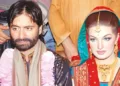
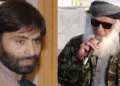
In June 2026, the long silence ended. A detailed 737-page chargesheet was filed before a TADA court in Srinagar. It named five men, including the fugitive gunman Khurshid Ahmad Chalkoo, and notably, Mohammad Yasin Malik as the main mastermind behind the abduction and murder.
Sarla Bhat did not live to see this day, and for her grieving family, this delayed justice is a painful reminder of their long suffering. Yet, it represents a vital and historic milestone. It promises that the true history of the Kashmiri Pandit exodus will be recognised, that the horrors of 1990 will never be forgotten, and that the brave nurse who stayed behind will finally see her killers brought to account.