A news of July 1, 1946 that appeared in Indian Daily Mail of Singapore in its July 3 edition said “23 persons have so far been killed and 160 in injured in the communal riots which broke-out at Ahmedabad yesterday (July 1), when the police opened fire many times.
“The disturbances followed a procession taken out by the Hindus. The procession was stoned by Muslims and soon trouble spread to the whole city: many localities presented an appearance of hostile military camps.
“Hindus and Muslims staged pitched battles with stones and brick bats and later started looting and burning shops. Only the strict enforcement of the curfew order from 9.pm brought quite to the city.
“The authorities have taken measures to prevent a recrudescence of the trouble: the military have been called out and section 144 order issued to prevent meetings and processions…..
“The police fired on mobs, troops were called out and public assemblies were banned.”
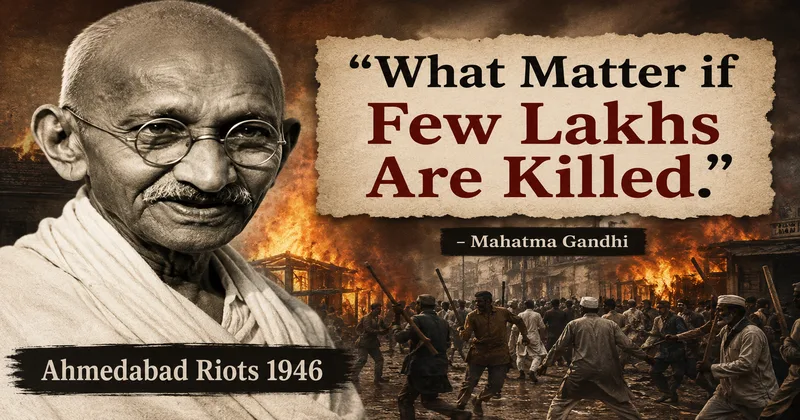
News of July 2 appeared in July 4 edition of this paper. It was captioned “What Matter if Few Lakhs Are Killed”. It informed “Rioting continued in Ahmedabad on yesterday when casualties reached 33 killed and more than 250 injured. Over 400 arrests were made.
“Mahatma Gandhi referred to the riots in his prayer meeting on July 2 night and said it was shame they had to take police and military help to prevent them from flying at each-others’ throats. If one side ceased to retaliate, the riots could not go on.
He said “What did it matter if even few lakhs were killed in right manner out of 40 crores of Indians? If they could learn the lesson of dying without killing, India would become a virtual Eden, the image of the kingdom of heaven on earth.”
The occasion of incident and Happenings
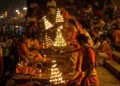
The incident happened during the Ahmedabad Jagannath Rath Yatra. It had since long been India’s second-largest rath yatra after Puri, held annually. A 14-km procession is taken from the 400 centuries old Jagannath Temple in Jamalpur, covering areas like Jamalpur Chakla, Khadia, Kalupur Circle, and Saraspur and back to the Jagannath temple by evening. The event is marked by caparisoned elephants, akhadas displaying martial arts, the bhajan mandalis and a massive public feast in Saraspur. This Rath Yatra passes through predominantly Muslim areas such as such as Khadia Kalupur and Dariapur.
In the said procession a Muslim Gymnast Sikandar criticized a Hindu, Chitranjan Chintamani, who was demonstrating his skill of weight lifting, in the procession. The criticism turned into fracas between the two and then into physical fight at about 12.30. The police brought the situation under control for the time being. When the procession passed by a restaurant near Railway Station, soda water bottles were thrown on the procession by persons who were hidden in that restaurant. The police forcibly broke open the door of the restaurant and arrested several Muslims. This infuriated them.
Widespread arson, stone-throwing, and stabbing across the Muslim dominated Shaher Kotda police station area happened which extended into Khadia near Muslim dominated Jamalpur.
Vasantrao Hegishte and Rajabali Lakhani, two local youths, were killed while trying to bring about peace during communal riots this day in Ahmedabad.
Steps Taken by Government
The B.G.Kher government acted decisively. They warned the rioters that “lawlessness can never be tolerated”. State officials made it clear that the full force of the Government would be put in motion to stop bloodshed and did not hesitate to deploy the military to restore order.
Home Minister Morarji Desai managed the 1946 Jagannath Rath Yatra riot in Ahmedabad by deploying the military and imposing a curfew when the local police lost control of the situation. The incident sparked a stern response and a critical letter from Mahatma Gandhi, who questioned the heavy-handed state tactics.
Reaction of Mahatma Gandhi
Mahatma Gandhi asked Morarji Desai, the then Minister of Home and Revenue of the Bombay Presidency in a letter from Pune, “They (police) must have anticipated a skirmish. Why did the police not take precautionary measures?” Gandhi also questioned Morarji’s decision to use the military. In his letter to Morarji he wrote “Does not the police now belong to the people? Why did they not seek the people’s co-operation beforehand? Our real defence force ought to be the people. Why call the military for such tasks? The state too may not rule with the help of the military”. Gandhiji went on to say that if the immediate withdrawal of military was not possible, they should be used for policing but without using rifles. Only bayonets could be used and that too sparingly. Gandhi ended the letter asking Desai to do only what he felt was right and that “A word is enough for the wise.”
According to Gandhi, true bravery is laying down one’s life peacefully rather than dying after taking someone else’s life. He repeatedly returned to this theme during the turbulent times leading up to partition.
Gandhiji’s utterance during prayer meeting on July 2 1946, needs reflection “Mathatma Gandhi said that the outbreak of communal riots in Ahmedabad had pained him deeply and he had told Morarji Desai, Bombay’s Home Minister, who had come to see him before his departure for Ahmedabad, that he (Mr. Desai) must go to meet the flames under the sole protection of God, not that of the police and military. If need be, he must perish in the flames in the attempt to quell them as the late Mr. Ganesh Shankar Vidyarthi had done.…. If enough young men like Ganesh Shankar Vidyarthi, Vasantrao and Rajab Ali came out, riots could be banished for ever….In Ahmedabad, went on Gandhiji, the pride of Sardar Vallabhbhai Patel, where he had rendered yeoman’s service to the Municipality, Hindus and Muslims had always lived together in peace. But of late, they seemed to be dehumanized…If one of the communities gives up the madness the conflict will cease immediately….All the deaths in Ahmedabad were not the result of firing. Many were the results of stabbing and the like. It was a shame that they had to call for the help of the police and the military to prevent them from flying at each other’s throats…. by seeking the help of the police and the army we become their slaves. If we want to have true independence, we should stop relying on them and relying solely on God should learn how to die. That is all we have to do. Many people know how to die after killing others but we have to die without killing anyone…. If one side ceased to retaliate, the riots could not go on. What did it matter if even a few lakhs were killed in the right manner out of the 40 crores of Indians? If they could learn the lesson of dying without killing, India which was celebrated in legend history as Karmabhoomi—the land of duty—would become a virtual Eden, the image of the Kingdom of Heaven on earth.” (Speech at Poona prayer meeting, July 2, The Hindu, 4-7-1946, and Harijanbandhu)
During his address at prayer meeting at Poona on July 3 Gandhiji said “Shri Morarji Desai had invited the representatives of the Muslims, Hindus and others to a joint conference at Ahmedabad and had told them he was prepared to withdraw the police and miliary if they so desired. But the latter, he heard, had unanimously replied that they were not prepared to take the risk. The result was that police and military were there. The authorities had imposed curfew for day and night for three days. Therefor as a result, disturbances had been arrested, the peace that was seen today in Ahmedabad, was peace of the grave.” (vol 84. P. 408)
Some observations
1. When Gandhiji said “What matter if few lakhs are killed in right manner” by right manner he meant without retaliation. What a callous attitude! He shunned intervention by police and military.
2.When Gandhiji said “If one side ceased to retaliate”. Certainly, Hindus were supposed not to retaliate as stoning and soda water bottle throwing during the rath yatra and had been perpetrated by the Muslims.
5.Hindus were not agreeable for withdrawal of police and military. One can conclude the reason.
6. Gandhiji’s complain, “of late, they (Hindus and Muslims) seemed to be dehumanized” is acceptance of his failure of life long effort to bring about Hindu-Muslim unity.
Only a month a half later, Calcutta holocaust happened. The stand taken by Morarji to contain the riot and that taken by Suharavardi to augment the situation needs to be compared.