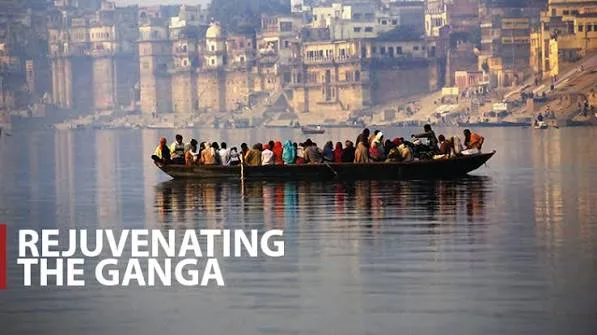
In a significant step towards integrating environmental sustainability with urban development, the National Mission for Clean Ganga (NMCG) has accelerated the implementation of Urban River Management Plans (URMPs) across cities located in the Ganga Basin. The initiative, being implemented in partnership with the National Institute of Urban Affairs (NIUA), seeks to fundamentally reshape the way Indian cities interact with rivers by placing river health at the centre of urban planning and development.
The programme has already completed Urban River Management Plans for 13 cities and is currently preparing plans for dozens of additional urban centres across Uttarakhand, Uttar Pradesh, Bihar, Jharkhand and West Bengal. With ongoing expansion under multiple phases, the initiative now covers around 60 cities and represents one of the world’s largest coordinated efforts to align urban development with river conservation.
Officials say the programme is not merely about cleaning rivers but about reimagining entire urban ecosystems around them. The plans combine ecological restoration, pollution management, flood resilience, cultural heritage conservation, public participation and economic development into a single planning framework.
Prime Minister’s Vision of River-Centric Development
The origins of the initiative can be traced back to the National Ganga Council meeting held in Kanpur in December 2019. During the meeting, Prime Minister Narendra Modi called for a shift from traditional city-centric development models towards river-centric planning.
The Prime Minister argued that rivers should not be treated as isolated water channels running through cities. Instead, they should become central elements around which urban planning, environmental management and public life are organised.
This vision has since become a guiding principle for the Urban River Management Plan framework.
The approach recognises that rivers and cities share a symbiotic relationship. Healthy rivers contribute to groundwater recharge, biodiversity, flood mitigation, climate resilience, cultural continuity and economic activity. Conversely, unplanned urbanisation often leads to pollution, encroachment, degradation of wetlands and increased vulnerability to flooding.
The URMP initiative seeks to bridge this gap by ensuring that urban development and river conservation move forward together.
What is an Urban River Management Plan?
An Urban River Management Plan is a comprehensive city-level strategy designed to integrate river health into urban planning and governance.
Unlike conventional urban development plans, URMPs examine the entire river ecosystem and its interaction with surrounding urban settlements. The framework is built around three key pillars—environmental sustainability, economic development and social inclusion.
Each plan follows a ten-point agenda aimed at restoring and protecting river ecosystems while supporting urban growth.
These interventions include floodplain regulation, pollution control measures, restoration of wetlands and water bodies, protection of riparian zones, reuse of treated wastewater, eco-sensitive riverfront development, maintenance of quality return flows into rivers, sustainable utilisation of river resources and active citizen engagement.
The plans also establish timelines and implementation pathways through infrastructure projects, policy reforms, regulatory interventions and community participation programmes.
From Pilot Projects to Basin-Wide Expansion
The current scale of the programme is the result of lessons learned from pilot projects implemented in cities such as Ayodhya, Kanpur and Chhatrapati Sambhaji Nagar.
These pilot initiatives demonstrated that river-sensitive planning could be tailored to local conditions instead of relying on standardised solutions.
Each city faced unique challenges. Some struggled with pollution and untreated sewage, while others dealt with flooding, wetland degradation, riverbank erosion or loss of cultural connections with rivers.
The success of these pilot projects convinced policymakers that the framework could be expanded across the Ganga Basin.
Under Phase-I of the programme, supported by the World Bank, Urban River Management Plans are being prepared for 27 cities located across Uttarakhand, Uttar Pradesh, Bihar, Jharkhand and West Bengal.
The cities represent diverse geographical and ecological conditions ranging from the upper Himalayan reaches of the Ganga near Gangotri and Rishikesh to industrial and urban centres such as Howrah, Durgapur and Asansol in eastern India.
Of these, plans for 13 cities have already been completed. The remaining cities are expected to be covered by March 2027.
The long-term objective is even more ambitious. Authorities aim to eventually cover all 97 cities located along the main stem of the Ganga, creating a consistent yet locally adaptable framework for river-sensitive urban planning.
Uttarakhand: Restoring Ecological Connections in Himalayan Cities
In Uttarakhand, Urban River Management Plans are focusing on restoring ecological linkages between cities and rivers while supporting tourism, biodiversity conservation and climate resilience.
The plan for Haldwani-Kathgodam seeks to reconnect the urban landscape with the Gaula River. Measures include creation of riparian buffers, flood management interventions and ecological restoration of riverfront areas.
The city has experienced increasing pressure from urban expansion, making river-sensitive planning critical for long-term sustainability.
Ramnagar’s plan is closely linked to the broader Corbett landscape. The Kosi River has been positioned as a key component of the region’s eco-tourism economy.
The proposal includes biodiversity-focused riverfronts, bird habitats, ecological parks, viewing towers and public spaces designed to enhance environmental awareness while supporting local livelihoods.
In Rishikesh, the focus is on restoring tributaries, wetlands and associated water systems that ultimately feed into the Ganga.
Projects include wetland rejuvenation, sewerage upgrades, faecal sludge management and ecological restoration measures aimed at preserving the city’s spiritual significance while enhancing environmental resilience.
Officials say these interventions demonstrate how ecological conservation and urban growth can coexist in rapidly developing Himalayan cities.
Uttar Pradesh Focuses on Flood Resilience and Cultural Heritage
Several cities in Uttar Pradesh have adopted innovative approaches under their Urban River Management Plans.
Gorakhpur’s strategy revolves around blue-green infrastructure solutions designed to address chronic urban flooding. The city plans to develop sponge parks, bioswales, constructed wetlands and ecological riverfront spaces that absorb excess rainwater while improving biodiversity.
The objective is to transform flood management from a purely engineering challenge into an ecological opportunity.
Shahjahanpur’s plan focuses on restoring the Garra and Khannaut rivers through a combination of wastewater treatment, ecological restoration and public participation.
Authorities are promoting citizen awareness campaigns under initiatives such as “Meri Nadi, Mera Shahar” to encourage residents to take ownership of river conservation efforts.
In Bijnor, planners have adopted a district-wide ecological approach linked to the Haiderpur Wetland and broader Ganga ecosystem.
The focus includes biodiversity conservation, wetland restoration and eco-tourism development that supports both environmental objectives and local economic growth.
Prayagraj’s Urban River Management Plan is particularly significant due to the city’s unique cultural and religious importance.
The plan envisions the Sangam area and associated river systems as “Living Heritage Corridors.” It integrates ecological restoration, flood resilience, heritage preservation and tourism development into a unified framework.
Officials believe the approach can help preserve Prayagraj’s cultural landscape while addressing environmental challenges associated with rapid urbanisation.
Bihar Integrates Rivers, Culture and Urban Resilience
Cities in Bihar are using Urban River Management Plans to strengthen the relationship between rivers, culture and sustainable development.
Buxar’s plan proposes a culturally vibrant yet environmentally sensitive riverfront along the Ganga.
The proposal includes biodiversity parks, ecological zones, permeable ghat infrastructure, canal restoration and constructed wetland systems designed to improve water quality.
Chapra’s plan addresses challenges arising from recurrent flooding and dynamic river morphology.
The strategy includes floodplain zoning, restoration of the Tel River corridor, decentralised wastewater treatment systems and rejuvenation of ponds and wetlands as components of an integrated blue-green network.
In Gaya, planners are focusing on restoring the ecological health of the Falgu River.
The plan includes groundwater recharge measures, floodplain restoration, phytoremediation of polluted drains and GIS-based monitoring of water bodies.
These interventions seek to improve both environmental quality and urban resilience.
Moving Beyond Planning Towards Implementation
Officials emphasise that the initiative has now entered a new phase focused on implementation.
While planning remains important, the objective is increasingly to demonstrate how Urban River Management Plans can be translated into visible, measurable outcomes on the ground.
NMCG and NIUA are working with Urban Local Bodies to identify interventions that can serve as demonstration projects.
These projects are expected to generate environmental, social and economic benefits while providing models that can be replicated elsewhere.
Kanpur Emerges as a Demonstration City
Kanpur has become one of the leading examples of implementing Urban River Management Plan recommendations.
One of the city’s flagship projects involves rejuvenation of the Central Ordnance Depot (COD) Drain.
The drain has long been identified as a degraded urban watercourse contributing to environmental stress.
Authorities are developing a detailed restoration framework aimed at transforming it into an ecologically functional corridor capable of supporting biodiversity and improving environmental quality.
Another important initiative focuses on restoring urban water bodies using Lake Assessment and Monitoring Analysis System (LAMAS) technology.
The approach combines scientific assessment, ecological restoration and long-term management practices to improve water quality and restore ecological functions.
Beyond environmental benefits, rejuvenated lakes and ponds are expected to provide recreational opportunities, improve urban aesthetics and enhance climate resilience.
Incentives for Urban Local Bodies
To encourage implementation, NMCG is leveraging the Performance Based Incentive Grant (PBIG) mechanism under its partnership with the World Bank.
The initiative aims to motivate Urban Local Bodies to implement priority interventions identified through Urban River Management Plans.
Potential projects include development of riparian buffers, preparation of Faecal Sludge and Septage Management plans, restoration of wetlands and water bodies, eco-friendly riverfront projects and technology-driven river management systems.
Officials believe the incentive-based approach can accelerate implementation while ensuring accountability and measurable outcomes.
While the current focus remains on the Ganga Basin, policymakers are already looking beyond the river system.
The long-term vision is to institutionalise river-sensitive urban planning as a national development model.
Lessons learned from the Ganga Basin are expected to inform future initiatives in other river systems across the country.
If successful, the framework could transform the way Indian cities plan growth, manage water resources and build climate resilience.
The initiative represents a significant shift in urban planning philosophy. Instead of viewing rivers as infrastructure assets or drainage channels, cities are being encouraged to recognise them as living ecosystems that support economic development, cultural identity and environmental sustainability.
As India grapples with the twin challenges of rapid urbanisation and climate change, Urban River Management Plans could emerge as a critical tool for creating resilient, sustainable and future-ready cities. By placing rivers at the centre of planning decisions, the programme seeks not only to revive waterways but also to reshape the future of urban development itself.