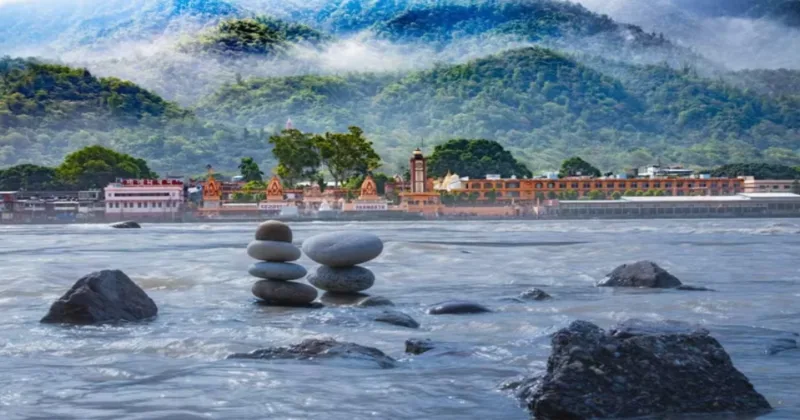
Under the ambitious flagship Namami Gange program initiated by the Government of India in 2014, dedicated to the cleanliness, uninterrupted flow, and purity of the sacred river Ganga, the first step involved identifying 15 primary towns along the main course of the Ganga—from Shri Badrinath to Devprayag and from Gangotri to Haridwar. These towns are: Haridwar, Rishikesh, Swargashram, Tapovan, Muni-ki-Reti, Kirtinagar, Srinagar, Shrikot, Nandprayag, Rudraprayag, Karnaprayag, Gopeshwar-Chamoli, Joshimath, Badrinath, and Uttarkashi.
To prevent pollution caused by drains discharging into the Ganga, 62 Sewage Treatment Plants (STPs) with a combined capacity of 244.47 MLD were approved along the main river. Of these, 51 STPs with a capacity of 195.355 MLD have already been completed and are operational. In Uttarakhand, 170 polluted drains discharging into the Ganga have been identified, out of which 155 drains have been successfully tapped. The remaining 15 drains are being connected to 11 STPs under construction, with a total capacity of 49.122 MLD.
The positive outcomes of the technical interventions and public awareness initiatives under the Namami Gange program for the cleanliness, uninterrupted flow, and purity of the Ganga and its tributaries are now becoming visible on the ground.
According to UKPCB reports, in 2013–2014, the water quality of the Ganga in Haridwar was Category D (fisheries). After the launch of Namami Gange in 2015, the water quality improved to Category C (drinkable after treatment). By 2025, water quality had improved to Category A (drinkable) in Rishikesh and Category B (bathing) in Haridwar. This clearly demonstrates that the Namami Gange program is producing tangible results in ensuring the cleanliness and purity of the Ganga and its tributaries.
Uttarakhand is the first state in India to pass the Policy on safe reuse of treated water (SRTW) through the State Cabinet and implement it, developed in cooperation with GIZ (German International Cooperation), in line with the National SRTW framework. As per this Policy, treated water from STPs will now be effectively reused for construction, firefighting, irrigation, and other purposes, thereby conserving freshwater sources.
To further improve the quality of treated water from STPs, Tertiary Treatment Plants will be established in accordance with NGT standards, ensuring the water is purified to a higher level.
District Ganga Committees are preparing District Ganga Plans in all 13 districts of the state under Namami Gange, focusing on liquid waste, faecal sludge, municipal solid waste, and water conservation. The plans for 8 districts have been completed, and implementation is underway; the remaining 5 districts are in preparation.
While tapping polluted drains remains a primary focus, the state government is also promoting co-treatment facilities to safely treat and dispose of septage collected from household septic tanks. Five co-treatment projects have been completed so far and are functional (Haridwar – 2, Rishikesh – 1, Devprayag – 1, Srinagar – 1). Additionally, one Faecal Sludge Treatment Plant (FSTP) with a capacity of 125 KLD is operational, the first and largest in Uttarakhand for the city of Rudrapur.