Sant Kabir Jayanti: The mystic poet who challenged ritualism
July 21, 2026
  • Read Ecopy
  • Circulation
  • Advertise
  • Careers
  • About Us
  • Contact Us
Android AppiPhone AppArattai
Organiser
  • ‌
  • Bharat
    • Assam
    • Bihar
    • Chhattisgarh
    • Jharkhand
    • Maharashtra
    • View All States
  • World
    • Asia
    • Europe
    • North America
    • South America
    • Africa
    • Australia
  • Editorial
  • International
  • Opinion
  • RSS @ 100
  • More
    • Op Sindoor
    • Analysis
    • Sports
    • Defence
    • Politics
    • Business
    • Economy
    • Culture
    • Special Report
    • Sci & Tech
    • Entertainment
    • G20
    • Azadi Ka Amrit Mahotsav
    • Vocal4Local
    • Web Stories
    • Education
    • Employment
    • Books
    • Interviews
    • Travel
    • Law
    • Health
    • Obituary
  • Subscribe
    • Subscribe Print Edition
    • Subscribe Ecopy
    • Read Ecopy
  • ‌
  • Bharat
    • Assam
    • Bihar
    • Chhattisgarh
    • Jharkhand
    • Maharashtra
    • View All States
  • World
    • Asia
    • Europe
    • North America
    • South America
    • Africa
    • Australia
  • Editorial
  • International
  • Opinion
  • RSS @ 100
  • More
    • Op Sindoor
    • Analysis
    • Sports
    • Defence
    • Politics
    • Business
    • Economy
    • Culture
    • Special Report
    • Sci & Tech
    • Entertainment
    • G20
    • Azadi Ka Amrit Mahotsav
    • Vocal4Local
    • Web Stories
    • Education
    • Employment
    • Books
    • Interviews
    • Travel
    • Law
    • Health
    • Obituary
  • Subscribe
    • Subscribe Print Edition
    • Subscribe Ecopy
    • Read Ecopy
Organiser
  • Home
  • Bharat
  • World
  • Operation Sindoor
  • Editorial
  • Analysis
  • Opinion
  • Culture
  • Defence
  • International Edition
  • RSS @ 100
  • Magazine
  • Read Ecopy
Home Bharat

Sant Kabir Jayanti: Remembering the mystic poet who challenged ritualism & championed love, equality and truth

Sant Kabir Das, one of India's most influential poet-saints, continues to inspire generations with his timeless teachings on love, equality and spiritual awakening

WEBDESKWEBDESK
Jun 29, 2026, 07:00 am IST
in Bharat, Culture
Follow on Google News
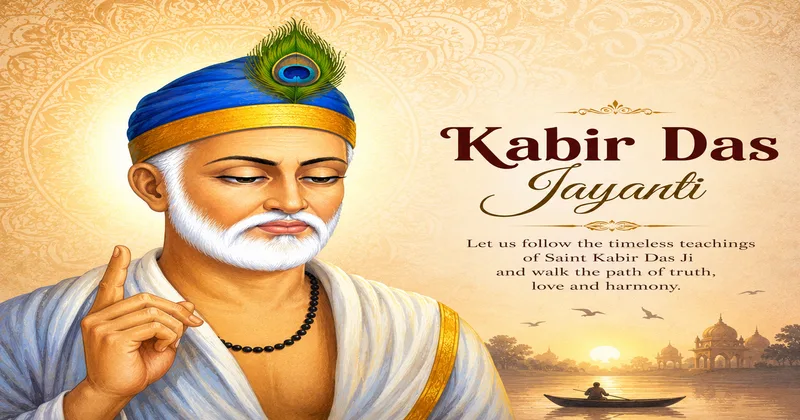
Remembering Sant Kabirdas on his Jayanti

Remembering Sant Kabirdas on his Jayanti

FacebookTwitterWhatsAppTelegramEmail

Sant Kabir Das occupies a unique place in India’s spiritual and literary heritage. Widely regarded as one of the foremost Bhakti sants, Kabir’s verses transcended religious boundaries and spoke directly to ordinary people in a language they could understand.

According to traditional accounts, Kabir was born around 1398–1399 CE near Varanasi. While details surrounding his birth remain a subject of historical debate, it is widely believed that he was raised by Niru and Nima, a family of weavers (Julahas), after being found near Lahartara. Growing up in a humble household exposed Kabir to diverse religious and philosophical influences that later shaped his teachings.

Read More: PM Modi addresses Seychelles Parliament; Advocates climate justice, maritime security & Global South prosperity

Many traditions associate Kabir with the Bhakti Sant Ramananda, whom he is believed to have accepted as his spiritual guru. Kabir himself refers to Ramananda with deep reverence in several of his verses, while emphasising that true spiritual knowledge comes through direct experience and devotion rather than ritualistic practices.

Although Kabir never received formal education, his compositions have become enduring classics of Indian literature. His disciples preserved his teachings in collections comprising Sakhis (couplets), Shabads (hymns), and Ramainis, many of which continue to be recited across India.

A Voice Against Social Divisions

Kabir was among the earliest voices to openly criticise caste discrimination and social inequality.

His famous couplet:

“Jaati na puchho sadhu ki, puchh lijiye gyaan”
(“Ask not a saint’s caste; ask instead about his wisdom.”)

captures his belief that knowledge, character and devotion—not birth—define an individual.

Similarly, through verses such as “Bura jo dekhan main chala…” and “Kabira khada bazaar mein...”, Kabir encouraged introspection, humility and goodwill towards all.

His teachings consistently emphasised compassion, moderation and self-reflection over social status or external identity.

Critique of Ritualism Across Communities

A defining feature of Kabir’s philosophy was his rejection of ritualism and hypocrisy wherever he perceived it.

He questioned practices that, in his view, prioritised outward religious observance over inner spiritual transformation. His verses contain pointed critiques of ritualistic practices among both Hindus and Muslims, reflecting his broader message that genuine devotion cannot be achieved through ceremonies alone.

Among his well-known observations are verses questioning mechanical religious rituals, public displays of piety and practices he believed contradicted compassion and moral conduct.

Kabir’s criticisms were directed not at communities as a whole but at what he regarded as empty ritualism, dogmatism and social hypocrisy. His message urged individuals to cultivate sincerity, ethical conduct and devotion rooted in truth.

The Philosophy of Love

Perhaps Kabir’s most enduring teaching is his emphasis on love as the highest spiritual path.

His celebrated couplet:

“Pothi padh padh jag mua, pandit bhaya na koye; Dhai aakhar prem ka, padhe so pandit hoye.”

(“The world may read countless books, yet wisdom remains elusive; one who understands the two-and-a-half letters of ‘love’ is the true scholar.”)

This philosophy continues to resonate across generations as a call for empathy, humility and human unity.

An Enduring Legacy

Centuries after his lifetime, Kabir’s verses remain part of India’s cultural consciousness. They are sung in devotional gatherings, taught in schools and universities, and studied by scholars of literature, religion and philosophy.

His teachings influenced the Bhakti movement and also found resonance among Sufi traditions, reflecting his ability to bridge social and spiritual divides.

In contemporary society, Kabir’s message continues to inspire discussions on equality, ethical living, religious harmony and the rejection of prejudice.

As India commemorates Sant Kabir Jayanti, his timeless wisdom serves as a reminder that truth, compassion and self-realisation remain the strongest foundations for a just and harmonious society.


 

Topics: Sant Kabirdas JayantiBhakti Sant Ramananda
ShareTweetSendShareSend
✮ Subscribe Organiser YouTube Channel. ✮
✮ Join Organiser's WhatsApp channel for Nationalist views beyond the news. ✮
Previous News

PM Modi addresses Seychelles Parliament; Advocates climate justice, maritime security & Global South prosperity

Next News

Bharat’s complete & integrated vision holds the answers that the world today is seeking: Dr Mohan Bhagwat in Bengaluru

Related News

No Content Available
Load More

Latest News

Keralam Minister moves to stop free food distribution by NGOs in government hospitals, sparks backlash

NEET 2026 | Abhay Yadav Case: NTA warns against AI generated OMR sheets & scorecards; Reiterates strict legal action

Former Aam Aadmi Party (AAP) councillor Tahir Hussian with AAP leader and former Delhi Chief Minister Arvind Kejriwal. Notably, Delhi court convicted Tahir Hussain and four others for the 2020 murder of Intelligence Bureau (IB) staffer Ankit Sharma, who was brutally killed and his body was dumped into a drain in the Chand Bagh area during anti-Hindu Delhi riots

Anti-Hindu Delhi Riots 2020: When evidence outlasted narratives

NCUI Elections: Sahakar Bharati–BJP registers historic victory; Wins 19 of 20 seats & 10 candidates elected unopposed

Representative Image

Tamil Nadu: Authorities ‘demolish’ Annadaana Satram in Thiruvannamalai; Sparks outrage from public

India's BioE3 Policy aims to build a $2.6 trillion bioeconomy by 2047 through biotechnology-driven innovation, jobs and growth

India’s Bioeconomy Revolution: How NITI Aayog’s roadmap seeks to make the country a global biotechnology leader by 2047

Tri-Services Exercise 2025 was led by the Western Naval Command of the Indian Navy along with the Southern Command of the Indian Army and the South Western Air Command of the Indian Air Force as the principal participating formations

Theatre Command: Military reforms for integrated Actions

Court-Ordered Demolition: Periyar Arch Removed in Madurai Overnight

Tamil Nadu: Madurai authorities demolish EV Ramaswamy arch to ease traffic, acting on High Court orders

The then Prime Minister Atal Bihari Vajpayee with the soldiers in Kargil, June, 1999

Theatre Command: Review, revision and reforms

Pakistan tops the Global Terrorism Index and faces EU scrutiny over its human rights record, risking key trade benefits

GSP+ status review: EU wants Pakistan to improve human rights record, end enforced disappearances, or lose it

Load More
  • Privacy
  • Terms
  • Cookie Policy
  • Refund and Cancellation
  • Delivery and Shipping

© Bharat Prakashan (Delhi) Limited.
Tech-enabled by Ananthapuri Technologies

  • Home
  • Search Organiser
  • Bharat
    • Assam
    • Bihar
    • Chhattisgarh
    • Jharkhand
    • Maharashtra
    • View All States
  • World
    • Asia
    • Africa
    • North America
    • South America
    • Europe
    • Australia
  • Editorial
  • Operation Sindoor
  • Opinion
  • Analysis
  • Defence
  • Culture
  • Sports
  • Business
  • RSS @ 100
  • Entertainment
  • More ..
    • Sci & Tech
    • Vocal4Local
    • Special Report
    • Education
    • Employment
    • Books
    • Interviews
    • Travel
    • Health
    • Politics
    • Law
    • Economy
    • Obituary
  • Subscribe Magazine
  • Read Ecopy
  • Advertise
  • Circulation
  • Careers
  • About Us
  • Contact Us
  • Policies & Terms
    • Privacy Policy
    • Cookie Policy
    • Refund and Cancellation
    • Terms of Use

© Bharat Prakashan (Delhi) Limited.
Tech-enabled by Ananthapuri Technologies