Emergency at Fifty: Democracy's darkest hour, India's finest test
September 14, 2026
  • Read Ecopy
  • Circulation
  • Advertise
  • Careers
  • About Us
  • Contact Us
Android AppiPhone AppArattai
Organiser
  • ‌
  • Bharat
    • Assam
    • Bihar
    • Chhattisgarh
    • Jharkhand
    • Maharashtra
    • View All States
  • World
    • Asia
    • Europe
    • North America
    • South America
    • Africa
    • Australia
  • Editorial
  • International
  • Opinion
  • RSS @ 100
  • More
    • World Hindu Congress 2026
    • Op Sindoor
    • Analysis
    • Sports
    • Defence
    • Politics
    • Business
    • Economy
    • Culture
    • Special Report
    • Sci & Tech
    • Entertainment
    • G20
    • Azadi Ka Amrit Mahotsav
    • Vocal4Local
    • Web Stories
    • Education
    • Employment
    • Books
    • Interviews
    • Travel
    • Law
    • Health
    • Obituary
  • Subscribe
    • Subscribe Print Edition
    • Subscribe Ecopy
    • Read Ecopy
  • ‌
  • Bharat
    • Assam
    • Bihar
    • Chhattisgarh
    • Jharkhand
    • Maharashtra
    • View All States
  • World
    • Asia
    • Europe
    • North America
    • South America
    • Africa
    • Australia
  • Editorial
  • International
  • Opinion
  • RSS @ 100
  • More
    • World Hindu Congress 2026
    • Op Sindoor
    • Analysis
    • Sports
    • Defence
    • Politics
    • Business
    • Economy
    • Culture
    • Special Report
    • Sci & Tech
    • Entertainment
    • G20
    • Azadi Ka Amrit Mahotsav
    • Vocal4Local
    • Web Stories
    • Education
    • Employment
    • Books
    • Interviews
    • Travel
    • Law
    • Health
    • Obituary
  • Subscribe
    • Subscribe Print Edition
    • Subscribe Ecopy
    • Read Ecopy
Organiser
  • Home
  • Bharat
  • World
  • Operation Sindoor
  • Editorial
  • Analysis
  • Opinion
  • Culture
  • Defence
  • International Edition
  • RSS @ 100
  • Magazine
  • Read Ecopy
Home Bharat

The Emergency at Fifty: Democracy’s darkest hour, India’s finest test

Fifty years after the Emergency, India reflects on a defining chapter that tested the strength of its democratic institutions and the resolve of its citizens. The period remains a powerful reminder that liberty endures only when people remain vigilant in defending constitutional freedoms

Debika DuttaDebika Dutta
Jun 25, 2026, 04:30 pm IST
inBharat, RSS in News
Follow on Google News
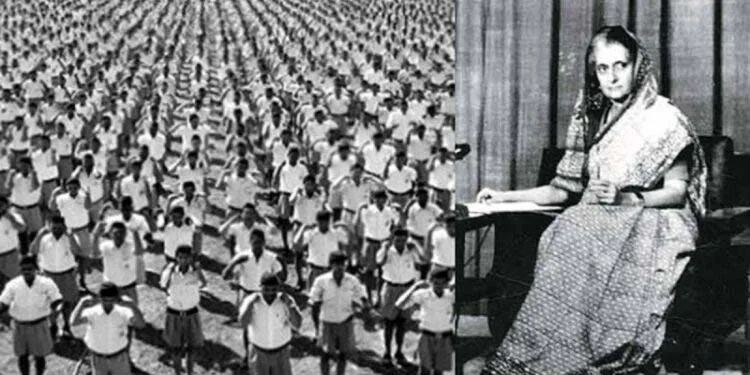
Fifty years after the Emergency, India reflects on a defining test of democracy, freedom and citizen resilience

Fifty years after the Emergency, India reflects on a defining test of democracy, freedom and citizen resilience

Facebook
Twitter
WhatsAppTelegramEmail

As India marks fifty years since the Emergency, remembrance must rise above partisan triumphalism and political score-settling. The Emergency is not merely the history of one government, one party or one political movement. It is part of the constitutional history of the Republic itself. Its lessons belong equally to supporters and critics of every political persuasion.

The true significance of the Emergency lies in what it revealed about democracy. It demonstrated how fragile freedom can become when power is concentrated, institutions become compliant, and dissent is treated as an obstacle rather than a democratic necessity. The constitutional framework survived, but many of the assumptions that citizens held about the permanence of liberty were profoundly shaken.

Yet the Emergency also revealed something equally important. It exposed not merely the vulnerability of Indian democracy but its extraordinary resilience. Across prisons, courtrooms, university campuses, newspaper offices and countless ordinary homes, Indians refused to accept that freedom was a gift that could be withdrawn at the discretion of the State. Socialists, Gandhians, journalists, student activists, lawyers, political workers and swayamsevaks stood on the same side of a larger constitutional struggle. Their ideological differences remained, but their commitment to liberty proved stronger.

The role played by the Rashtriya Swayamsevak Sangh during this period deserves recognition within this broader democratic narrative. Thousands of swayamsevaks faced arrest, organisational networks were disrupted by the ban imposed on the RSS, and many volunteers became active participants in underground resistance efforts. Their contribution formed an important part of a wider national movement that sought not political advantage but the restoration of democratic freedoms. The struggle against the Emergency remains a reminder that the defence of liberty is most effective when it transcends ideological boundaries.

Ultimately, the most decisive verdict on the Emergency came neither from historians nor from constitutional experts. It came from the people of India. In the general election of 1977, voters accomplished through the ballot box what countless authoritarian regimes throughout history had sought to prevent. They peacefully removed a government that appeared politically invincible and reaffirmed a principle that lies at the heart of democratic civilisation: power belongs to the people and remains answerable to them.

Also Read: France Music Festival Violence: Women stabbed, drugged and sexually assaulted; 243 arrests made

Fifty years later, the greatest lesson of the Emergency is not that democracy is invulnerable. Democracies can weaken. Institutions can fail. Rights can be curtailed. Constitutional safeguards can be tested. The enduring lesson is something far more hopeful. Democracy survives when citizens refuse to surrender it.

The prisons have long since emptied. The censorship orders have faded into archives. The personalities who dominated that era belong to history. Yet the warning of 1975 remains relevant to every generation. Freedom rarely disappears in a single dramatic act. More often, it recedes gradually—one institution at a time, one compromise at a time, one silence at a time.

The men and women who resisted the Emergency understood this truth. Some paid with imprisonment, others with the loss of careers, and many with years of uncertainty and sacrifice. Their courage ensured that India’s longest democratic night did not become a permanent darkness.

If the Emergency was the Republic’s darkest hour, the democratic awakening that followed was among its finest moments. The lesson endures after fifty years: liberty survives not because power is always restrained, but because free citizens remain determined to restrain it. In the end, it was not authority that prevailed. It was freedom.

 

Topics: RSSIndira GandhiIndian democracyEmergency 1975Civil LibertiesConstitutional HistoryDemocratic RightsEmergency Anniversary
Share
Tweet
SendShareSend
✮ Subscribe Organiser YouTube Channel. ✮
✮ Join Organiser's WhatsApp channel for Nationalist views beyond the news. ✮
Previous News

History of Venezuela Earthquakes: How the oil rich nation remains engulfed in natural, political, economic & crises

Next News

Punjab: Bhagwant Mann Government promoting Christianity? Over 15 crores allocated for Christian community buildings

Related News

Bharatiya Kisan Sangh distributed free school uniforms, notebooks, pen bundles, bags to 7,000 students in flood-affected areas of Assam

Assam: Bharatiya Kisan Sangh distributes free school uniforms, notebooks & bags to 7,000 flood-affected students

RSS Sarsanghchalak Dr Mohan Bhagwat, attended the 37th annual prize distribution ceremony ‘Swaraj’ at L.K. Singhania Education Centre

Education must go beyond livelihood and focus on holistic human development: Dr Mohan Bhagwat

The RSS has spent a century building influence through organisation, social networks and ideological formation beyond the electoral arena

RSS at 100: How the Sangh built a century-long network of influence beyond Indian politics

Indonesian Jaranan Dance Video Falsely Shared as Congress Supporter Being Abducted in Ladakh

FACT CHECK: Indonesian Jaranan video falsely shared as Congress supporter abducted in Ladakh by RSS Swayamsevaks

K Kunjikkannan (File Photo)

Obituary: Senior journalist and Janmabhumi resident editor K Kunjikkannan passes away at Thiruvananthapuram

NIA raids Patna flats linked to the Ranchi RSS office petrol bomb attack

Ranchi RSS Office Attack: NIA recovers Rs 20 lakh in Patna raids linked to petrol bombing

Load More

Latest News

RSS Akhil Bharatiya Sah-Bauddhik Shikshan Pramukh Deepak Vispute addressing the gathering

‘Nation First’ should be the guiding principle for every individual, regardless of their Field: Deepak Vispute

‘India was not poor; it was made poor’: The truth re-emerges through Jema Ferrer’s perspective

Six years after talent manager Disha Salian was found dead, her father Satish Salian on September 11 recorded a detailed statement with the Central Bureau of Investigation (CBI), naming Shiv Sena (UBT) leader Aaditya Thackeray, actors Dino Morea and Sooraj Pancholi, and others.

Disha Salian Murder Case: Father names Aaditya Thackeray in CBI statement; Lawyer claims gang rape, murder cover-up

Release of a book at Vishwa Bandhutva Diwas programme that was organised in Ujjain

Bharat’s youth rooted in sacrifice, service & discipline can give new direction to World: Parag Abhyankar

AI Generated Representative Image

“Let Go” — But only when it suits you? Exposing the double standards of Kashmir’s political leadership

Bharatiya Kisan Sangh distributed free school uniforms, notebooks, pen bundles, bags to 7,000 students in flood-affected areas of Assam

Assam: Bharatiya Kisan Sangh distributes free school uniforms, notebooks & bags to 7,000 flood-affected students

Chinmoy Prabhu

When a Bengali Hindu suffers in Bangladesh, where does ‘Bangali-Prem’ go?

AI Generated Representative Image

BRICS Summit: Not de-dollarisation, but derisking from dollar; India scripts pragmatic shield against external shocks

RSS Sarsanghchalak Dr Mohan Bhagwat, attended the 37th annual prize distribution ceremony ‘Swaraj’ at L.K. Singhania Education Centre

Education must go beyond livelihood and focus on holistic human development: Dr Mohan Bhagwat

(Left) Prime Minister Narendra Modi and Russian President Vladimir Putin (Right) Prime Minister Narendra Modi and Chinese President Xi Jinping in the backdrop of the Rameshwaram temple corridor in the backdrop of the BRICS 2026 summit

Bharat’s civilisational pride at BRICS 2026: Rameswaram temple corridor frames world leaders

Load More
  • Privacy
  • Terms
  • Cookie Policy
  • Refund and Cancellation
  • Delivery and Shipping

© Bharat Prakashan (Delhi) Limited.
Tech-enabled by Ananthapuri Technologies

  • Home
  • Search Organiser
  • Bharat
    • Assam
    • Bihar
    • Chhattisgarh
    • Jharkhand
    • Maharashtra
    • View All States
  • World
    • Asia
    • Africa
    • North America
    • South America
    • Europe
    • Australia
  • Editorial
  • Operation Sindoor
  • Opinion
  • Analysis
  • Defence
  • Culture
  • Sports
  • Business
  • RSS @ 100
  • Entertainment
  • More ..
    • Sci & Tech
    • Vocal4Local
    • Special Report
    • Education
    • Employment
    • Books
    • Interviews
    • Travel
    • Health
    • Politics
    • Law
    • Economy
    • Obituary
  • Subscribe Magazine
  • Read Ecopy
  • Advertise
  • Circulation
  • Careers
  • About Us
  • Contact Us
  • Policies & Terms
    • Privacy Policy
    • Cookie Policy
    • Refund and Cancellation
    • Terms of Use

© Bharat Prakashan (Delhi) Limited.
Tech-enabled by Ananthapuri Technologies