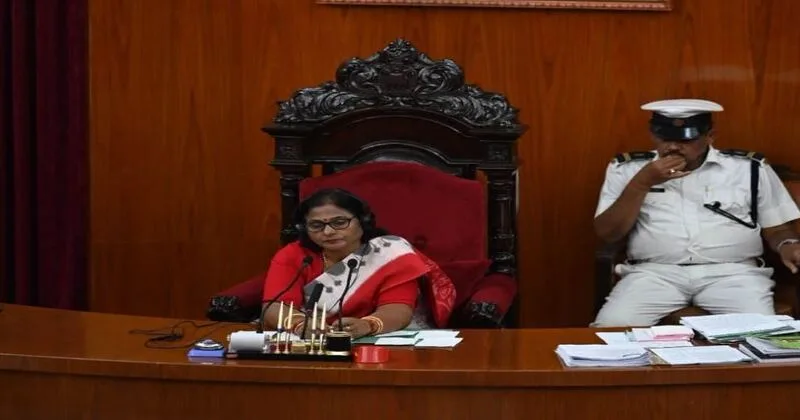
Bhubaneswar: In a significant political development, Odisha Legislative Assembly Speaker Surama Padhy has dismissed petitions filed by the Biju Janata Dal (BJD) and the Congress seeking the disqualification of 11 MLAs over alleged cross-voting during the Rajya Sabha elections held in March this year.
The petitions had accused eight BJD MLAs and three Congress MLAs of violating party whips and engaging in cross-voting during the election, which triggered widespread political controversy over party discipline and legislative conduct.
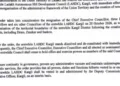
According to an official notification issued by the Secretariat of the Odisha Legislative Assembly on June 19, the Speaker rejected the petitions submitted by BJD Chief Whip Pramila Mallik on April 25, which sought disqualification of eight legislators. A separate petition filed by the Congress seeking action against its three MLAs was also dismissed.
The BJD had alleged that its legislators violated the party whip during the Rajya Sabha polls and demanded action under the anti-defection law, seeking their disqualification from the Odisha Legislative Assembly. The party had named eight MLAs in its petition: Debi Ranjan Tripathy, Souvic Biswal, Ramakanta Bhoi, Naba Mallik, Subasini Jena, Chakramani Kanhara, Arvind Mohapatra, and Sanatan Mahakud.
Similarly, the Congress had moved the Speaker seeking disqualification of its legislators Sofia Firdous, Ramesh Chandra Jena, and Dasarathi Gamango, alleging defiance of party directives during the voting process.
After examining the petitions, Speaker Surama Padhy ruled that the submissions did not meet the legal and procedural requirements necessary for consideration under the Tenth Schedule of the Constitution, which governs anti-defection cases. In her order, the Speaker observed that the petitions were “cryptic, vague, and unsubstantiated” and lacked sufficient material evidence to proceed further.
“The petition is cryptic, vague, unsubstantiated and does not fulfil the statutory requirements to be gone into on merits. Even assuming the contents are worthy of enquiry, the defects are substantial and do not warrant consideration,” the order stated.
The Speaker further noted that the petitions suffered from serious procedural deficiencies and did not provide adequate grounds for initiating disqualification proceedings. She maintained that the decision was taken strictly in accordance with constitutional provisions and legal standards.
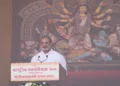
Later, Assembly Speaker Padhi told reporters that the petitions were not complete and lacked evidence. “The decision was taken as per law,”
The ruling effectively allows all 11 MLAs—eight from the BJD and three from the Congress—to retain their membership in the Assembly. The decision is being viewed as a major setback for both opposition parties, which had sought strict action against their legislators for alleged anti-party activities.
The controversy stems from the Rajya Sabha elections held in March, during which allegations of cross-voting emerged from within both the BJD and Congress camps. The elections witnessed intense political maneuvering, with claims that several MLAs deviated from official party directives despite the issuance of whips.
The BJD had argued that the conduct of the MLAs amounted to voluntarily giving up party membership under Paragraph 2(1)(a) of the Tenth Schedule of the Constitution, thereby attracting disqualification. The Congress had also raised similar allegations, citing violation of party discipline.
The political episode gained further attention as both the BJD and Congress had extended support to independent candidate Datteswar Hota, who eventually lost the election. Meanwhile, BJP-backed candidate Dilip Ray, with cross-party support, secured a victory in the closely contested race.