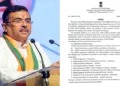
The Kolkata Municipal Corporation (KMC) has announced the renaming of Suhrawardy Avenue as Gopal Mukherjee Road via its notice dated June 20.
The notice came around Paschimbanga Divas/West Bengal Day that is observed on June 20, the Kolkata Municipal Corporation renamed Suhrawardy Avenue (in the Park Circus area) to Gopal Mukherjee Road.
The original name: The avenue was officially named in 1933 after Sir Hassan Suhrawardy (or Hassan Shaheed Suhrawardy), a Muslim scholar, surgeon, diplomat, art critic, and Vice-Chancellor of Calcutta University, not the controversial politician Huseyn Shaheed Suhrawardy (Hassan’s nephew). It was named while the latter’s major political actions were still in the future.
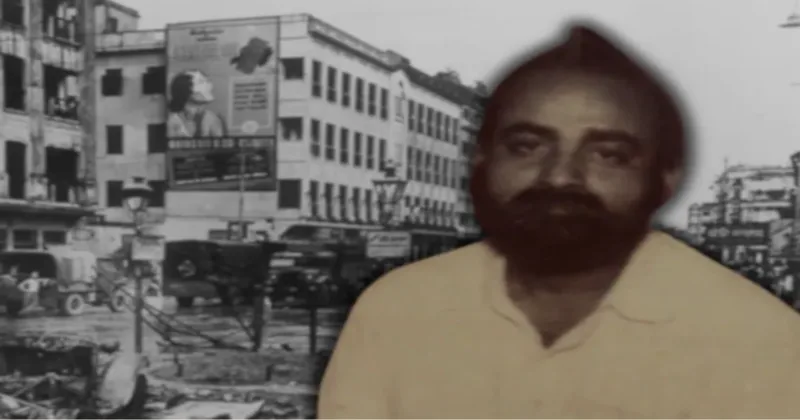
Who was Gopal Mukherjee?
Gopal Chandra Mukherjee or Gopal Patha (https://organiser.org/2024/08/21/252740/bharat/remembering-gopal-mukherjee-on-aitihasic-pratirodh-diwas-who-saved-hindus-on-direct-action-day/) was a Bengali Hindu figure from Kolkata (then Calcutta) who became a folk hero for his role in organizing armed self-defence by Hindus during the planned genocide of Hindus by Islamists, a genocide that is also known as the Great Calcutta Killings of August 1946.
Kolkata, West Bengal: Suhrawardy Avenue Road in Kolkata Municipal Corporation area named as Gopal Mukherjee Road. pic.twitter.com/q0qafrDbMr
— ANI (@ANI) June 21, 2026
A road in Kolkata was named after Huseyn Shaheed Suhrawardy – butcher of Bengal.
Thankfully, it has now been changed after Gopal Mukherjee who saved Hindus. pic.twitter.com/uBOmXGhQkb
— Shashank Shekhar Jha (@shashank_ssj) June 21, 2026
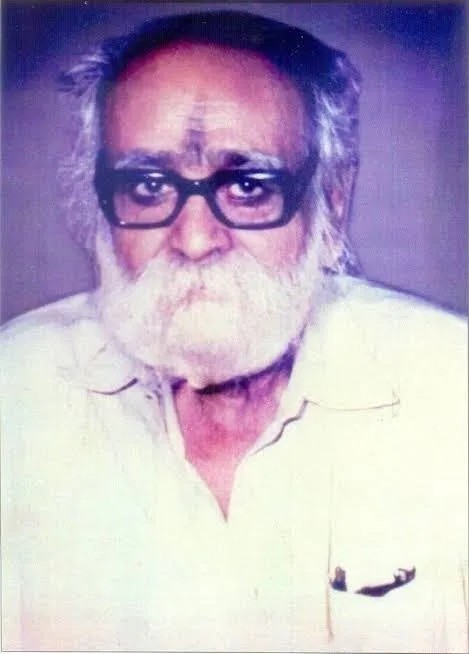
He was a local strongman in his 30s at the time, known for his influence in the neighbourhood networks. He died in the early 2000s (around 2005) after living relatively quietly post-independence.
Gopal Mukherjee’s Role in 1946
On Direct Action Day (August 16, 1946), called by the Muslim League under Muhammad Ali Jinnah, widespread communal violence erupted in Calcutta. Huseyn Shaheed Suhrawardy, then the Muslim League Premier (Chief Minister) of Bengal, was widely accused of inciting or failing to control attacks on Hindus, with police allegedly restrained. Thousands of Hindus died in the riots.
The events of 1946 marked a bloody turning point that made Partition seem inevitable. On August 16, 1946, the Muslim League observed “Direct Action Day,” called by Muhammad Ali Jinnah to demonstrate Muslim resolve for a separate homeland. In Calcutta (now Kolkata), a Hindu-majority city in a Muslim-majority province, the day descended into unprecedented communal carnage. Estimates of deaths range from 2,000 to over 10,000 in just a few days, with thousands more injured, displaced, or raped.
Gopal Patha mobilised Hindu resistance groups, armed fighters, and local networks to counter the attacks, protect Hindu neighbourhoods (especially in central Kolkata), and retaliate. Accounts credit him and his men with turning the tide after initial days of one-sided violence, preventing a complete rout of Hindus in key areas. This is said to have foiled plans to drive Hindus out of Calcutta and adjacent regions east of the Hooghly, which could have altered the demographic outcome during Partition and kept more of Bengal in Pakistan.
He is remembered by supporters as the “Lion of Boubazar” or the man who “saved Calcutta” from becoming part of Pakistan, alongside figures like Syama Prasad Mookerjee.
I commend the historic decision taken by the Kolkata Municipal Corporation, yesterday, on the solemn occasion of Paschimbanga Divas, which would be instrumental in rectifying a historical wrong.
Suhrawardy Avenue will now be renamed as Gopal Mukherjee Road.For decades, a major… pic.twitter.com/eUmZj1msE9
— Suvendu Adhikari (@SuvenduWB) June 21, 2026
Leaders like Suvendu Adhikari (who announced it) framed it as rectifying a “past wrong” and paying tribute to someone who protected the city. It has been praised by BJP and right-leaning voices as a symbolic assertion of Bengali Hindu pride and a rejection of “appeasement” politics.
This fits into broader efforts in India to rename places/streets to reflect indigenous or nationalist heroes over colonial or Partition-era figures. The move is polarizing: celebratory for some as justice and recognition, but potentially seen by others as communal rewriting of history.
Islam appeasement brigade of post-Independence India call Gopal Patha “a controversial gang leader” involved in retaliatory violence amid a cycle of riots. His story has gained renewed attention in recent years through books, films (like discussions around The Bengal Files), and nationalist narratives.
What did Senior Mr Suhrawardy do for India or Indians?
Sir Hassan Suhrawardy was the maternal uncle of Huseyn Shaheed Suhrawardy (1892–1963). Huseyn’s mother, Khujesta Akhtar Banu, was Sir Hassan’s sister. She married her cousin, Justice Sir Zahid Suhrawardy.
Huseyn Shaheed Suhrawardy (8 September 1892 – 5 December 1963), the nephew of Sir Hassan Suhravardy was a Pakistani politician and statesman who served as the fifth prime minister of Pakistan from 12 September 1956 to 17 October 1957. He briefly remained in India after partition to attend to his ailing father and manage his family’s property. He eventually moved to Pakistan and divided his time between Karachi (Pakistan’s federal capital) and Dhaka (capital of East Pakistan).
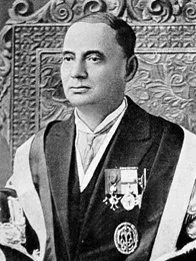
Lieutenant Colonel Hassan Suhrawardy (1884-1946) was a surgeon and vice-chancellor of Calcutta University. In 1932, he was bestowed knighthood for saving the life of Stanley Jackson from Bina Das. Selected by Muslim League to be a member of the Legislative Assembly, he renounced… pic.twitter.com/7vKF4ZFZO1
— Anuj Dhar (@anujdhar) June 21, 2026
Senior Mr Suhrawardy may have indeed been a distinguished figure: a surgeon (FRCS), Lieutenant-Colonel in the British Indian Army’s Indian Medical Service, Vice-Chancellor of Calcutta University (first Muslim to hold the post, 1930–1934), and a public servant. But how did any of that make him distinguished to the Indians, especially Bengal?
He was knighted in 1932 for his services, including saving the life of a British official during an assassination attempt. The avenue in Kolkata was officially named after him in 1933, during British rule, recognizing his contributions to medicine, education, and public life.
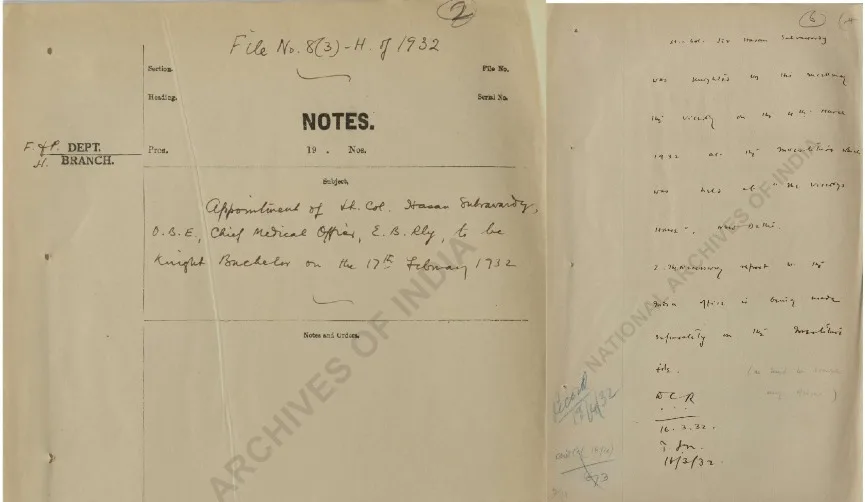
Suhrawardy senior died in Calcutta in September 1946, shortly after the Great Calcutta Killings (Direct Action Day riots of August 1946), and shortly before his demise he had renounced his British honours (knighthood and OBE) in August 1946 NOT because he was proud of India and hated the colonial yoke BUT as part of the Muslim League’s broader decision to give up such titles amid the push for the carving out of a separate Islamic country – Pakistan.
His infamous radicalised Islamist nephew Huseyn Suhrawardy was educated in Calcutta and Oxford, rose through Muslim League ranks. He became Premier of Bengal in April 1946 after the League’s strong performance in provincial elections. His government was accused of partisanship even before Direct Action Day. Critics claimed he had links to the Muslim underworld in Calcutta and used state power to favour Muslim interests amid growing communal tensions.
On August 16, the League declared a hartal (general strike). Suhrawardy reportedly requested a public holiday, which the British Governor approved. Large rallies were held, including one at the Ochterlony Monument (now Shaheed Minar) where inflammatory speeches allegedly incited crowds.
According to Congress and British accounts, mobs (most of them from the poor Muslim underclass in areas like north Calcutta) were incited to attack Hindus, Hindus businesses and shops, and Hindu neighbourhoods. Police were allegedly restrained or withdrawn in key areas. Suhrawardy was accused of stationing himself in the police control room, interfering with operations, and showing bias.
Public perception: Over time, many associated the name with Huseyn Shaheed Suhrawardy (“the Butcher of Bengal” in some narratives) due to his role in 1946 and later as a Pakistani leader. This made the name a sore point for all those who knew that the 1946 events were a targeted anti-Hindu pogrom.
Why it’s called a historic move
It honours a local “defender” figure long overlooked in mainstream narratives, symbolizing a correction of historical memory in favour of Hindu resistance during Partition-era violence.
It removes a name tied (in popular view) to the architect of the riots, even if technically for his uncle.
Why honour the Suhrawardy name at all?
The entire prominent Suhrawardy clan, Sir Hassan Shaheed Suhrawardy included, belonged to the elite Muslim League ecosystem that curried favours and knighthood with the British colonial powers, aggressively championed the Two-Nation Theory to favour Muslims and trample Hindu rights and honour, demanded Partition, and backed the politics that culminated in the Direct Action Day carnage of August 1946.
Sir Hassan, knighted by the British in 1932 and honoured with top medical and academic posts under colonial rule, died in Calcutta just weeks after the massacres his nephew Huseyn Shaheed Suhrawardy (as Bengal Premier) enabled, oversaw and orchestrated.
Every politically significant member of that family ultimately chose Pakistan after 1947, aligning with the very ideology that sought to tear Bengal away from India. In such a context, retaining a major Kolkata road named after any Suhrawardy, whether the so-called “respectable” uncle who died before formal Partition or the “Butcher of Bengal” nephew, represents selective historical blindness and minority appeasement, not neutrality.
Celebrating or defending such a name while sidelining Gopal Mukherjee, the local Hindu defender who saved thousands of lives during the riots, exposes the bigotry of those who prioritize the legacy of Partition’s architects and migrants over the sons of the soil who ensured Calcutta remained in India. Historical justice demands correcting this, not perpetuating it under the guise of technical accuracy.