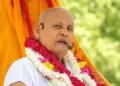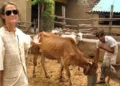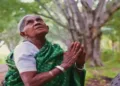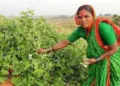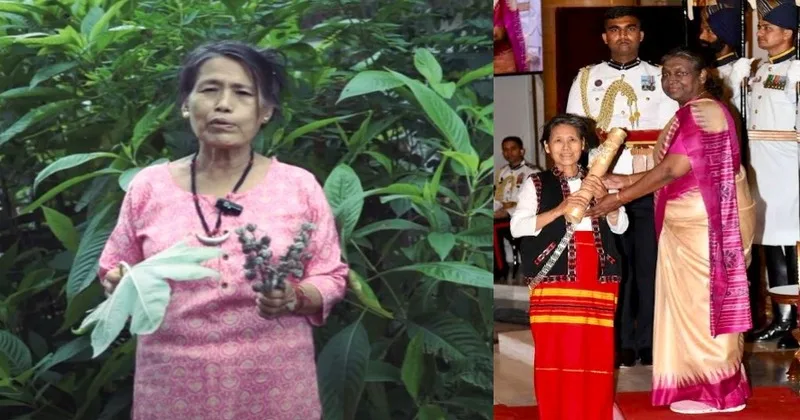
Guwahati: Deep inside the forests of Arunachal Pradesh, where most people see only trees, Yanung Jamoh Lego sees medicine. Traditional Indian herbal medicines with immense curable power.
“Nature has the answer to every problem humanity has. Our traditional herbal medicines are powerful but only we need to nurture them”, she said.
For almost two decades, this quiet woman from East Siang district has walked forest trails, studied roots and leaves, and used what nature offered to treat some of humanity’s most feared diseases — cancer, tumours, diabetes, and lung ailments. Her patients come to her when modern medicine has often given up on them. And more often than not, she does not disappoint.
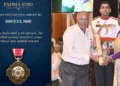
The President of India has now recognised what over three lakh patients already knew. Smt. Yanung Jamoh Lego has been conferred the Padma Shri award in 2024 for her outstanding contributions to herbal medicine and agriculture — a fitting honour for a woman the world is only now beginning to notice.
Yanung Jamoh Lego was born on July 9, 1963, in the small village of SikaTode in East Siang district. Her father was a respected traditional healer in the remote area of Arunachal Pradesh. Her experiences of often visiting forests with her father, identifying plants, preparing remedies, and tending to the sick with calm and conviction inspired her remarkable journey.
Lego decided to pursue formal education in Agriculture to know more about nature, trees and plants . She pursued BSc in agriculture, graduating from the prestigious Assam Agricultural University. Armed with both traditional wisdom and academic training, she joined the Department of Agriculture, Government of Arunachal Pradesh in 1988 as an Agriculture Inspector. She worked with the agriculture department visiting various forests and fields learning about herbs serving the farmers and gathering knowledge until her retirement in 2023. But even as she fulfilled her official duties, her heart never left the forest.
Fifteen years of learning, a lifetime of healing
Alongside her government job, Lego spent 15 long years in apprenticeship under her father, learning the language of medicinal plants. She studied which herb cured which ailment, which root reduced which growth, and how combinations of local plants could do what synthetic medicines sometimes could not.
When she finally began practising independently, her reputation spread quickly — not through advertisements or social media, but through the oldest medium known to man: word of mouth.
Patients suffering from various forms of cancer, hypertension, tumours, and other life-threatening conditions began arriving at her doorstep. Many had already tried everything else. For thousands of them, her herbal remedies brought relief and, in many cases, recovery.
She charges little. She turns no one away. In many parts of Arunachal Pradesh, she is not just a healer. She is a hope.
Lego understood early that her knowledge could not remain confined to one pair of hands. In 2009, she founded an organisation called Indigenous Herbal Heritage, with a simple but powerful mission — to keep traditional plant knowledge alive and accessible.
Through this organisation, she has educated over one lakh people about the benefits of medicinal herbs. Every year, approximately 5,000 medicinal plants are cultivated to ensure that future generations have access to the same natural resources that have healed so many. It is conservation, education, and healthcare rolled into one.
The awards have come gradually, each one acknowledging a different facet of her work. She received the SRISTI Samman Award in 2007, the Paramparika Vaidya Ratna in 2013, and the Arunachal Pradesh State Award in 2019. The Padma Shri award is a true recognition of her selfless service to humanity through our traditional herbal medicines. For someone who has spent a lifetime in quiet, unglamorous service — often in remote areas, often without recognition — the national honour carries deep significance.