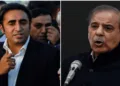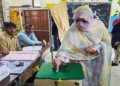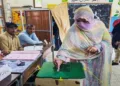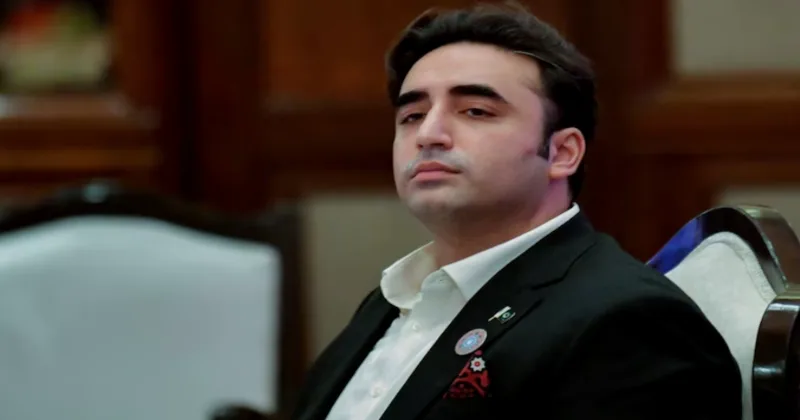
Gilgit-Baltistan Chief Election Commissioner Raja Shahbaz Khan has said the results of all 24 constituencies have been finalised 11 days after polling, with the Pakistan People’s Party (PPP) emerging as the largest party in the assembly with 11 seats. Bilawal Bhutto Zardari had campaigned and spent some days mobilising support for his party candidates in these elections.
Pakistan Muslim League (Nawaz) chief, former Prime Minister Mian Nawaz Sharif had visited Gigit-Baltistan and addressed some rallies as well. It is widely believed that the promises he made during his interaction with people helped his party win some seats in the assembly. Incidentally, his party has emerged as number two behind PPP but decided not to join the government. It has promised to vote and support PPP to form a government in Gilgit-Baltistan.
Shahbaz Khan’s statement came on June 17 after the election commissioner announced decisions on two outstanding election petitions. He declared PPP candidate Ataullah from GBA-16 Diamer, PML-N candidate Rana Farman from GBA-13 Astore as the successful candidates. Rival candidates had approached the G-B Election Commission, disputing the Form-47 results through formal petitions.
In a statement, Khan said the PPP had secured 11 seats, while the Pakistan Muslim League-Nawaz (PML-N) won six seats to become the second-largest party.
He said the Istehkam-e-Pakistan Party (IPP) had become the third-largest parliamentary group after four successful independent candidates joined it party following the election. The Majlis Wahdat-e-Muslimeen (MWM) won one seat.
Two Pakistan Tehreek Insaf (PTI)-backed independent candidates were also elected. PTI has alleged that it could have won more seats improving its performance substantially but all its leaders were prevented from campaigning effectively. Its leaders from Islamabad, Khyber Pakhtunkhwa and elsewhere were not even allowed to enter Gilgit-Baltistan and denied permission by G-B authorities for doing so.
On the other hand, the ruling parties of Pakistan, both PML-N and PPP, faced no such constraints and their leaders were given permits to tour all areas of G-B. This was unfair and amounted to electoral rigging as the Election Commission failed to provide a level playing field, several PTI leaders alleged. This had been done at the bidding of the Federal government, they added.
According to the constituency-wise results cited by the chief election commissioner, PPP G-B president Amjad Hussain Advocate won from GBA-1 Gilgit, while PML-N G-B president Hafiz Hafeezur Rehman was elected from GBA-2 Gilgit.
PTI-backed independent candidates Suhail Abbas Shah and Neknam Karim were declared successful in GBA-3 and GBA-6, respectively.
Khan said PPP candidates won in GBA-4, GBA-5, GBA-7, GBA-9, GBA-10, GBA-11, GBA-16 and GBA-17, while MWM candidate Meesam Kazim secured victory in GBA-8.
PML-N candidates were declared successful in GBA-13, GBA-14, GBA-18, GBA-20, and GBA-22, in addition to GBA-2.
Independent candidates won in GBA-15, GBA-21, GBA-23, and GBA-24. Khan said all four subsequently joined the IPP.
The chief election commissioner said the election process for all 24 general seats had now been completed. He added that notifications for the general seats would be issued after the completion of the remaining formalities.
Khan also said the allocation of nine reserved seats — six for women and three for technocrats — would be carried out in accordance with each party’s representation in the assembly, after which a final notification would be issued.
The announcement came a day after the Human Rights Commission of Pakistan (HRCP) raised concerns over the Election Commission’s handling of the recent G-B election process, particularly its decision to suspend re-polling in five constituencies shortly after ordering it and proceeding to announce final results.
In a post on X, HRCP said it had observed the election and withheld its final assessment pending recounting processes and the consolidation of results.
The rights body stated that the “initial re-polling decision had led some opposition parties and candidates to allege that recounting and related measures could be used to influence outcomes and shape government formation.”
It added that “abrupt changes of this nature risk reinforcing existing perceptions of political interference and weakening confidence in electoral administration.”
HRCP urged the election commission to “publicly clarify the legal and factual basis for both decisions” and ensure that “all disputes are resolved through transparent and credible mechanisms.”
A day earlier, four newly elected independent members of the G-B Assembly announced their decision to join the IPP following a meeting with party president and Federal Minister Abdul Aleem Khan.
The lawmakers who announced their affiliation with the party include Anwar Ali, elected from GBA-23 Ghanche-II; Dr Asad Shafiq, elected from GBA-24 Ghanche-III; Muhammad Dilpazeer, elected from GBA-15 Diamer-I; and Aman Ali Amir, elected from GBA-21 Yasin.
A broad opposition alliance, including the Pakistan Tehreek-e-Insaf, rejected the results of the G-B elections, alleging widespread rigging and manipulation, and announced plans for protests and further political action.
Congratulating the PPP on victory, Prime Minister Shehbaz Sharif said that the PML-N would sit on opposition benches in the G-B, but its elected members would vote in favour of the PPP to enable it to form the government. He assured full support from the PML-N for the PPP in the government formation process.
PPP Chairman Bilawal Bhutto Zardari welcomed PM Shehbaz’s statement and expressed his gratitude.
In a statement, Bilawal said that recognising the PPP’s majority in G-B reflected continuity of democratic traditions and hailed the prime minister’s invitation to form the government as a “positive step”.
“As a result of a consensus agreement, the positions of governor and deputy speaker of G-B will be allocated to the PML-N,” he was quoted as saying. “The PPP will utilise all its capabilities to serve the people of G-B.”
He added that the PPP would fully dedicate its efforts to serving the people of the region and addressing their concerns.