As India moves steadily towards 2047, the centenary year of its Independence and the target date for achieving developed nation status, the role of science and technology is becoming increasingly central to the country’s transformation. Over the past twelve years, India has witnessed remarkable advancements in sectors ranging from agriculture and healthcare to biotechnology, artificial intelligence, space exploration and nuclear energy. These developments have not remained confined to laboratories and research institutions; they have increasingly translated into tangible benefits for ordinary citizens across the country.
According to Union Minister of State (Independent Charge) for Science and Technology Dr. Jitendra Singh, the story of India’s scientific progress is ultimately a story of empowerment. It is reflected in the lives of farmers receiving accurate weather forecasts, patients benefiting from cutting-edge medical treatments, entrepreneurs building space startups and scientists pushing the frontiers of research.
Science beyond laboratories
For decades, scientific achievements were often perceived as distant accomplishments taking place inside laboratories. However, the past twelve years have seen a significant shift in the relationship between science and society.
One of the most visible examples comes from the remote district of Doda in Jammu and Kashmir. Once known primarily for its challenging terrain and limited economic opportunities, the region has emerged as the centre of India’s celebrated Purple Revolution.
Through the Aroma Mission, scientists introduced lavender cultivation and provided farmers with quality planting material, scientific support and market linkages. What began as an experimental initiative gradually evolved into a successful rural development model. Thousands of farmers today earn sustainable incomes through the cultivation of aromatic and medicinal plants.
The transformation demonstrates how scientific interventions can directly improve livelihoods. Similar efforts have been undertaken in saffron cultivation, medicinal herbs and even the introduction of asafoetida cultivation within India, reducing dependence on imports while creating new income opportunities for farmers.
Science has also transformed agricultural planning. Modern earth observation systems, satellite-based monitoring and advanced weather forecasting technologies now provide farmers with highly localised weather information. Instead of relying on broad regional forecasts, farmers can make informed decisions regarding sowing, irrigation and harvesting.
The impact is particularly evident during natural disasters. Early warning systems for cyclones and extreme weather events now provide communities with critical advance notice, helping save lives and minimise economic losses.
Technology reaching rural India
Scientific innovation in India is increasingly focused on solving everyday problems faced by citizens.
The development of affordable housing technologies, including 3D-printed construction models, has opened new possibilities for rural housing. Meanwhile, artificial intelligence-based systems are being deployed to detect food adulteration, a longstanding concern affecting public health.
A major initiative driving such innovation is the National Mission on Interdisciplinary Cyber Physical Systems. The mission has established 25 Technology Innovation Hubs across the country, bringing together researchers, entrepreneurs and industry experts.
These hubs have supported more than a thousand startups working in areas such as precision agriculture, clean drinking water, healthcare delivery, robotics and smart manufacturing. The objective is not merely technological advancement but the creation of practical solutions that improve the quality of life for citizens.
Biotechnology: A new chapter in healthcare
Perhaps no sector better reflects India’s scientific progress than biotechnology and healthcare.
For many years, India’s pharmaceutical industry earned global recognition as a major manufacturer of generic medicines. However, the country’s focus is increasingly shifting towards original research and innovation.
A landmark achievement in this direction was the development of Nafithromycin, India’s first indigenously discovered antibiotic in decades. Developed through collaboration between scientific institutions and industry partners, the drug represents a significant milestone in India’s journey towards pharmaceutical self-reliance.
The achievement demonstrates that Indian researchers are no longer limited to manufacturing medicines discovered elsewhere but are capable of contributing to global drug discovery efforts.
Another major breakthrough came in the field of gene therapy. Scientists successfully conducted India’s first indigenous gene therapy clinical trial for Haemophilia at the Christian Medical College in Vellore.
Gene therapy offers the possibility of treating diseases at their genetic root rather than merely managing symptoms. For conditions requiring lifelong treatment, such innovations hold transformative potential.
GenomeIndia and the future of personalised medicine
One of India’s most ambitious scientific projects in recent years has been the GenomeIndia Project.
The initiative has successfully sequenced more than 10,000 human genomes from diverse populations across the country. Given India’s extraordinary genetic diversity, the project is expected to become a foundational resource for future medical research.
Scientists believe that genome mapping could pave the way for personalised medicine, where treatments are tailored according to an individual’s genetic profile. Such an approach has the potential to improve treatment outcomes and reduce adverse drug reactions.
The project also strengthens India’s ability to conduct advanced biomedical research independently and contributes to global understanding of human genetics.
Lessons from the COVID-19 pandemic
The COVID-19 pandemic highlighted the importance of scientific preparedness and domestic research capabilities.
India’s ability to develop, manufacture and distribute vaccines at an unprecedented scale drew international attention. Behind this success lay years of investment in biotechnology infrastructure and research ecosystems.
Institutions such as the Biotechnology Industry Research Assistance Council (BIRAC) played a crucial role in supporting innovation-driven startups and connecting scientific research with commercial applications.
Today, a growing number of biotechnology startups are working in fields such as precision medicine, diagnostics, synthetic biology and sustainable bio-based products, contributing to India’s emergence as a global biotechnology hub.
Chandrayaan-3 and India’s space moment
Among India’s scientific achievements, few captured public imagination as powerfully as Chandrayaan-3.
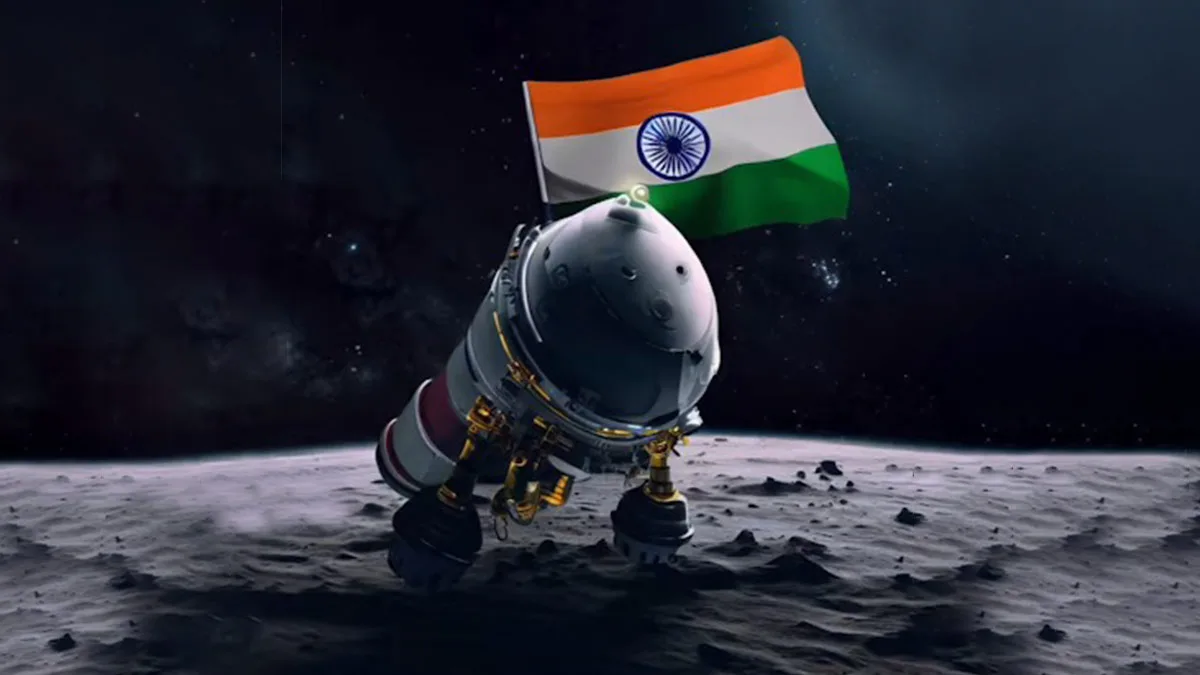
On August 23, 2023, India became the first country in the world to successfully land a spacecraft near the Moon’s south pole. The achievement placed India among a select group of nations capable of conducting advanced lunar exploration.
The successful landing of the Vikram lander was celebrated across the country and enhanced India’s stature in the global scientific community.
However, Chandrayaan-3 represented more than a symbolic victory. The mission generated valuable scientific data regarding the lunar surface and demonstrated India’s growing technological capabilities in deep-space exploration.
Expanding India’s presence in space
The years following Chandrayaan-3 have seen continued momentum in India’s space programme.
The Aditya-L1 mission, India’s first dedicated solar observatory, was launched to study the Sun and improve understanding of solar activity and space weather. Such research has practical implications for communication systems, satellites and power infrastructure on Earth.
India also achieved a significant milestone through the SpaDeX mission, demonstrating spacecraft docking capabilities. This technology is considered essential for future human spaceflight programmes, orbital stations and deep-space missions.
Another landmark moment came with Group Captain Shubhanshu Shukla’s stay aboard the International Space Station, reflecting India’s growing participation in human spaceflight activities.
The rise of India’s space economy
Perhaps the most significant transformation in the space sector has occurred outside government institutions.
The Indian Space Policy 2023 opened greater opportunities for private participation across the space value chain. The results have been dramatic.
India had only around 11 space startups in 2014. Today, the number exceeds 400. These companies are developing launch vehicles, satellite technologies, earth observation services and commercial applications.
Indian rockets have launched hundreds of foreign satellites, helping establish India as a reliable and cost-effective global launch partner.
The growth of the private space ecosystem is generating employment, attracting investment and encouraging innovation among young entrepreneurs.
Looking ahead, India plans to establish the Bharatiya Antariksh Station by 2035 and aims to send astronauts to the Moon by 2040, reflecting the country’s long-term ambitions in space exploration.
Atmanirbhar Bharat and scientific self-reliance
Scientific advancement has become a cornerstone of the broader vision of Atmanirbhar Bharat.
The National Quantum Mission represents one of the most ambitious technology programmes undertaken by India. Backed by significant financial investment, the mission seeks to develop capabilities in quantum computing, quantum communication, quantum sensing and quantum materials.
These technologies are expected to play a crucial role in future cybersecurity, defence, healthcare and industrial applications.
Simultaneously, the National Supercomputing Mission has expanded high-performance computing infrastructure across the country. Supercomputers installed in major institutions now support advanced research in climate science, engineering, artificial intelligence and data analytics.
India has also launched BharatGen, the country’s first government-supported multilingual generative artificial intelligence initiative. The programme aims to develop AI models capable of operating effectively in Indian languages, ensuring that technological benefits reach a wider population.
Indigenous innovation and manufacturing
India’s drive for self-reliance has also produced several notable technological innovations.
The HANSA-NG trainer aircraft represents a major achievement in indigenous aviation technology. Designed and developed in India, the aircraft has potential applications in both domestic and international markets.
Scientists have also developed India’s first hydrogen fuel-cell-powered vessel, reflecting the country’s commitment to clean energy solutions.
Research into sustainable aviation fuel is another area receiving significant attention as India seeks to reduce carbon emissions while maintaining economic growth.
The establishment of the CSIR Innovation Complex further strengthens the innovation ecosystem by connecting researchers, startups and industry stakeholders.
Nuclear energy and strategic security
India’s scientific transformation extends into the strategically important field of nuclear energy.
In April 2026, the 500 MWe Prototype Fast Breeder Reactor at Kalpakkam achieved first criticality, marking a major milestone in India’s three-stage nuclear programme.
Developed entirely by Indian scientists and engineers, the reactor is expected to play a crucial role in enabling the future utilisation of India’s vast thorium reserves.
Thorium-based energy has long been viewed as a strategic advantage for India due to the country’s substantial natural reserves.
As nations seek clean and reliable energy sources, nuclear power is increasingly recognised as an important component of long-term energy security.
Nuclear science improving healthcare
The impact of nuclear science extends beyond electricity generation.
Advanced radiopharmaceuticals and nuclear medicine technologies are improving cancer diagnosis and treatment across India.
The Tata Memorial Hospital’s recognition by the International Atomic Energy Agency as a “Rays of Hope” Anchor Centre highlights India’s growing leadership in cancer care.
The expansion of specialised cancer facilities under the Homi Bhabha Cancer Hospital network is helping improve access to advanced oncology services.
The SHANTI Act of 2025 has further modernised India’s nuclear regulatory framework, facilitating innovation and investment in the sector.
Exploring the deep ocean
While India’s space missions have attracted global attention, scientists are also exploring another frontier much closer to home, the deep ocean.
The Deep Ocean Mission seeks to unlock scientific knowledge and strategic opportunities beneath India’s surrounding waters.
The ocean floor contains valuable mineral resources, including polymetallic nodules and cobalt-rich deposits, which are essential for renewable energy technologies and advanced manufacturing.
Developing indigenous underwater exploration technologies is expected to strengthen India’s resource security while expanding scientific understanding of marine ecosystems.
Science and vision of Viksit Bharat
As India advances towards its goal of becoming a developed nation by 2047, science and technology are increasingly viewed as central pillars of national progress.
The establishment of the Anusandhan National Research Foundation reflects a commitment to strengthening research and innovation through closer collaboration among academia, industry and government.
Similarly, the creation of a Research, Development and Innovation Fund with a corpus of ₹1 lakh crore signals one of the largest investments in scientific capability in India’s history.
These initiatives aim to ensure that India not only adopts emerging technologies but also becomes a global leader in creating them.
From the lavender farmer in Jammu and Kashmir to the genomics researcher in Vellore, from the space entrepreneur in Bengaluru to the nuclear scientist in Kalpakkam, the story of India’s scientific transformation is ultimately a story of people.
Over the last twelve years, science has increasingly become a tool for national development, social empowerment and economic growth. The achievements recorded across agriculture, healthcare, biotechnology, artificial intelligence, space exploration and energy are laying the foundation for a self-reliant, innovative and globally competitive India.
As the country approaches 2047, these scientific advances are expected to play an even greater role in shaping the pace, direction and character of India’s development journey.