The Labyrinth of War: Easy to enter; Difficult to exit
June 14, 2026
  • Read Ecopy
  • Circulation
  • Advertise
  • Careers
  • About Us
  • Contact Us
Android AppiPhone AppArattai
Organiser
  • ‌
  • Bharat
    • Assam
    • Bihar
    • Chhattisgarh
    • Jharkhand
    • Maharashtra
    • View All States
  • World
    • Asia
    • Europe
    • North America
    • South America
    • Africa
    • Australia
  • Editorial
  • International
  • Opinion
  • RSS @ 100
  • More
    • Op Sindoor
    • Analysis
    • Sports
    • Defence
    • Politics
    • Business
    • Economy
    • Culture
    • Special Report
    • Sci & Tech
    • Entertainment
    • G20
    • Azadi Ka Amrit Mahotsav
    • Vocal4Local
    • Web Stories
    • Education
    • Employment
    • Books
    • Interviews
    • Travel
    • Law
    • Health
    • Obituary
  • Subscribe
    • Subscribe Print Edition
    • Subscribe Ecopy
    • Read Ecopy
  • ‌
  • Bharat
    • Assam
    • Bihar
    • Chhattisgarh
    • Jharkhand
    • Maharashtra
    • View All States
  • World
    • Asia
    • Europe
    • North America
    • South America
    • Africa
    • Australia
  • Editorial
  • International
  • Opinion
  • RSS @ 100
  • More
    • Op Sindoor
    • Analysis
    • Sports
    • Defence
    • Politics
    • Business
    • Economy
    • Culture
    • Special Report
    • Sci & Tech
    • Entertainment
    • G20
    • Azadi Ka Amrit Mahotsav
    • Vocal4Local
    • Web Stories
    • Education
    • Employment
    • Books
    • Interviews
    • Travel
    • Law
    • Health
    • Obituary
  • Subscribe
    • Subscribe Print Edition
    • Subscribe Ecopy
    • Read Ecopy
Organiser
  • Home
  • Bharat
  • World
  • Operation Sindoor
  • Editorial
  • Analysis
  • Opinion
  • Culture
  • Defence
  • International Edition
  • RSS @ 100
  • Magazine
  • Read Ecopy
Home World

The Labyrinth of War: Easy to enter; Difficult to exit

Entering war without a credible exit strategy may be one of the most dangerous forms of strategic miscalculation in the present century. Until global leadership fully acknowledges this reality, peace may remain more an aspiration than an achievement

Dr Manmohan PrakashDr Manmohan Prakash
Jun 14, 2026, 12:00 pm IST
in World, Analysis
Follow on Google News
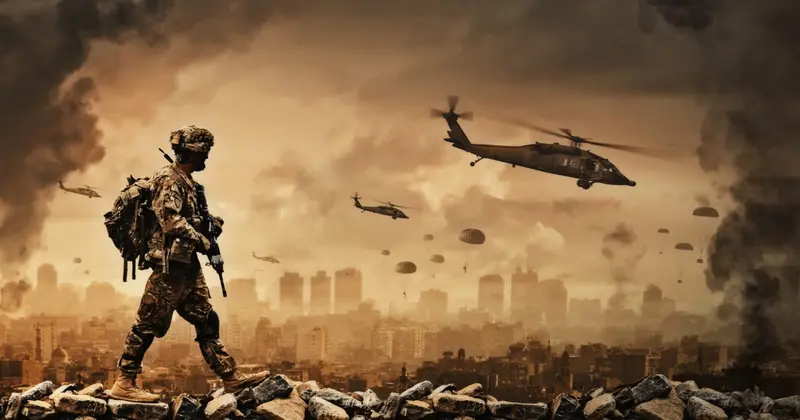
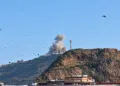
Representative Image

Representative Image

FacebookTwitterWhatsAppTelegramEmail

Most Indians are familiar with the episode from the Mahabharata in which the young warrior Abhimanyu declared that he knew how to enter the Chakravyuha (a complex military formation) but did not know the way to emerge from it. Today’s global landscape appears to reflect a similar reality. In the modern era, some nations and their leaders, driven by political, geographical and strategic ambitions, enter military conflicts with confidence, only to find themselves trapped in prolonged and complicated situations from which withdrawal with dignity becomes difficult, if not impossible.

Recent global developments have repeatedly demonstrated that despite advances in technology and military capability, initiating war may be relatively easy, but bringing it to a stable conclusion is far more complex and uncertain. History shows that those who initiate wars often assume they will be able to conclude them on their own terms and at a time of their choosing once their objectives are achieved. Reality, however, has frequently unfolded differently.

The Vietnam War remains one of the clearest historical examples. The United States entered the conflict largely with the objective of preventing the expansion of communist influence in South Vietnam. The war continued for nearly two decades (1955–1975), involving enormous military, economic, and political costs. Ultimately, after the loss of more than 58,000 American military personnel and growing domestic opposition, the United States withdrew without achieving many of its original strategic objectives.

A similar strategic entanglement emerged for the Soviet Union in Afghanistan in 1979. What began as military intervention evolved into a prolonged conflict that imposed severe economic and political burdens on the Soviet system. Although the Soviet withdrawal from Afghanistan was not the sole cause of the eventual dissolution of the Soviet Union, many historians consider it an important factor that exposed and intensified existing structural weaknesses.

Yet history did not fully absorb the lessons of this Afghan experience. Following the terrorist attacks of September 11, 2001, the United States entered Afghanistan with the objective of dismantling terrorist networks and removing the Taliban government that had provided sanctuary to them. Early expectations in some policy circles suggested a relatively swift campaign. Instead, it became the longest war in American history, lasting nearly twenty years.

In August 2021, after enormous financial expenditure and significant human loss, the United States completed its withdrawal under difficult circumstances, and Afghanistan ultimately returned to Taliban rule. The expectation of a “quick victory” remains visible in contemporary conflicts as well. When Russia launched its invasion of Ukraine in February 2022, many observers anticipated that the conflict would either conclude rapidly or remain geographically limited.

Years later, however, the war has evolved into a prolonged and costly confrontation in which both sides have suffered substantial human and economic losses, while political realities have complicated prospects for settlement. Likewise, military confrontations and regional tensions involving Iran, Israel and the United States have repeatedly demonstrated that operations initially expected to remain limited can generate wider strategic consequences.

Retaliatory cycles, regional instability, concerns over maritime trade routes including the Strait of Hormuz, and the expansion of proxy dynamics illustrate how quickly military engagements can evolve into broader geopolitical challenges. Several deeper forces drive this global Chakravyuha. One is the phenomenon known as the sunk cost fallacy i.e.the pressure created by prestige and prior investment. Once thousands of lives have been lost and billions of dollars spent, withdrawal without visible gains may appear politically unacceptable to national leadership.

Also Read: US: Anshul Kuncha’s death exposes anti-India racist racket; Assaulting the community that powers American economy!

Another factor is the globalization of conflict. Modern wars rarely remain confined to two countries; they increasingly involve local armed groups, external military assistance, arms suppliers, and international alliances, reducing the ability of the original actors to control events. Economic self-damage also becomes significant, as sanctions, disrupted supply chains, and instability in energy and food markets eventually affect not only targeted nations but also those initiating or supporting conflict.

The contemporary global situation offers a serious warning: modern weapons may enable nations to begin wars, but they do not guarantee control over how wars end. From Vietnam to Afghanistan and from Ukraine to tensions in West Asia, the lesson remains clear that military strength alone rarely delivers quick and lasting resolutions. Entering war without a credible exit strategy may be one of the most dangerous forms of strategic miscalculation in the present century. Until global leadership fully acknowledges this reality, peace may remain more an aspiration than an achievement.

Therefore, nations must strengthen the path of peace, respect one another’s sovereignty, and prioritize dialogue over confrontation. Only then can humanity redirect its resources from conflict toward reducing poverty, hunger, and underdevelopment. In this regard, the Indian civilizational ideal of “Vasudhaiva Kutumbakam” i.e. “the world is one family”, offers a timeless principle for building a more peaceful and prosperous world.

Topics: AfghanistanUnited StatesWarWest Asia ConflictVietnam WarIran
ShareTweetSendShareSend
✮ Subscribe Organiser YouTube Channel. ✮
✮ Join Organiser's WhatsApp channel for Nationalist views beyond the news. ✮
Previous News

From Chandrayaan to GenomeIndia: How 12 years of scientific transformation powered journey towards Viksit Bharat

Next News

World Bank praises India’s economic resilience, highlights opportunities in manufacturing and food processing

Related News

India Summons US Diplomat: Lodges strong protest over attack on vessel carrying Indian seafarers in Gulf of Oman

West Asia Conflict: 3 Indian seafarers died in Gulf of Oman who were missing after US military strike hit the vessel

West Asia Conflict: Collective response to energy crisis

Afghanistan Foreign Minister Amir Khan Muttaqi and External Affairs Minister Dr. S. Jaishankar(File Photo)

India extends gratis long-term business visas to Afghan traders; Slams Pakistan for “trade & transit terrorism”

India's Permanent Representative to United Nations Ambassador Harish Parvathaneni

India & Afghanistan are “civilisational states”: Indian Envoy at UN reaffirms health, education & humanitarian aid

West Asia Conflict: India issues advisory to citizens in Iran & Israel; Urges to avoid tarvel & exercise utmost caution

Load More

Latest News

Representative Image

Baloch Liberation Army blows up bridges on CPEC road; Dozens of Pakistani vehicles carrying minerals set on fire

As economic pressures mount, Beijing is tightening control over business, investment and society, placing security and stability above growth

Xi, the CCP and China’s New Reality: Why regime survival now matters more than economic growth

Bharat Innovates: Launchpad for India’s deeptech industry; Features 120 innovators, 15 institutions & 500 investors

A representative image

World Bank praises India’s economic resilience, highlights opportunities in manufacturing and food processing

Representative Image

The Labyrinth of War: Easy to enter; Difficult to exit

AI-generated image used for representative purposes

From Chandrayaan to GenomeIndia: How 12 years of scientific transformation powered journey towards Viksit Bharat

Police arrested Pastor and the landowner in the case

“Your Shiva & Vishnu won’t help, Jesus will”: Chhattisgarh pastor arrested over conversion bid through ‘Miracle water’

Bangladesh: Anti-Hindu Rally in Dhaka Targets Shri Ram's Image, Radical Groups Demand Demolition of Ram murti

Bangladesh: Radical Muslim groups hold anti-Hindu march; Demand demolition of under-construction murti of Shri Ram

TMC chief and former CM of Bengal Mamata Banerjee

Mamata’s Damage-control Exercise? TMC reshuffle comes as rebel leaders reject Banerjee family’s leadership

West Bengal: Sikh Youth Alleges Conversion Pressure, Assault by Mother Preeti Kaur and Wasim Raza Khan

West Bengal: Sikh Youth accuses mother Preeti Kaur and Lawyer Wasim Raza Khan of pressuring him to convert to Islam

Load More
  • Privacy
  • Terms
  • Cookie Policy
  • Refund and Cancellation
  • Delivery and Shipping

© Bharat Prakashan (Delhi) Limited.
Tech-enabled by Ananthapuri Technologies

  • Home
  • Search Organiser
  • Bharat
    • Assam
    • Bihar
    • Chhattisgarh
    • Jharkhand
    • Maharashtra
    • View All States
  • World
    • Asia
    • Africa
    • North America
    • South America
    • Europe
    • Australia
  • Editorial
  • Operation Sindoor
  • Opinion
  • Analysis
  • Defence
  • Culture
  • Sports
  • Business
  • RSS @ 100
  • Entertainment
  • More ..
    • Sci & Tech
    • Vocal4Local
    • Special Report
    • Education
    • Employment
    • Books
    • Interviews
    • Travel
    • Health
    • Politics
    • Law
    • Economy
    • Obituary
  • Subscribe Magazine
  • Read Ecopy
  • Advertise
  • Circulation
  • Careers
  • About Us
  • Contact Us
  • Policies & Terms
    • Privacy Policy
    • Cookie Policy
    • Refund and Cancellation
    • Terms of Use

© Bharat Prakashan (Delhi) Limited.
Tech-enabled by Ananthapuri Technologies