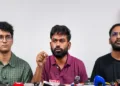
The Azad Jammu and Kashmir (AJK) government on June 10 announced a reward of Rs10 million (Rs 1 crore) for information leading to the arrest of four wanted individuals linked to the newly proscribed Joint Awami Action Committee (JAAC). The individuals named in the notification are Shaukat Nawaz Mir, Umar Nazir Kashmiri, Khawaja Mehran Arshad and Sardar Aman Khan. It further stated that the identity of the informant would be kept strictly confidential.
The four individuals named in the government notification are major leaders of the JAAC and come from different districts of POJK. Shaukat Nawaz Mir is leading mobilisation of protesters in Muzaffarabad, the capital of POJK; Umar Nazir Kashmiri is from Poonch district and mobilised crowds in Rawalakot; Khwaja Mehran is from Mehran and Sardar Aman Khan from district Sudhnoti. These four districts together constitute a strong network of JAAC cadres.
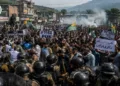
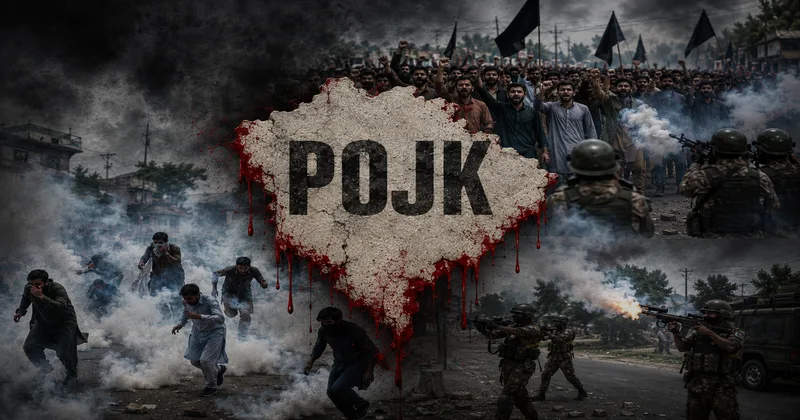
On Tuesday, all cities, towns and villages across POJK observed a complete shutter down strike. Even the banks, medical stores and bistros were closed and public and private transport off the roads. In capital Muzaffarabad, the ultimate destination of protesters, riot police had taken positions in and outside government buildings and main thoroughfares to meet any eventuality. Streets remained deserted as protesters marching from other towns to Muzaffarabad were not allowed to leave their respective areas.
In its response to the announcement of reward for capture of its leaders, the JAAC noted that rewards could be set by the government to “suppress voices” but the same amount could not be provided to “resolve public issues”. It added: “It is due to the incompetence of these unfit rulers and their inept methods that the situation has reached this point today.”
“The President is pleased to fix Rs 10 million reward money to be granted to any person who provides information leading to the successful arrest of the following offenders belonging to the proscribed JAAC,” said a notification.
At Least 30 killed, Over 200 Injured
The development emerged after large scale violence led to over 30 people getting killed and over 200 getting injured in firing by the security forces. There are competing accounts over casualties, governance grievances and political legitimacy with no official figures being released about the casualties, according to a report of The Express Tribune newspaper.
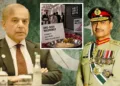
Many British citizens, mostly descendants of Mirpuris who had migrated to UK after their villages got submerged in the Mangla dam, decades ago, led massive protests in several cities on Tuesday. Most of them alleged highhanded behaviour on the part of hybrid regime of Pakistan PM Shehbaz Sharif and Chief of Defence Forces General Asim Munir. They said General Asim Munir’s directions to quell the JAAC dissent has led to the carnage in POJK over the last few days.
Last week, the POJK government had banned the JAAC, accusing it of involvement in terrorism, promoting hatred, and creating anarchy in the state. The ban followed the JAAC’s call for a protest on June 9. The organisation has previously spearheaded mass protests demanding economic relief and political rights, with some demonstrations ending in violence and fatalities during confrontations with law enforcement authorities in May 2024 and September 2025.
The Home Department also directed the inspector general of police to take the necessary steps for the immediate implementation of the reward scheme.
Meanwhile, Syed Faisal Gilani, a key JAAC member, announced complete disassociation from the party.
In his statement, Gilani strongly condemned the attacks in Rawalakot, saying that the “JAAC was playing a festival of blood with the lives of innocent citizens.” Gilani further stated that he had become part of the JAAC for the sake of public interests, but unfortunately, it had deviated from its original path. “The people of Azad Kashmir are rejecting the banned JAAC violent rhetoric and proving themselves to be conscious citizens,” he said.
According to the Associated Press of Pakistan (APP), law enforcement agencies conducted a targeted, intelligence-based operation in the Chehla area of Muzaffarabad, resulting in the arrest of five suspects.
Crackdown Intensifies All Over POJK
According to security sources, authorities seized laptops, mobile phones, and various communication devices during the raid. “Initial investigations into the digital devices have already revealed suspicious links and sensitive material. During interrogation, information provided by one of the detainees led to the recovery of a large cache of arms, including seven automatic weapons, multiple grenades, and other military hardware.”
Separately, Kashmiri, one of the proscribed leaders, said the group’s movement was peaceful and it would prefer to emerge with honour instead of surrendering before the authorities. The JAAC said many people from various parts of the territory were joining it for its protest call.
AJK Prime Minister Raja Faisal Mumtaz Rathore once again requested the JAAC to “please come back to the negotiating table”.
In a post on X, he said: “I’m requesting everyone on daily basis to resolve matters through discussions instead of fire and blood. Your abusive comments, constant threats and senseless agitation are not helpful to anyone on this side of the LOC.
“Everyone recognises your rights and liberties. No one can dictate Kashmiris on how we should resolve our issues. All we need to do is remain calm and find a way out through talks. The only weapon a political activist carries is his reasoning and negotiation skills.”
Reserved Seats for Refugees Provide Spark
The spark for JAAC protests has been provided by 12 reserved refugee seats in the POJK assembly. The arrangement is lopsided, to say the least, as there are six seats for people settled in mainland Pakistan (4,34,000 people by official counts) and six seats for people from Kashmir valley (only 30,000 by official counts).
This means that there is one seat for 72,333 people from the Jammu region and one seat for only 5,000 people from the Kashmir valley. This huge disparity is a major problem flagged by the JAAC members repeatedly.
The Pakistan Tehreek-e-Insaf (PTI) expressed grief and concern over the loss of lives and the escalating violence.
“The recent clashes in Rawalakot and other areas, resulting in the deaths of civilians and law enforcement personnel, along with numerous injuries, have deeply saddened the party and the entire nation,” a statement issued by the party reads.
Imran Khan’s PTI Condemns Security Forces
“PTI stands in solidarity with the people of AJK, who have long endured economic hardships, political marginalisation and governance failures,” the statement further reads. The PTI strongly condemned the “excessive use of force” by the authorities against peaceful protesters.
“The people have legitimate grievances regarding economic rights, electricity tariffs, subsidies, political representation, and the abolition of reserved seats that favour outsiders at the expense of locals. Instead of addressing these issues through dialogue and meaningful reforms, the current setup has resorted to bans, crackdowns, communication blackouts, and lethal force, turning a civic movement into a bloody confrontation.
“This violence is a direct outcome of the incompetent and insensitive governance imposed by the PPP-led administration and its allies. The PPP government, which claims to champion democracy and public welfare, has once again exposed its authoritarian tendencies by proscribing a popular civil society platform and suppressing the voices of the people. Their policies of economic exploitation, elite privileges, and failure to deliver basic relief have pushed the resilient people to the brink. PTI holds the PPP and its coalition partners fully responsible for this bloodshed and the prevailing crisis of governance in the region.”
Stakeholders Denied Say in Governance
The PTI said it fully understood the unique sensitivity of the Kashmir region. As a party that has always prioritised the Kashmir cause and the aspirations of its people, it urged all stakeholders, protesters, administration and security forces to exercise maximum restraint.
“Further violence will only harm the Kashmiri cause and provide ammunition to enemies. Peaceful dialogue, not bullets and batons, is the way forward. The genuine demands of the people must be addressed urgently through inclusive negotiations.”
The party demanded an immediate end to the crackdown, lifting of restrictions, and the formation of a neutral inquiry into the recent violence. The party called upon all democratic and patriotic forces to unite in support of the Kashmiri people’s legitimate rights and to reject the politics of suppression.
The Human Rights Commission of Pakistan (HRCP) has expressed concern at the escalating confrontation in AJK and the loss of life among both protesters and law enforcement personnel.
“We urge an immediate de-escalation of tensions and an impartial investigation into all deaths and injuries. The state must remember that proscribing popular movements invariably risks narrowing democratic space,’’ it said.
The anger in POJK among the ordinary citizens springs from the fact that they lack political and economic autonomy and the region suffers from administrative neglect. The region is basically used as a strategic asset against India and no welfare measures for the citizenry have been initiated.