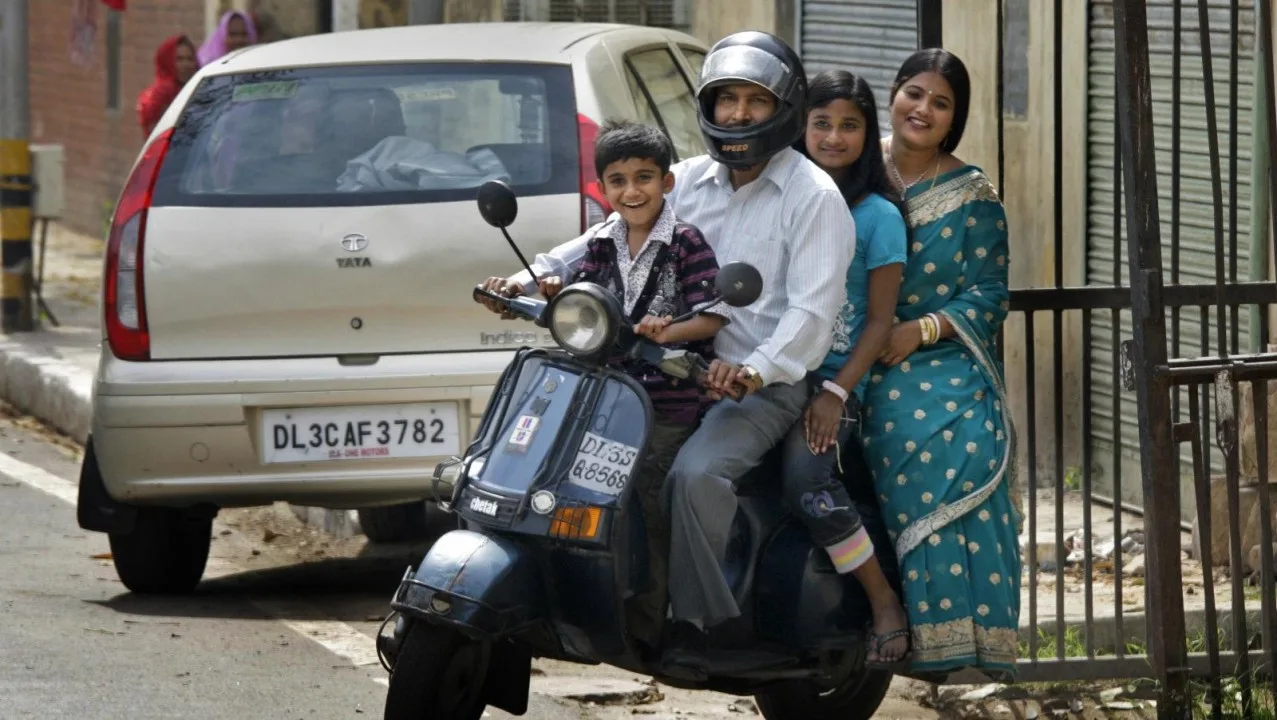
India’s development story is often told through macroeconomic indicators such as GDP growth, infrastructure expansion, manufacturing output, or rising foreign investment. Yet one of the most important transformations taking place in the country is visible inside ordinary households. Across cities, towns, and emerging urban centres, millions of middle-class families are experiencing changes in the way they save, spend, travel, access services, buy homes, educate their children, and plan for the future.
Over the past decade, India’s middle class has evolved from a segment primarily focused on economic security to one increasingly driven by aspiration and opportunity. This shift has been accompanied by major reforms in taxation, banking, pensions, housing, entrepreneurship, and financial inclusion. Together, these changes have altered the economic landscape in which middle-income families operate.
The result is a middle class that is becoming increasingly important not merely as a consumer base but as a key driver of economic growth, entrepreneurship, innovation, and domestic demand.
Understanding the expanding middle class
Defining the middle class is not straightforward. Different countries use different benchmarks based on income levels, purchasing power, education, access to services, and patterns of consumption.
Globally, one commonly used reference is the World Bank’s income classification framework, which categorises economies according to Gross National Income per capita. These classifications provide a broad understanding of where income groups stand within the global economy.
India’s middle class has expanded considerably over the past three decades. Between 1995 and 2021, the segment grew at an average annual rate of 6.3 per cent. Today, it constitutes roughly 31 per cent of India’s population. This growth has coincided with rising incomes, urbanisation, and increasing access to education and financial services.
India’s economic progress has played a major role in this expansion. Between 2011 and 2019, the country’s GDP per capita grew by approximately 53 per cent. As incomes increased, millions of households moved into higher consumption brackets, creating new demand for housing, education, healthcare, mobility, and financial products.
The transformation is not unique to India. Across Asia, middle-class populations have grown rapidly over the last two decades. However, India is expected to become one of the largest contributors to future middle-class expansion globally. Forecasts by the OECD suggest that India could overtake China in absolute middle-class population between 2030 and 2035.
The significance of this development extends beyond household prosperity. A strong middle class is often regarded as a foundation of economic stability because it drives consumption, invests in education and health, pays taxes, creates businesses, and contributes to institutional development.
According to projections highlighted by the World Economic Forum, India’s next wave of middle-class growth is expected to come increasingly from emerging cities rather than traditional metropolitan centres. Nearly 93 per cent of urban consumption growth is projected to occur outside the country’s five largest cities, indicating that economic opportunities are spreading more widely across the nation.
Tax reforms and expansion of income
Among the most visible changes affecting middle-class households has been the reduction in personal tax burdens.
Taxation influences nearly every aspect of household financial planning. Lower taxes translate into higher disposable income, increased savings, stronger investment capacity, and greater purchasing power.
In 2014, individuals earning up to Rs 2.5 lakh annually fell within the zero-tax bracket. Over the years, successive changes in tax policy expanded relief for salaried and middle-income taxpayers.
A major milestone came with the introduction of the new tax regime and subsequent reforms that significantly increased the income threshold exempt from taxation. Under the current framework, individuals earning up to Rs 12 lakh annually, and salaried taxpayers earning up to Rs 12.75 lakh after accounting for standard deductions, pay no income tax under the new regime.
The implications extend beyond tax savings alone. Increased disposable income enables households to spend more on education, healthcare, housing, travel, and investments. It also strengthens financial resilience by allowing greater savings and retirement planning.
Another important development was the comprehensive review of the Income Tax Act of 1961. The exercise culminated in the implementation of the Income Tax Act, 2025, which came into force in April 2026. The reform aimed to simplify tax administration, improve compliance, and reduce complexity for taxpayers.
For middle-class families, these changes have translated into a more predictable and less burdensome tax environment.
GST and the creation of a unified market
If income tax reforms affected household finances directly, the introduction of the Goods and Services Tax altered the broader economic environment in which consumers and businesses operate.
Before GST, India’s indirect taxation framework was fragmented across multiple central and state levies. Different taxes applied at various stages of production and distribution, often creating inefficiencies and increasing costs.
The introduction of GST in July 2017 represented one of the most significant tax reforms since Independence. By consolidating multiple taxes into a single framework, the reform created a common national market and reduced cascading tax effects.
For middle-class consumers, the impact became visible in several ways. Rate rationalisation on essential goods reduced the burden of indirect taxation on many commonly used products. Simplified logistics and supply chains improved efficiency across industries. Businesses operating across state boundaries benefited from reduced compliance hurdles.
Over time, the GST system has undergone continuous refinements, including digitalisation and rate adjustments. Its taxpayer base expanded from 66.5 lakh in 2017 to approximately 1.64 crore by April 2026, indicating deeper formalisation of economic activity.
The broader consequence has been the strengthening of a unified economic ecosystem that supports business growth, investment, and consumer access.
Building retirement security through pension reforms
Retirement planning remains a major concern for middle-class families, particularly in an era of rising life expectancy and changing employment patterns.
Recognising these concerns, the Government introduced the Unified Pension Scheme, which became operational in April 2025.
The scheme was designed to provide greater certainty regarding post-retirement income for central government employees. It combines employee and government contributions while offering assured pension benefits linked to inflation.
One of its most notable features is the guarantee of a minimum pension of Rs 10,000 per month after retirement for employees meeting eligibility requirements.
The provision of Dearness Relief further protects retirees against inflationary pressures, while family pension benefits ensure continued support for dependents.
For many middle-class households, retirement security is not merely an individual concern but a family issue. Assured pension mechanisms help reduce uncertainty and strengthen long-term financial planning.
Insurance as a pillar of financial protection
The growing importance of insurance reflects a broader shift in middle-class financial behaviour.
Historically, many Indian households relied heavily on savings and physical assets to manage financial risks. Today, insurance is becoming a more integral component of financial planning.
India has emerged as the world’s tenth-largest insurance market by premium volume. The share of insurance and pension funds in household financial assets increased from 28.6 per cent in FY 2018-19 to 29.6 per cent in FY 2024-25.
This change indicates increasing awareness regarding long-term financial security and risk management.
Government-backed insurance programmes have played an important role in expanding coverage. Pradhan Mantri Jeevan Jyoti Bima Yojana has recorded more than 26 crore enrolments, while Pradhan Mantri Suraksha Bima Yojana has enrolled over 57 crore subscribers.
Simultaneously, the Employees’ State Insurance Scheme now covers more than three crore employees and benefits nearly fifteen crore individuals, including family members.
Regulatory reforms introduced through initiatives such as the 2025 insurance amendments have sought to improve consumer protection and expand market participation.
Together, these developments have made insurance more accessible, affordable, and relevant to middle-class households seeking protection against unforeseen financial shocks.
Lower interest rates and greater access to credit
Perhaps no change has been felt more directly by aspiring homeowners and borrowers than the decline in lending rates.
In 2015, home loan interest rates generally ranged between 9.5 and 10.5 per cent. By 2025, these rates had declined to approximately 7.35 to 8.75 per cent.
This reduction was driven by broader monetary policy changes, including a decline in the Reserve Bank of India’s repo rate from 8 per cent in 2015 to 5.25 per cent in 2026.
The benefits extend beyond housing. Personal loan rates declined from around 14.25 per cent in 2014 to 12.5 per cent in 2026. Education loan rates witnessed an even sharper reduction, falling from 14.25 per cent to approximately 9.4 per cent.
For middle-class borrowers, lower interest rates translate into reduced EMIs, improved affordability, and greater flexibility in household budgeting.
They also encourage investment in productive assets such as housing, education, and business ventures, thereby contributing to broader economic activity.
MUDRA and the rise of small entrepreneurs
Not all middle-class aspirations revolve around salaried employment. Increasingly, entrepreneurship has emerged as an avenue for economic mobility.
The Pradhan Mantri Mudra Yojana was launched in April 2015 to provide collateral-free loans to micro and small enterprises engaged in manufacturing, services, trading, and allied activities.
Since its inception, the scheme has sanctioned more than 57 crore loans amounting to over Rs 40 lakh crore.
For aspiring entrepreneurs who lack substantial collateral, access to formal credit can be transformative. MUDRA was designed precisely to bridge this financing gap.
The story of Lavkush Mehra from Bhopal illustrates the scheme’s potential impact. Beginning with a Rs 5 lakh loan in 2021, he expanded his pharmaceutical business significantly over the following years. His turnover reportedly increased from Rs 12 lakh to more than Rs 50 lakh, while his income more than doubled.
Such examples highlight how access to institutional finance can support business creation, income growth, and upward mobility.
More importantly, they demonstrate how entrepreneurship is becoming an increasingly viable pathway for middle-class advancement.
Over the last decade, housing has emerged as one of the most significant areas of policy intervention. Through a combination of affordable housing initiatives, credit support, and measures to revive stalled projects, the Government has sought to expand access to home ownership while reducing uncertainty for homebuyers.
A key pillar of this effort has been the Pradhan Mantri Awas Yojana-Urban (PMAY-U), launched in 2015. The scheme was designed to address the housing needs of urban households across different income groups, including middle-income families. In September 2024, PMAY-U 2.0 was introduced to build upon the progress achieved under the original programme and extend support to an additional one crore eligible beneficiaries over five years.
The scale of implementation has been substantial. By May 2026, more than 125 lakh houses had been sanctioned under PMAY-U, with over 98 lakh completed and delivered to beneficiaries. This represents a dramatic increase compared to the housing output recorded during the decade preceding 2014.
For middle-class families, affordable housing support has helped reduce the gap between aspiration and ownership. Combined with lower home loan interest rates and expanding urban infrastructure, the housing sector has become a significant contributor to wealth creation and financial security.
Reviving stalled housing projects through SWAMIH
While housing construction expanded significantly, another challenge confronting thousands of middle-class families involved incomplete residential projects.
Many homebuyers had invested their life savings into apartments that remained unfinished due to funding shortages, regulatory hurdles, or legal complications. Delays often extended for years, leaving families burdened with both rent and loan repayments.
To address this issue, the Government launched the Special Window for Affordable and Mid-Income Housing (SWAMIH) Fund in 2019.
The fund was specifically designed to revive stalled residential projects in the affordable and middle-income housing segments. Since its launch, SWAMIH has supported the completion of more than 58,000 homes across 146 projects nationwide.
The intervention has unlocked over Rs 49,500 crore in capital and facilitated the completion of projects covering more than 90 million square feet of development area. Importantly, approximately 44 per cent of the supported housing stock falls within the low-income and middle-income categories.
The impact becomes particularly evident in cases such as Elite Acres in Chennai. Launched in 2017, the project faced repeated delays due to financial difficulties and regulatory challenges. Following SWAMIH intervention in 2020, construction resumed and more than 250 families eventually received possession of their homes.
For affected homebuyers, the programme represented more than project completion. It restored financial confidence, protected investments, and reaffirmed trust in the housing market.
Transforming urban mobility through metro expansion
Urbanisation has fundamentally changed how India’s middle class lives and works. As cities expanded, transportation emerged as one of the most pressing challenges affecting productivity, quality of life, and household expenditure.
The expansion of metro rail systems over the past decade has been one of the most visible responses to this challenge.
India today possesses the world’s third-largest metro network. The pace of expansion has accelerated significantly, rising from less than one kilometre of metro construction per month before 2014 to nearly six kilometres per month today.
The number of cities served by metro systems increased from five in 2014 to twenty-six by 2025. Simultaneously, daily ridership has risen from approximately 28 lakh passengers in 2013-14 to more than 1.15 crore passengers.
Investment in metro infrastructure has exceeded Rs 3.7 lakh crore over the last twelve years.
For middle-class commuters, the impact extends beyond convenience. Faster travel reduces commuting time, improves productivity, lowers transportation costs, and provides a reliable alternative to increasingly congested road networks.
The metro ecosystem has also supported domestic manufacturing under the Make in India initiative. More than 2,100 metro coaches have been manufactured within India for use in major cities including Delhi, Mumbai, Bengaluru, Jaipur, and Kolkata.
The result has been the emergence of a more integrated and efficient urban transport network that supports both economic activity and improved quality of life.
Railways: Faster, safer and more comfortable
While metro systems transformed urban commuting, Indian Railways continued to play a central role in connecting families, businesses, and regions across the country.
Over the past decade, substantial investments have been made in modernising railway infrastructure, enhancing safety systems, and improving passenger amenities.
Budgetary support for Indian Railways increased dramatically from approximately Rs 32,000 crore in 2014-15 to Rs 2.78 lakh crore in FY 2025-26.
One of the most significant developments has been the expansion of high-speed rail corridors capable of supporting train speeds above 130 kilometres per hour. The length of such routes increased from approximately 5,036 kilometres in 2014 to over 23,700 kilometres by 2026.
Safety enhancements have also received priority. The indigenous Kavach system, designed to prevent collisions through automatic braking and signalling intervention, represents one of the most important technological upgrades in recent railway history.
Passenger experience has improved through the introduction of modern train services such as Vande Bharat and Amrit Bharat trains. By 2026, sixty Amrit Bharat trains were operational across the country, while Vande Bharat sleeper services had entered operation.
The scale of railway usage highlights its continuing importance. Passenger journeys increased from 716 crore in 2024-25 to approximately 741 crore in 2025-26, while Indian Railways continued to transport more than two crore passengers every day.
For middle-class families, these developments have translated into safer travel, shorter journey times, improved station facilities, and greater reliability.
Making air travel accessible to the middle class
A decade ago, air travel remained an occasional luxury for many Indian households. Today, it has become increasingly integrated into middle-class mobility.
The expansion of aviation infrastructure has played a major role in this transformation.
The number of operational airports increased from 74 in 2014 to 165 by 2026. More than Rs 1.4 lakh crore has been invested in airport infrastructure during this period.
New airports such as Mopa, Kannur, Hollongi, Navi Mumbai, and Noida International Airport have expanded connectivity and improved access to regional destinations.
Technological innovations have further improved passenger experience. Digi Yatra has introduced paperless and contactless travel at dozens of airports, while UDAN Yatri Cafés provide affordable food options for travellers.
However, perhaps the most significant development has been the implementation of the UDAN scheme.
Designed to improve regional air connectivity, UDAN has connected smaller cities and underserved regions to the national aviation network. Since its launch, more than 665 routes have connected 95 airports, heliports, and water aerodromes.
More than 164 lakh passengers have travelled under the scheme, demonstrating the growing accessibility of air travel.
For middle-class households, affordable aviation connectivity has expanded opportunities for employment, education, tourism, and business travel.
Access to basic amenities and improved quality of life
Economic progress is not measured solely through income growth. Access to basic services remains equally important in determining quality of life.
Over the last twelve years, significant progress has been made in expanding access to tap water, sanitation, electricity, and urban infrastructure.
One of the most visible changes has occurred in household water access. Functional tap water connections increased from 3.23 crore in 2019 to approximately 15.85 crore by May 2026.
For millions of households, reliable water supply has reduced dependence on tankers, community taps, and irregular sources.
Similarly, urban sanitation infrastructure has undergone substantial improvement under Swachh Bharat Mission-Urban and its subsequent phase.
Waste processing levels increased from negligible levels in 2014 to approximately 97 per cent by 2026. The expansion of scientific waste management systems has improved urban cleanliness and public health outcomes.
Parallel efforts under the Atal Mission for Rejuvenation and Urban Transformation (AMRUT) strengthened water supply and sewerage infrastructure across cities.
Collectively, these interventions have improved urban living conditions while supporting public health and environmental sustainability.
Reliable electricity and energy security
Electricity availability remains one of the most fundamental requirements for economic activity and household well-being.
Over the last decade, India has witnessed substantial improvements in power generation, transmission, and distribution.
Energy shortages declined sharply from 4.2 per cent in FY 2013-14 to only 0.03 per cent in FY 2025-26.
The impact on households has been significant. Rural electricity supply increased from approximately 12.5 hours per day in 2014 to more than 22 hours, while urban supply improved to over 23 hours daily.
Programmes such as Deen Dayal Upadhyaya Gram Jyoti Yojana, Integrated Power Development Scheme, and Saubhagya focused on expanding last-mile connectivity and strengthening power distribution networks.
Combined investments of approximately Rs 1.85 lakh crore supported these initiatives.
The effect on everyday life has been substantial. Reliable electricity supports education, enables remote work, powers digital services, and improves household productivity.
Per capita electricity consumption increased from 957 kWh in 2013-14 to approximately 1,460 kWh in 2024-25, reflecting both rising access and increasing demand.
For middle-class families, uninterrupted electricity has become an essential enabler of modern living.
Healthcare access and financial protection
Healthcare expenditure has traditionally represented one of the largest financial risks for middle-class households.
Unexpected medical emergencies can rapidly erode savings accumulated over years. Consequently, healthcare reforms over the last decade have focused on reducing out-of-pocket expenditure while expanding access to affordable treatment.
One significant intervention has been the expansion of Jan Aushadhi Kendras.
These centres provide quality-assured generic medicines at prices substantially lower than branded alternatives. Today, more than 18,000 Jan Aushadhi Kendras operate across the country, serving approximately 10 to 12 lakh individuals every day.
The programme now offers over 2,100 medicines and hundreds of surgical products. Over eleven years, it is estimated to have generated savings exceeding Rs 40,000 crore for families by reducing medicine expenses.
Food safety initiatives have also gained prominence through the Eat Right India movement. The programme has trained over 17 lakh food handlers and certified hundreds of food markets, street food hubs, and railway stations to improve food hygiene standards.
The objective is preventive healthcare, reducing health risks before they result in expensive medical interventions.
Ayushman Bharat and strengthening public health infrastructure
Healthcare reforms have also focused on expanding institutional capacity.
Ayushman Bharat, launched in 2018, has become one of the world’s largest public healthcare initiatives.
Its multiple components include Ayushman Bharat-Pradhan Mantri Jan Arogya Yojana, Ayushman Arogya Mandirs, the Ayushman Bharat Digital Mission, and the PM-Ayushman Bharat Health Infrastructure Mission.
The Ayushman Arogya Mandir network represents a particularly significant development. More than 1.85 lakh centres are operational across rural, urban, and tribal regions.
These facilities provide preventive, promotive, and primary healthcare services closer to communities.
The broader impact is visible in national health indicators. Universal Health Coverage scores have improved, while out-of-pocket expenditure has declined substantially compared to previous years.
For middle-class families, these developments mean greater access to preventive care, reduced treatment costs, and improved healthcare infrastructure closer to home.
The transformation of housing, transport, infrastructure, utilities, and healthcare reflects a broader shift in the everyday experience of India’s middle class. Together, these reforms have not merely expanded access to services but have reshaped expectations regarding quality of life, mobility, convenience, and economic security.
Education as a vehicle of upward mobility
For India’s middle class, education has traditionally been viewed as the most reliable pathway to social mobility and economic advancement. A quality education often determines access to better jobs, higher incomes, and greater opportunities for future generations. Recognising this reality, education reforms over the past decade have focused on expanding access, improving quality, and strengthening pathways from school to employment.
India’s education system today supports more than 24.69 crore students through approximately 14.71 lakh schools and over one crore teachers. The challenge has not only been to expand educational access but also to ensure that students acquire skills relevant to a rapidly changing economy.
The launch of Samagra Shiksha in 2018 marked an important shift toward a more integrated approach to school education. By bringing together multiple educational interventions under a single framework, the programme sought to improve planning, resource allocation, and learning outcomes across all levels of schooling.
This effort was reinforced by the National Education Policy 2020, which introduced a comprehensive vision for transforming education. The policy emphasised multidisciplinary learning, skill development, flexibility in academic pathways, and greater alignment between education and future employment needs.
For middle-class families, these reforms carry particular significance. Better public education reduces financial pressure, expands opportunities for students from diverse backgrounds, and creates stronger foundations for long-term economic mobility.
Expanding access to India’s premier engineering institutions
Engineering education continues to occupy a central place in the aspirations of many middle-class families. Admission to institutions such as the Indian Institutes of Technology has long been associated with academic excellence and access to high-quality career opportunities.
Over the past decade, the Government has significantly expanded IIT capacity to accommodate growing demand.
In 2014, India had 16 IITs. By 2025, the number had increased to 23 following the establishment of seven new institutions.
The expansion has been accompanied by a sharp increase in student intake. Total student strength across IITs doubled from approximately 65,000 to 1.35 lakh during the period.
The Government has also approved infrastructure expansion in newer IITs, including those at Tirupati, Bhilai, Jammu, Dharwad, and Palakkad. These investments are expected to support an additional 6,500 students while strengthening research and teaching capacity.
The creation of additional faculty positions further supports academic quality and institutional growth.
For middle-class students, expanded capacity increases opportunities to access some of India’s most prestigious educational institutions without leaving the country. It also contributes to the development of a larger pool of highly skilled professionals capable of supporting India’s technological and industrial ambitions.
Reducing financial barriers through the Vidya Lakshmi Scheme
While access to quality institutions remains important, affordability continues to be a critical concern for many families.
Higher education expenses often represent one of the largest financial commitments undertaken by middle-class households. Tuition fees, accommodation costs, educational materials, and living expenses can place significant pressure on family finances.
To address these concerns, the Vidya Lakshmi Scheme was introduced in 2024.
The initiative seeks to ensure that financial limitations do not prevent deserving students from pursuing higher education. It provides collateral-free and guarantor-free education loans through a digital platform designed to simplify the application process.
Students from families with annual incomes up to Rs 8 lakh are eligible for an interest subsidy of three per cent, provided they secure admission to designated quality institutions through merit-based processes.
The response has been substantial. Between February 2025 and February 2026, more than 60,600 loans were sanctioned under the scheme, amounting to over Rs 7,750 crore.
For middle-class households, such support reduces dependence on informal borrowing, lowers financial stress, and expands access to educational opportunities that might otherwise remain unaffordable.
Global education opportunities within India
Another noteworthy development in the education sector has been the arrival of foreign universities in India.
Historically, students seeking international degrees often had to bear the substantial costs associated with overseas education, including tuition, accommodation, travel, and foreign exchange expenses.
Recent regulatory changes have begun altering this landscape.
Universities such as Deakin University and the University of Wollongong have established campuses in Gujarat’s GIFT City, while the University of Southampton has opened operations in Gurugram.
In addition, the University Grants Commission has issued letters of intent to several foreign higher education institutions from countries including Australia, Italy, the United Kingdom, and the United States to establish campuses in Indian cities.
For middle-class families, this development offers access to internationally recognised educational programmes at significantly lower costs than studying abroad. It also contributes to retaining talent and educational expenditure within the country while expanding choices for students.
Expanding Medical education and healthcare capacity
The growth of medical education has implications extending far beyond academic institutions. It directly influences healthcare availability, affordability, and access.
Over the last decade, India has witnessed substantial expansion in medical infrastructure and educational capacity.
More than 2,000 medical institutions, including allopathic, dental, and AYUSH colleges, have become operational. The number of AIIMS institutions has also increased significantly, with 23 now operational or approved.
These investments are intended to address shortages in healthcare professionals while improving the geographical distribution of medical services.
Nursing education has similarly received attention, with 157 new nursing colleges being established alongside medical colleges.
Additional investments are being directed toward mental healthcare through the proposed establishment of a second National Institute of Mental Health and Neuro Sciences in northern India and upgrades to regional institutions.
The expansion of healthcare education supports the long-term objective of improving healthcare access while reducing pressure on existing facilities.
For middle-class families, stronger healthcare infrastructure can mean shorter waiting periods, reduced travel requirements, and greater availability of quality medical services.
Vocational education and the expansion of skills training
Not all career pathways require traditional university education. Increasingly, vocational education and technical skills are becoming important drivers of employment and income growth.
Industrial Training Institutes continue to play a central role in vocational training. To strengthen this ecosystem, the Government launched the Pradhan Mantri Skilling and Employability Transformation through Upgraded ITIs initiative in 2025.
With an estimated outlay of Rs 60,000 crore, the programme seeks to modernise vocational training infrastructure and align skill development with industry requirements.
For many middle-class families, vocational education offers an alternative route to stable employment without the high costs often associated with professional degree programmes.
By improving employability and supporting industry-relevant skills, these initiatives contribute to economic mobility and workforce development.
Skill India and preparing for a changing economy
The nature of work is evolving rapidly due to technological change, automation, and digitalisation. As a result, continuous skill development has become increasingly important.
The Skill India Mission, launched in 2015 and subsequently expanded, aims to equip individuals with competencies relevant to contemporary labour markets.
The initiative encompasses multiple programmes, including Pradhan Mantri Kaushal Vikas Yojana, Jan Shikshan Sansthan, the National Apprenticeship Promotion Scheme, and the Craftsmen Training Scheme.
The current phase emphasises emerging fields such as artificial intelligence, the Internet of Things, advanced manufacturing, and digital services.
By March 2026, over 27 lakh candidates had been trained under PMKVY 4.0, while apprenticeship programmes had engaged more than 54 lakh individuals.
The growing role of the Skill India Digital Hub further reflects the increasing integration of technology into workforce development.
For middle-class youth, such programmes provide opportunities to acquire new skills, improve employability, and remain competitive in evolving labour markets.
Startup India and the rise of entrepreneurial aspirations
Entrepreneurship has become an increasingly important component of India’s economic landscape.
The Startup India initiative, launched in 2016, was designed to support innovation and enterprise creation through funding, mentorship, and regulatory facilitation.
The growth achieved under the programme has been remarkable.
In 2016, only 502 startups were officially recognised. By March 2026, that number had crossed 2.23 lakh.
These enterprises have generated approximately 23.3 lakh direct jobs across sectors ranging from technology and healthcare to manufacturing and financial services.
Government support mechanisms such as the Fund of Funds for Startups, the Startup India Seed Fund Scheme, and the Credit Guarantee Scheme for Startups have expanded access to financing at different stages of business development.
For middle-class Indians, the rise of the startup ecosystem has expanded career options beyond conventional employment. It has also created opportunities for wealth creation, innovation, and job generation.
Notably, nearly 48 per cent of recognised startups include at least one woman director or partner, reflecting growing diversity within the entrepreneurial ecosystem.
The digital transformation of governance
One of the most profound changes experienced by India’s middle class over the past decade has been the digitisation of public services.
The integration of identity systems, banking networks, and mobile connectivity has transformed how citizens interact with government institutions.
At the centre of this transformation lies the JAM Trinity, Jan Dhan accounts, Aadhaar, and mobile connectivity.
Together, these three pillars have created a framework for delivering services more efficiently while reducing leakages and administrative delays.
The scale of adoption is unprecedented. Jan Dhan accounts increased from 14.72 crore in 2015 to more than 58 crore by May 2026. Deposits grew from approximately Rs 15,670 crore to over Rs 3 lakh crore during the same period.
Meanwhile, Aadhaar has evolved into one of the world’s largest digital identity platforms, with more than 144 crore numbers issued and billions of authentication transactions conducted annually.
The rapid expansion of mobile connectivity has further accelerated digital participation. Wireless subscribers increased from approximately 937 million in 2014 to nearly 126 crore by the end of 2025.
For middle-class households, the combined impact has been significant. Financial transactions have become easier, government services more accessible, and benefit transfers more transparent.
DigiLocker and paperless convenience
The transition toward digital governance is perhaps most visible in everyday interactions involving documents and records.
Launched in 2015, DigiLocker provides citizens with secure digital storage for official documents such as educational certificates, identity records, licences, and other credentials.
The platform has grown from fewer than ten lakh users in its early years to nearly 70 crore users by June 2026.
More than 950 crore digital documents have been issued through the system.
For middle-class citizens, DigiLocker reduces paperwork, minimises the risk of document loss, and simplifies processes ranging from admissions and employment applications to banking and travel.
UMANG and the integration of government services
Another important development has been the expansion of the Unified Mobile Application for New-age Governance, popularly known as UMANG.
The platform serves as a single digital gateway for accessing services offered by central, state, and local government bodies.
Through UMANG, citizens can access EPFO services, utility payments, passport-related facilities, pension services, DigiLocker integration, examination results, and numerous other services from a single interface.
Registrations on the platform have grown from approximately 24 lakh in 2017 to more than 11 crore by June 2026.
The significance of such platforms lies not merely in technological advancement but in their ability to save time, reduce administrative friction, and improve convenience for citizens.
The role of middle class in India’s growth story
The evolution of India’s middle class over the past twelve years reflects a broader transformation in the country’s economic and social landscape.
Changes in taxation, housing, transportation, healthcare, education, entrepreneurship, and digital governance have collectively expanded opportunities available to millions of households.
These reforms have contributed to higher disposable incomes, greater financial security, improved access to services, and stronger pathways for upward mobility.
The middle class today occupies a far more influential position within India’s development story than it did a decade ago. It is increasingly shaping consumption patterns, supporting entrepreneurship, investing in education, driving demand for quality services, and contributing to economic growth.
As India moves toward its vision of becoming a developed nation by 2047, the continued expansion and empowerment of the middle class is likely to remain a critical component of that journey.
The story of India’s middle class is therefore not merely a story of rising incomes. It is a story of expanding opportunities, growing confidence, and the gradual transformation of aspiration into achievement. Through a combination of policy interventions and economic change, millions of families have gained greater control over their futures, reinforcing the middle class as one of the strongest foundations of India’s long-term growth trajectory.