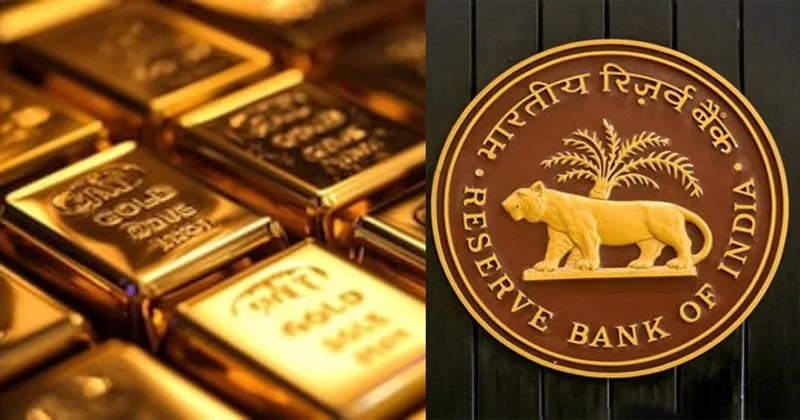
New Delhi: The Centre has rejected a recent media report alleging that the Reserve Bank of India (RBI) sold gold to support foreign exchange reserves. The clarification came after a Bloomberg report, citing unnamed sources, claimed that the RBI may have offloaded gold worth around $12 billion.
A news report published by @Bloomberg states that RBI may have sold gold amounting to approximately USD 12 billion.#PIBFactCheck
❌ This claim is FAKE
✔️ According to @RBI, the share of gold in India's foreign exchange reserves rose from 13.92% at end-September 2025 to 16.70%… pic.twitter.com/eVjxPxEv1i
— PIB Fact Check (@PIBFactCheck) June 3, 2026
Dismissing the claim, the government stated that the share of gold in India’s foreign exchange reserves has, in fact, increased, from 13.92 per cent at the end of September 2025 to 16.70 per cent as of March 31, 2026, and further to 16.85 per cent as of May 22, 2026.
The clarification further stated that the physical stock of gold is regularly disclosed by the RBI in its Monthly Bulletin and advised the public to rely only on official data available on the Reserve Bank of India’s website for accurate information.
Separately, Bloomberg Economics Senior India Economist Abhishek Gupta estimated that the RBI may have sold gold worth around $12 billion in the fortnight ending May 22, while simultaneously purchasing approximately $7.5 billion worth of foreign currency assets.
The RBI stated that its physical gold holdings remain unchanged at 880.52 tonnes. “The RBI has come across reports in certain sections of the media about RBI’s sale of gold. The RBI emphasizes that these reports are not correct,” the central bank clarified.
Meanwhile, the RBI, earlier this week, released data highlighting a notable shift in the composition of bank deposits in India over the past five years. The data shows that savers are increasingly moving funds from low-yield savings accounts to higher-return term deposits.
According to the latest figures, the share of savings deposits in total bank deposits fell sharply to 28.7 per cent in March 2026, down from 34.6 per cent in March 2022. In contrast, term deposits increased their share from 55.2 per cent to 61.6 per cent during the same period.
Commenting on the trend, Sarvjeet Singh Virk, CEO of jUMPP, said the decline in savings account balances reflects a growing preference among households for more return-focused and disciplined financial planning. He noted that this shift is not necessarily toward riskier investments, but toward better utilisation of idle funds, as fixed deposits continue to offer stable returns with capital safety.
He also pointed to the role of digital adoption in driving this change, citing that UPI processed 23.2 billion transactions worth Rs 29.90 lakh crore in May 2026, underscoring India’s increasing comfort with digital financial behaviour. According to him, while savings accounts are no longer the default parking place for surplus cash, term deposits remain dominant, particularly in the one-to-three-year maturity segment, supported by relatively attractive interest rates.