
“The strong conceptual unity of Bharat is multi-hued like a rainbow, whether we are vanvasi, gramavasi or nagarvasi, we are all Bharatvasi. Our cultural heritage from ancient Bharat is still continuing as worship of Surya, the Devi etc. Our cultural values are reflected in our arts, literature, crafts and in the various facets of our national life. The colonial rule has not only distorted our cultural traditions, they destroyed our social fabric and our functioning social, economic, cultural and education systems… Our national consciousness is now awakening and we are slowly shedding our colonial baggage”
– President Smt Droupadi Murmu,while delivering the inaugural address of Lokmanthan 2024, at Bhagyanagar (Hyderabad) on November 22, 2024 (https://www.presidentofindia.gov.in/sites/default/files/2023-06/sp22112024_0.pdf)
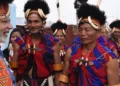
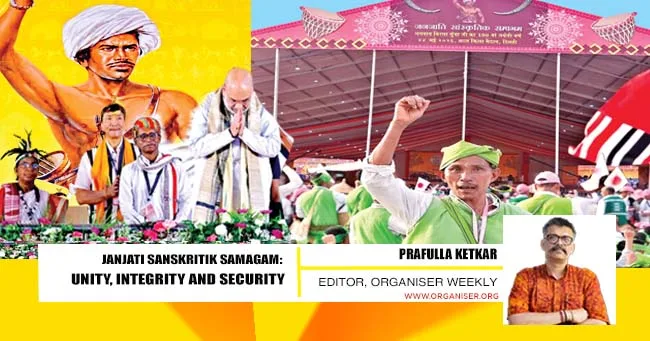
Thousands of people representing various Scheduled Tribes (STs) of Bharat thronged on the streets of New Delhi on May 24, 2026. Many of them travelled by train for the first time, and most had their first visit to any city outside their respective region, let alone the national capital. The confluence, called Janjati Sanskritik Samagam, organised by the Janjati Suraksha Manch, was a landmark and unique event not just for the Janjatis but also for Bharat in multiple ways.
Though Nagar (cities), gram (villages) and Van (forests) were distinct entities in Bharat, our national life was always interdependent. Forests were considered the abode of knowledge, so even people from cities and villages used to go to forests to seek the truth in the Aaranyak tradition. The forest-dwellers were not backwards but people who were wise and close to nature. The British colonised Bharatiya cities and destroyed the village manufacturing systems. However, they failed to occupy the forests. The resistance of people like Bhagwan Birsa Munda or Tantya Bhil was so furious that the British first isolated them from the rest of Bharat, used derogatory terms for them and then created legal systems to exploit their innocence through missionaries. This colonial ploy, which believed that every society must have mistreated the forest dwellers as they did to the tribes in America and Africa, ruptured our social fabric and created a binary between Tribes and Non-Tribes.
The occasion when representatives of almost all Scheduled Tribes, from every part of Bharat, reached the national capital in such large numbers was a display of unity among the tribes themselves and the connection that they have with the rest of Bharat. They colourfully presented their own traditions and culture, and people in Delhi treated them like special guests. The distinct practices were recognised while inherent unity was celebrated. The message of unity and integrity was clear.
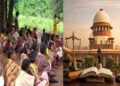
The real concern for the people who came all the way to Delhi and registered themselves with a monetary contribution was the issue of ‘security’. When we adopted the Constitution, the idea was to maintain a balance between two projects of protection and integration. Protecting the distinct identity and practices based on faith and tradition was the main criterion for assigning Scheduled Tribe status. With the passage of time, missionaries misused the loopholes in the legal systems, uprooted a section of people from their distinct identity and ate into their share of reservation. If the distinct practices are compromised, the traditions and faith are given up, then how could one retain the Scheduled Tribe status after conversion to a foreign faith? This process would undermine the reservation rights of the Scheduled Tribes and eventually pose an existential threat to their distinct cultural traditions and practices. The practices rooted in Bharatiya Knowledge Traditions can serve as a guiding force for many of us influenced by Western thought.
The Janjatis of Bharat have shown unity and integrity and have conveyed their concerns about security. Now, it is our duty to genuinely and empathetically understand their issues and have a national deliberation on the issue of ‘delisting’.