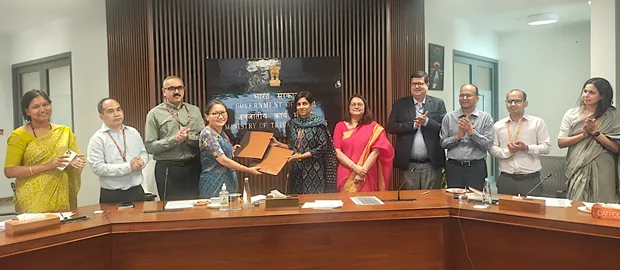
In a major step towards accelerating tribal development and ensuring that government welfare initiatives reach some of India’s most vulnerable communities, the Ministry of Tribal Affairs (MoTA) conducted a comprehensive review of tribal welfare programmes in West Bengal on May 27, 2026. The meeting not only assessed the implementation of flagship schemes such as the Pradhan Mantri Janjati Adivasi Nyaya Maha Abhiyan (PM JANMAN) and Dharti Aaba Janjatiya Gram Utkarsh Abhiyan (DA-JGUA) but also witnessed the signing of a significant Memorandum of Understanding (MoU) aimed at strengthening tribal education through the Eklavya Model Residential Schools (EMRS) network.
The discussions reflected the Centre’s broader objective of improving the socio-economic conditions of tribal communities while advancing Prime Minister Narendra Modi’s vision of an inclusive, self-reliant, and developed India.
High-level review meeting focuses on tribal development
The review meeting was chaired by Ranjana Chopra, Secretary, Ministry of Tribal Affairs, and was attended by senior officials from both the Central and West Bengal governments.
Among those present were Choten Dhendup Lama, Additional Secretary Manish Thakur, Joint Secretaries Brij Nandan Prasad and Anant Prakash Pandey, Chairman and Managing Director of the National Scheduled Tribes Finance and Development Corporation T. Roumuan Paite, and Dr. Pratima, along with other senior officials.
The meeting reviewed the status of tribal welfare schemes being implemented in West Bengal and identified areas where greater coordination between the Centre and State could improve outcomes for tribal communities.
Officials discussed fund utilisation, project implementation, pending proposals, and measures required to accelerate welfare delivery in tribal-dominated districts.
PM JANMAN and DA-JGUA at the centre of discussions
A significant portion of the meeting focused on two flagship tribal welfare initiatives launched by the Government of India: PM JANMAN and DA-JGUA.
PM JANMAN was launched to address long-standing developmental gaps faced by Particularly Vulnerable Tribal Groups (PVTGs), who are considered among the most marginalised communities in the country. The programme seeks to improve access to housing, healthcare, education, drinking water, roads, connectivity, and livelihood opportunities.
Similarly, DA-JGUA has been designed to promote holistic development of tribal villages through coordinated interventions involving multiple ministries and departments.
During the meeting, Secretary Ranjana Chopra emphasised that the success of these ambitious initiatives would depend on effective convergence between Central ministries and State departments. She highlighted the need to ensure that every eligible tribal family, especially those belonging to PVTG communities, receives the benefits intended under these schemes.
Officials noted that West Bengal possesses a sizeable tribal population, including several PVTG communities, making the successful implementation of these programmes particularly important.
PVTG household survey begins across West Bengal
One of the most important developments discussed during the review was the launch of a comprehensive household survey targeting Particularly Vulnerable Tribal Groups across West Bengal.
State officials informed the Ministry that the survey commenced on May 27, 2026, and would be completed within the stipulated timeline.
The exercise is expected to create a detailed database of PVTG households, enabling governments to identify beneficiaries accurately and deliver welfare benefits more efficiently.
Accurate household-level data has become increasingly important in welfare administration because it helps eliminate exclusion errors and ensures that schemes are targeted towards the intended beneficiaries.
Officials believe that the survey will play a crucial role in strengthening the implementation of PM JANMAN and ensuring that tribal families are not left out of government welfare programmes.
Adi Karmayogi and Adi Sewa Kendras to strengthen grassroots outreach
The Ministry also stressed the importance of integrating West Bengal into the Adi Karmayogi Abhiyan (AKA), an initiative designed to improve service delivery mechanisms and strengthen governance in tribal regions.
To facilitate this process, the Ministry announced plans to organise dedicated handholding sessions for State Government officials, helping them understand and implement the programme effectively.
Another key recommendation was the expedited notification of Adi Sewa Kendras (ASKs) in villages covered under PM JANMAN and DA-JGUA.
These centres are expected to function as grassroots service hubs, providing information, facilitating access to welfare schemes, and strengthening community participation.
The Ministry advised the State Government to deploy teams of five to seven volunteers in each Adi Sewa Kendra, ensuring active involvement of local communities in welfare delivery and awareness generation.
Landmark MoU signed to strengthen tribal education
A major outcome of the meeting was the signing of a Memorandum of Understanding between the National Education Society for Tribal Students (NESTS) and the Government of West Bengal for strengthening the implementation of the Eklavya Model Residential Schools scheme.
The agreement was signed in the presence of senior officials from both governments and is expected to significantly improve educational infrastructure and opportunities available to tribal students in the State.
The Eklavya Model Residential School initiative has emerged as one of the flagship educational programmes aimed at providing quality residential education to tribal children, particularly in remote and underserved regions.
Funding Per Student Increased from Rs 61,500 to Rs 1.47 Lakh
One of the most significant provisions of the MoU is the substantial increase in per-student funding.
Under the revised arrangement, financial support under the EMRS scheme will increase from Rs 61,500 per student to Rs 1.47 lakh per student, representing a major enhancement in educational investment.
Officials believe that the increased funding will help improve infrastructure, learning resources, student welfare services, and overall educational quality.
The State Government has also committed to expediting the operationalisation of sanctioned schools and completing pending infrastructure projects.
Faculty recruitment for EMRS institutions will now be undertaken through a centralised process, aimed at improving transparency and ensuring quality teaching standards across schools.
Building modern educational institutions for Tribal students
The MoU seeks to strengthen coordination between the Centre and State in areas such as planning, construction, administration, and management of Eklavya schools.
The schools are expected to provide modern education aligned with NCERT curriculum standards and CBSE norms, ensuring that tribal students receive educational opportunities comparable to those available elsewhere in the country.
The initiative is designed not only to improve academic outcomes but also to promote holistic development, leadership skills, cultural awareness, and future employment opportunities among tribal youth.
Officials noted that quality education remains one of the most powerful tools for social mobility and empowerment in tribal communities.
Other key issues reviewed
Apart from PM JANMAN, DA-JGUA, and EMRS implementation, the meeting also reviewed several other important areas related to tribal development.
These included:
1. Submission of pending project proposals and utilisation certificates.
2. Progress of sanctioned projects under various tribal welfare schemes.
3. Implementation of the Forest Rights Act (FRA).
4. Expansion and operationalisation of Van Dhan Vikas Kendras (VDVKs).
5. Strengthening the Tribal Research Institute (TRI).
6. Promotion of innovative projects focused on skill development and livelihood generation.
Officials emphasised that improving livelihoods and creating sustainable income opportunities remain essential components of long-term tribal empowerment.
Towards inclusive growth and Viksit Bharat
The discussions concluded with a renewed commitment by both the Ministry of Tribal Affairs and the Government of West Bengal to strengthen tribal welfare initiatives and ensure effective implementation of developmental programmes.
By combining targeted welfare interventions, educational reforms, grassroots outreach mechanisms, livelihood initiatives, and improved governance systems, the Centre aims to bridge developmental gaps that have historically affected tribal communities.
The launch of the PVTG survey, the expansion of Eklavya schools, and the accelerated implementation of PM JANMAN and DA-JGUA together represent an important step towards ensuring that tribal communities become active participants in India’s growth story.
Officials said the initiatives are closely aligned with Prime Minister Narendra Modi’s vision of Sabka Saath, Sabka Vikas, Sabka Vishwas, Sabka Prayas, and are intended to contribute meaningfully towards the larger goal of building an Atmanirbhar Bharat and a Viksit Bharat where development reaches even the most remote tribal habitations of the country.