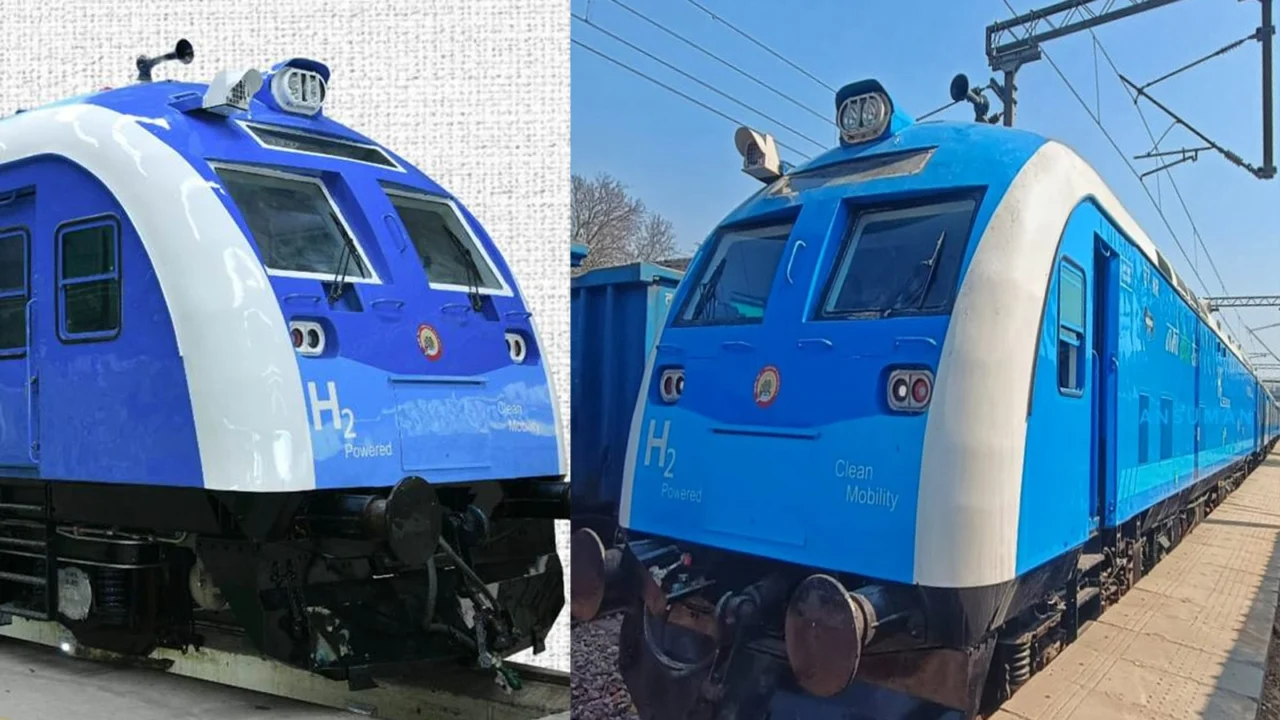
Indian Railways is on the verge of achieving a historic milestone in its nearly 172-year journey as it prepares to launch the country’s first indigenous hydrogen fuel cell-powered train. The pioneering project, which will operate on the Jind-Sonipat section of Northern Railway in Haryana, is expected to place India among a select group of nations experimenting with hydrogen-powered rail transportation as part of their clean energy transition strategies.
The initiative reflects a broader shift in India’s transportation sector, where sustainability, energy efficiency, and carbon emission reduction are increasingly shaping policy decisions. With hydrogen being viewed globally as one of the fuels of the future, the project marks an important step in India’s ambition to build a greener and more environmentally friendly railway network.
A new chapter in Indian Railways’ evolution
The history of Indian Railways mirrors India’s own developmental journey. From the first passenger train that ran between Bombay and Thane in 1853 to the widespread adoption of diesel and electric locomotives after Independence, each technological shift has transformed the country’s transport landscape.
For decades, steam engines powered India’s railways before giving way to diesel locomotives in the mid-twentieth century. Over the last few decades, electrification has emerged as the primary focus, significantly reducing dependence on imported fossil fuels and improving operational efficiency.
Now, with the introduction of hydrogen fuel cell technology, Indian Railways is entering yet another transformative phase, one that aims not only to improve efficiency but also to dramatically reduce environmental impact.
Officials believe that hydrogen-powered trains could become an important solution for routes where full electrification may not be economically viable while simultaneously helping India achieve its long-term decarbonisation goals.
India’s first indigenous hydrogen train
The approved hydrogen-powered trainset will consist of ten coaches and will be equipped with a powerful 1200 KW hydrogen fuel cell propulsion system.
The train is designed to operate at a maximum speed of 75 kilometres per hour and will initially run on the Jind-Sonipat section in Haryana, which has been selected as the pilot corridor for the project.
What makes the initiative particularly significant is its indigenous nature. Unlike many countries that initially depended heavily on imported technologies, India has focused on developing key components, infrastructure, and operational systems domestically, aligning with the broader vision of self-reliance in advanced transportation technologies.
The project is expected to serve as a testbed for future deployment of hydrogen-powered trains across other sections of the railway network if operational and economic viability is demonstrated successfully.
How Hydrogen fuel cell technology works
Hydrogen fuel cell technology has emerged as one of the most promising alternatives to conventional fossil fuel-powered transportation systems.
Unlike diesel engines that burn fuel and release carbon dioxide and other pollutants, hydrogen fuel cells generate electricity through a chemical reaction between hydrogen and oxygen.
The electricity produced powers the train’s propulsion system, while the only by-product emitted is water vapour.
This makes hydrogen-powered trains a highly attractive option for countries seeking to reduce greenhouse gas emissions without compromising transportation efficiency.
Globally, hydrogen is increasingly being explored as a clean fuel for sectors that are difficult to fully electrify, including long-distance transportation, heavy industry, aviation, and shipping.
For Indian Railways, which transports billions of passengers annually and operates one of the world’s largest rail networks, hydrogen technology offers a potential pathway toward achieving greener operations.
Joining an exclusive global club
The launch of India’s first hydrogen train will place the country alongside nations such as Germany, Japan, China and the United States, all of which have been actively exploring hydrogen-powered rail solutions.
Germany was among the first countries to introduce commercial hydrogen-powered passenger trains, demonstrating the feasibility of replacing diesel-powered operations on non-electrified routes.
India’s entry into this emerging sector reflects the country’s growing technological capabilities and its ambition to become a major player in future clean energy ecosystems.
Building the infrastructure for hydrogen mobility
A train powered by hydrogen requires far more than just a new locomotive technology. It also demands an entirely new ecosystem for fuel production, storage, transportation, and refuelling.
Recognising this challenge, Indian Railways has established an indigenous hydrogen storage and refuelling facility at Jind to support operations on the pilot corridor.
The facility will function as the backbone of the hydrogen train project, ensuring safe storage and reliable dispensing of compressed hydrogen gas required for daily train operations.
The Petroleum and Explosives Safety Organisation (PESO) has already granted the necessary licence for storage and dispensing activities at the site, clearing an important regulatory milestone for the project.
The refuelling facility is equipped with a hydrogen compression system, technical support infrastructure, and critical spare components designed to maintain uninterrupted operations.
Authorities have also planned a standby compressor unit to provide additional reliability and redundancy in case of equipment failure.
Safety remains the top priority
Given that hydrogen is a highly combustible fuel, safety has been a central focus throughout the planning and development stages of the project.
Railway officials have incorporated multiple layers of safety mechanisms to ensure safe operations.
These include advanced hydrogen leak detection systems, flame detectors, automated monitoring systems, and periodic inspections of hydrogen production, storage, and dispensing facilities.
Comprehensive operation and maintenance manuals approved by the Research Designs and Standards Organisation (RDSO) are also being prepared for both the hydrogen trainset and the supporting hydrogen plant.
The maintenance facility proposed at Shakurbasti will operate under stringent safety standards, detailed standard operating procedures, and regular audits to ensure compliance with safety requirements.
In addition, railway authorities have mandated round-the-clock monitoring of the hydrogen refuelling system and deployment of trained and certified personnel for critical operations.
During the initial phase of service, specially trained technical staff will travel with the train to monitor performance and address any operational challenges that may arise.
Supporting India’s net-zero vision
The hydrogen train project is part of a much larger transformation underway within Indian Railways.
Over the past decade, Indian Railways has aggressively pursued electrification, renewable energy adoption, energy-efficient technologies, and carbon reduction measures.
The national transporter has already achieved near-complete electrification of its broad-gauge network and has set ambitious targets to become a net-zero carbon emitter in the coming decades.
Hydrogen-powered trains are expected to complement these efforts by providing a clean alternative for routes where conventional electrification may not always be the most practical solution.
The project also aligns closely with India’s National Green Hydrogen Mission, which seeks to establish the country as a global hub for the production, utilisation, and export of green hydrogen.
While the Jind-Sonipat corridor will serve as the initial testing ground, the implications of the project extend far beyond a single railway route.
If successful, the hydrogen train could pave the way for wider adoption of hydrogen-powered mobility solutions across India’s vast transportation network. It would not only reduce dependence on fossil fuels but also stimulate domestic innovation, create new industrial opportunities, and strengthen India’s clean energy ecosystem.
As Indian Railways moves from the age of steam and diesel to a future powered by hydrogen and clean energy, the launch of the country’s first indigenous hydrogen train represents more than just a technological achievement. It symbolises India’s determination to combine infrastructure development with environmental responsibility, ensuring that the future of mobility is both efficient and sustainable.