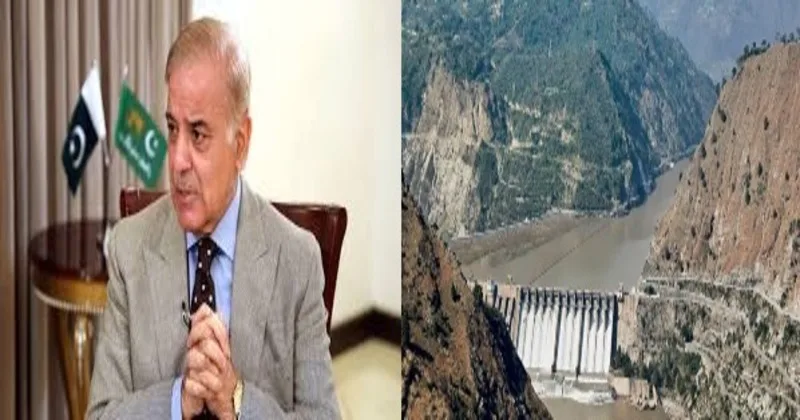
Sindh: Pakistan Peoples Party(PPP) Sindh provincial President Nisar Ahmed Khuhro has lodged a strong protest with the Federal government over the Indus River System Authority’s(IRSA) decision to impose a 27 per cent water shortage on Sindh during the Kharif season. This decision is blatantly unfair and aimed to favour Pakistan Punjab province as zero cuts have been imposed on it, he pointed out.
Khuhro criticised the decision for maintaining zero cuts for Punjab, while continuing the release of 25,500 cusecs from the Indus River into the Chashma-Jhelum Link Canal and Tunsa-Panjnad Link Canal. In case of any shortage of water recorded at various dams, there is provision for imposing proportionate cut on all provinces so that the burden of shortages is shared equitably.
Sindh is facing unusually high temperatures these days as a heat wave is leading to higher evaporation rates with ponds drying up in many areas. A couple of days ago, Dadu in Sindh recorded a record high of 51.5 degrees Celsius.
PM Shehbaz Sharif’s intervention sought
The matter is so serious that Prime Minister Shehbaz Sharif should intervene immediately to ensure Sindh receives its legal water share under the 1991 Water Apportionment Accord, he said. It is a direct hit against the hard working farmers of Sindh who work day and night in their fields to contribute to the national exchequer by producing grains that are exported.
In a pointed manner, he asked: What is the justification for unfairly depriving Sindh’s farmers of their share of waters and sacrificing their crops?
In the past too, provinces like Sindh, Khyber Pakhtunkhwa and Balochistan have accused IRSA of favouring Punjab at their cost in terms of water apportionment. A couple of years ago, the Punjab government had started working on digging new canals to divert water from Indus to Punjab. These plans had the backing of Chief of Defence Forces (CDF) General Asim Munir and all efforts to convene meetings of Council of Common Interests (CCI) by Sindh and other provinces were thwarted.
The work on these canal projects was finally abandoned on April 29 last year after India put the Indus Waters Treaty (IWT) in abeyance.
Water Apportionment Accord of 1991
In a statement issued in Larkana, Khuhro condemned IRSA’s actions as a direct violation of the Water Apportionment Accord of 1991 and demanded that PM Sharif take immediate notice of what he described as the deliberate “economic destruction” of the lower riparian province.
Incidentally, Larkana city in Sindh is central to all politics of PPP and the Indus river flows in east and south of the city. The importance of the city can perhaps be gauged from the fact that Bilawal Bhutto had concluded his campaign in 2024 elections at this historical city.
Mr. Khuhro pointed out that under the 1991 water accord, Sindh requires over 80,000 cusecs of water at the Guddu Barrage during the Kharif season. However, only 65,304 cusecs had been released so far which is a significant shortfall at a critical time for standing crops.
He further highlighted that 11,900 cusecs were being diverted to the Jhelum–Chenab zone via the Chashma–Jhelum Link Canal and another 9,000 cusecs through the Taunsa–Panjnad (TP) Link Canal. This amounts to a combined diversion of 20,900 cusecs from the Indus water, he argued, should be reaching Sindh’s agricultural fields. “The Jhelum–Chenab zone can be supplied through the Mangla Dam, yet water is being stored there instead of being released to Sindh’s farmers who urgently need it,” Khuhro stated.
Khuhro described Sindh as a major contributor to the national economy, producing 5.5 million tonnes of rice annually and generating $1.4 billion in rice exports. Cutting the province’s water share during Kharif, he argued, amounted to an “economic massacre” of the downstream province.
“Sindh produces 67 per cent of the country’s agricultural output, yet it is being deprived of its rightful water share”, he said.
Sindh angry with WAPDA interventions
The PPP leader also questioned the Federal government over an alleged overlap of authority, noting that while water distribution is legally IRSA’s mandate, it appears to be operating at WAPDA’s discretion, primarily to sustain power plant operations. He called on Islamabad to clarify which body actually holds control over water distribution. “Despite a continuous water supply to power plants, the country still faces an electricity shortfall. What, then, is the justification for sacrificing Sindh’s crops?” he asked.
Mr Khuhro tied the water crisis to the country’s broader fiscal challenges, noting that the Federal Bureau of Revenue’s (FBR) tax collection shortfall already stands at Rs 3.2 trillion. Undermining the agricultural sector, a key contributor to national revenue, would only widen that gap, he warned, urging the Federal government to support agriculture in Sindh rather than neglect it.