SC uses Article 142 to direct HC on timely judgment delivery
August 31, 2026
  • Read Ecopy
  • Circulation
  • Advertise
  • Careers
  • About Us
  • Contact Us
Android AppiPhone AppArattai
Organiser
  • ‌
  • Bharat
    • Assam
    • Bihar
    • Chhattisgarh
    • Jharkhand
    • Maharashtra
    • View All States
  • World
    • Asia
    • Europe
    • North America
    • South America
    • Africa
    • Australia
  • Editorial
  • International
  • Opinion
  • RSS @ 100
  • More
    • Op Sindoor
    • Analysis
    • Sports
    • Defence
    • Politics
    • Business
    • Economy
    • Culture
    • Special Report
    • Sci & Tech
    • Entertainment
    • G20
    • Azadi Ka Amrit Mahotsav
    • Vocal4Local
    • Web Stories
    • Education
    • Employment
    • Books
    • Interviews
    • Travel
    • Law
    • Health
    • Obituary
  • Subscribe
    • Subscribe Print Edition
    • Subscribe Ecopy
    • Read Ecopy
  • ‌
  • Bharat
    • Assam
    • Bihar
    • Chhattisgarh
    • Jharkhand
    • Maharashtra
    • View All States
  • World
    • Asia
    • Europe
    • North America
    • South America
    • Africa
    • Australia
  • Editorial
  • International
  • Opinion
  • RSS @ 100
  • More
    • Op Sindoor
    • Analysis
    • Sports
    • Defence
    • Politics
    • Business
    • Economy
    • Culture
    • Special Report
    • Sci & Tech
    • Entertainment
    • G20
    • Azadi Ka Amrit Mahotsav
    • Vocal4Local
    • Web Stories
    • Education
    • Employment
    • Books
    • Interviews
    • Travel
    • Law
    • Health
    • Obituary
  • Subscribe
    • Subscribe Print Edition
    • Subscribe Ecopy
    • Read Ecopy
Organiser
  • Home
  • Bharat
  • World
  • Operation Sindoor
  • Editorial
  • Analysis
  • Opinion
  • Culture
  • Defence
  • International Edition
  • RSS @ 100
  • Magazine
  • Read Ecopy
Home Bharat

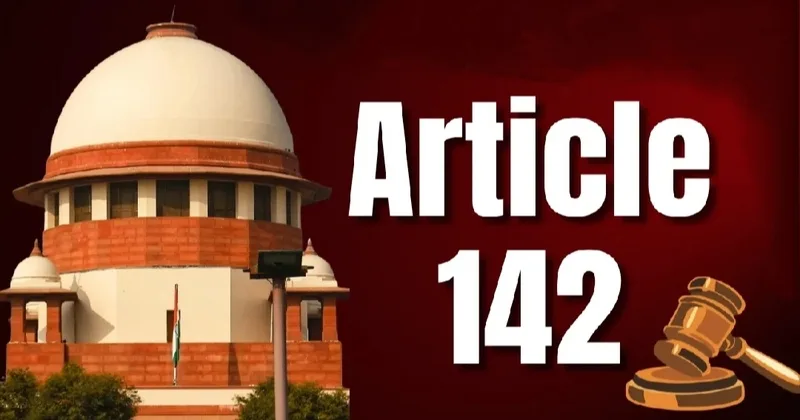
Supreme Court invokes Article 142, orders strict timelines for High Court judgments to end delays in justice delivery

The Supreme Court has invoked Article 142 of the Constitution to issue strict nationwide directions to High Courts aimed at reducing delays in pronouncing judgments. It has set clear timelines for reserved judgments, bail orders, and mandatory online publication of verdicts to ensure faster and more transparent justice delivery

WEBDESKWEBDESK
May 29, 2026, 06:30 pm IST
inBharat
Follow on Google News
Supreme Court invokes Article 142, issues strict timelines to curb delay in High Court judgments

Supreme Court invokes Article 142, issues strict timelines to curb delay in High Court judgments

Facebook
Twitter
WhatsAppTelegramEmail

New Delhi: In a significant judicial reform measure aimed at addressing long-standing delays in the justice delivery system, the Supreme Court on May 29 invoked its extraordinary powers under Article 142 of the Constitution and issued binding directions to all High Courts across the country to ensure time-bound pronouncement and publication of judgments.

A bench led by Chief Justice of India Surya Kant passed a series of structured guidelines intended to streamline judicial timelines, particularly in cases where judgments are reserved for long periods and remain pending without pronouncement. The Court observed that such delays directly impact litigants, weaken public confidence in the justice system, and undermine the fundamental principle of timely justice.

Three-month limit for reserved judgments

One of the most important directions issued by the Court is that all High Courts must pronounce reserved judgments within a maximum period of three months. The Supreme Court noted that while reserving judgments is a normal judicial practice, indefinite delays in delivering them create uncertainty for litigants and can lead to avoidable hardship, especially in criminal and liberty-related matters.

The Court emphasised that High Courts, being principal constitutional courts at the state level, handle thousands of critical cases daily, and therefore must adhere to strict internal discipline in disposing of reserved matters.

Strict rules for bail cases

In another major direction aimed at protecting personal liberty, the Supreme Court laid down timelines for the disposal of bail matters. It is ordered that bail orders must be pronounced on the same day whenever possible. In cases where the order is reserved, it must be delivered on the next day without delay.

Further strengthening the process, the Court directed that all regular bail orders must be immediately communicated to the concerned trial courts to avoid procedural lag. It also held that undertrial prisoners who are granted bail should be released on the same day, subject to completion of necessary formalities.

The Court noted that delays in bail execution often defeat the very purpose of granting bail, resulting in unnecessary continued incarceration despite a judicial order in favour of release.

Mandatory 24-hour upload of judgments

To enhance transparency and public access, the Supreme Court directed that all High Court judgments, once pronounced, must be uploaded on official High Court websites within 24 hours. The Court observed that in the digital age, the timely availability of judgments is essential for lawyers, litigants, researchers, and the public. This direction is also expected to reduce confusion regarding case outcomes and improve accessibility to judicial records across the country.

Also Read: West Bengal: BJP govt launches Rs 5 fish-and-rice meals across 400 canteens to strengthen Bengali cultural identity

The Supreme Court further clarified a key procedural aspect, stating that the date on which the operative portion of a judgment is pronounced will be treated as the official date of pronouncement of the judgment. This clarification aims to remove ambiguity in cases where full judgments are uploaded or signed later, but operative orders are already pronounced in court.

The judgment was delivered in a case that highlighted significant delays in pronouncement and uploading of judgments, with particular reference to concerns arising from proceedings in the Jharkhand High Court. The issue of reserved judgments remaining pending for extended periods prompted the Supreme Court to step in and lay down uniform guidelines applicable across all High Courts.

Legal experts view the ruling as a major step toward judicial reform, especially in improving efficiency and reducing pendency-related stress in the justice system. By introducing fixed timelines for judgments and bail orders, the Supreme Court has effectively set performance benchmarks for High Courts. The decision is also expected to have a broader impact on case management practices, pushing courts toward greater discipline in scheduling, pronouncement, and publication of orders. At its core, the ruling reinforces a simple but powerful principle: justice delayed, particularly in matters of liberty, can often amount to justice denied.


 

Topics: Supreme CourtArticle 142High CourtsJudicial ReformJudgments DelayBail OrdersJustice System
Share
Tweet
SendShareSend
✮ Subscribe Organiser YouTube Channel. ✮
✮ Join Organiser's WhatsApp channel for Nationalist views beyond the news. ✮
Previous News

Amarnath Yatra 2026: 3.5 lakh pilgrims registered; MHA clears 670 CAPF companies for security

Next News

Modi government plans military based security for top exams like NEET; China, South Korea already follow similar models

Related News

The Supreme Court of India

“Can the court direct fresh elections like this?”: SC questions TMC plea over West Bengal SIR voter deletion

Supreme Court rejects rape convict Tarun Tejpal’s exemption plea; Orders to surrender within two weeks

Pakistan PM Shehbaz Sharif and Former PM Imran Khan

Pakistan: Contempt plea filed against PM Shehbaz Sharif & 2 ministers for defying Supreme Court order on Imran Khan

Goa government moves Supreme Court seeking life imprisonment for convicted rapist Tarun Tejpal

Goa government demands life imprisonment for convicted rapist Tarun Tejpal, escalates case to Supreme Court

Uttar Pradesh Cabinet has approved amendments to the Madrasa Education Act, ending the recognition of Kamil and Fazil degrees

Uttar Pradesh: Yogi government ends recognition of Kamil and Fazil degrees in line with Supreme Court ruling

Tamil Nadu: Supreme Court refuses to stay HC order on Thiruparankundram Deepam; TVK govt faces legal setback

Load More

Latest News

Goa: Muslim share rises from 1.95% to 8.33%, Christian count falls; Why opposition rejects anti-conversion Bill?

Jadavpur University

Jadavpur University: From nationalist educational emblem to leftist battleground & Maoist anarchy

BRICS Ahead, CJP Takes to Streets: Why Dipke’s September 5 March Raises National Security Questions

BRICS Summit ahead, CJP plans Delhi march: Is global optics driving the protest strategy before every big moment?

Students at the Gautam Buddha University, Greater Noida

Mann Ki Baat: PM Modi praises GBU’s mission ShakthiSAT, says dreams of daughters are now taking flight to space

Dutch TikTokker Angelo Bryson, known as Superhuman Unchained, at a pro-Palestine protest.

Dutch TikTokker recently converted to Islam livestreams stabbing three in Amsterdam; Watch video

From Kanchipuram to Kalamkari, India’s traditional textiles reflect its rich regional cultures and centuries-old craftsmanship

From Kanchipuram to Kalamkari: Exploring India’s rich traditional textiles and regional clothing heritage

Punjabi Influencer Abducted, Burnt Alive Near Morinda

Punjab Law and order crisis: Influencer Manjeet Kaur abducted, burnt alive after attack near Morinda

‘Dimagi Naxals’ romanticising Mao, Stalin and Pol Pot

The Swadeshi movement turned Indian enterprise into a powerful force for economic self-reliance, national pride and the struggle for Swaraj

Building Economic Swaraj: How Indian enterprises fought foreign rule and reclaimed national pride

Prime Minsiter Narendra Modi and Uzbekistan President Shavkat Mirziyoyev

India-Uzbekistan Herald New Chapter: Uranium deal, 30-day visa-free entry to Indians & $5bn trade propel bilateral ties

Load More
  • Privacy
  • Terms
  • Cookie Policy
  • Refund and Cancellation
  • Delivery and Shipping

© Bharat Prakashan (Delhi) Limited.
Tech-enabled by Ananthapuri Technologies

  • Home
  • Search Organiser
  • Bharat
    • Assam
    • Bihar
    • Chhattisgarh
    • Jharkhand
    • Maharashtra
    • View All States
  • World
    • Asia
    • Africa
    • North America
    • South America
    • Europe
    • Australia
  • Editorial
  • Operation Sindoor
  • Opinion
  • Analysis
  • Defence
  • Culture
  • Sports
  • Business
  • RSS @ 100
  • Entertainment
  • More ..
    • Sci & Tech
    • Vocal4Local
    • Special Report
    • Education
    • Employment
    • Books
    • Interviews
    • Travel
    • Health
    • Politics
    • Law
    • Economy
    • Obituary
  • Subscribe Magazine
  • Read Ecopy
  • Advertise
  • Circulation
  • Careers
  • About Us
  • Contact Us
  • Policies & Terms
    • Privacy Policy
    • Cookie Policy
    • Refund and Cancellation
    • Terms of Use

© Bharat Prakashan (Delhi) Limited.
Tech-enabled by Ananthapuri Technologies