Prime Minister Narendra Modi’s 5-nation tour has successfully expanded Bharat’s footprint in Europe while deepening strategic and technological alignments in the Gulf region. Beyond diplomatic strides it also helped close a historical loop that began in the turbulence of colonial expansion, thus opening a new chapter in Bharat’s global effort to reclaim its civilisational legacy.
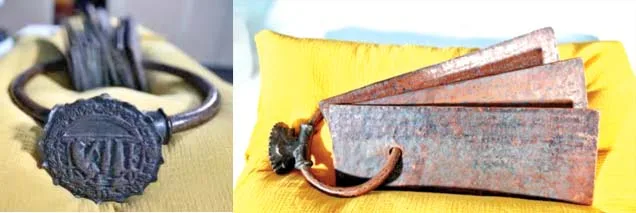
The return of the 11th-century Anaimangalam copper plates from the Netherlands in May 2026 is not merely an act of cultural diplomacy. It is the victory of justice in repatriating Bharat’s looted heritage, reaffirming rightful ownership of Chola-era history.
Coinciding with PM’s Visit
Timed with Prime Minister Narendra Modi’s visit to the Netherlands, the repatriation of the Leiden Plates, alongside the return of thousands of Jain manuscripts from the United Kingdom, marks a decisive shift in how the world engages with artefacts acquired under colonial conditions.
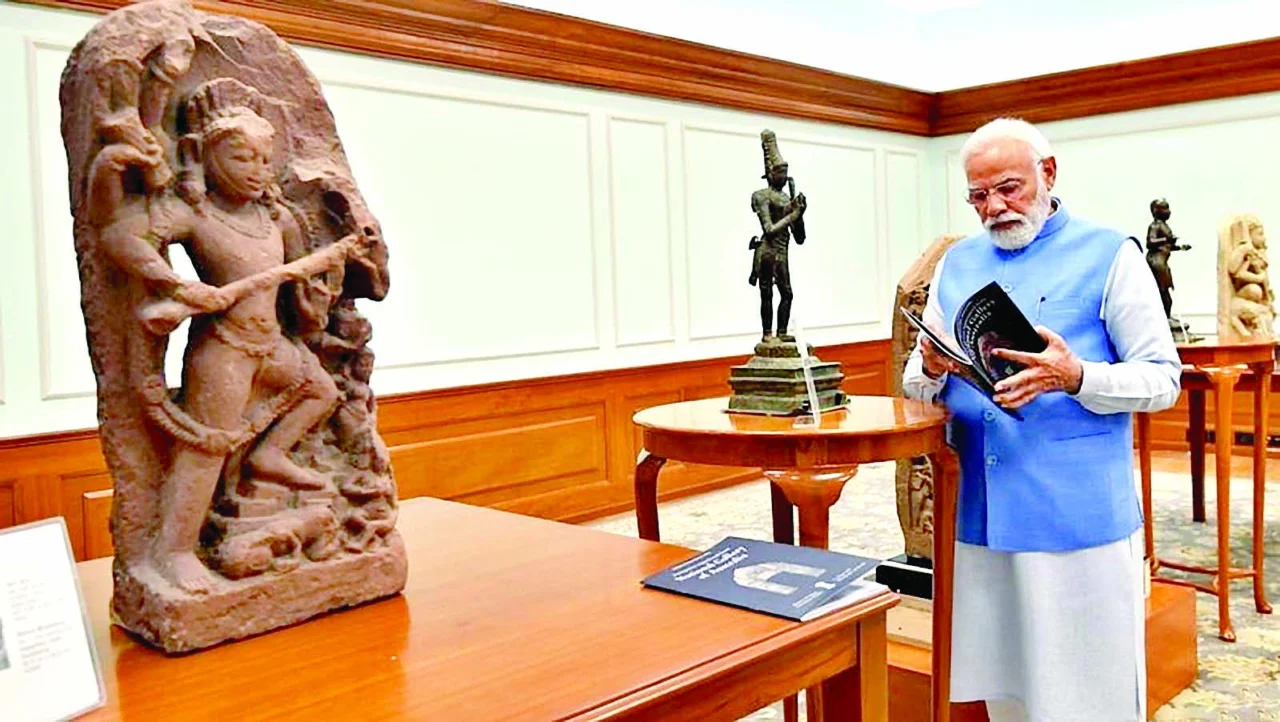
Bringing civilisational heritage at home
Since Prime Minister Narendra Modi came to power in 2014, Bharat has witnessed an unprecedented recovery of its stolen civilisational heritage
- 640+ antiquities and sacred artefacts brought back to Bharat since 2014
- Returned in just 10–11 years, compared to only 13 antiquities between 1947–2014
- Artefacts recovered from countries including the USA, Australia, UK, Singapore, Canada and the Netherlands
- Includes Chola-era copper plates, Nataraja Murtis, bronze sculptures, temple Murtis, manuscripts and dynastic treasures
- The United States alone returned 578+ artefacts to Bharat in recent years
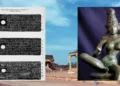
Major Antiquities & Heritage Returns to Bharat - July 2014 — Australia returned the sacred Sripuranthan Nataraja Murti, a priceless Chola-era bronze stolen from Tamil Nadu
- November 2014 — USA returned 61 Bharatiya antiquities, including ancient bronze Murtis and temple artefacts
- September 2015 — USA handed over 19 stolen antiquities linked to South Indian temple heritage
- January 2016 — USA returned an important bronze Devi Murti stolen from Tamil Nadu temples
- November 2016 — Bharat received 111 antiquities from the United States, then one of the largest returns in history
- April 2017 — Singapore returned multiple Bharatiya artefacts, including sculptures and manuscripts
- December 2018 — UK returned a rare 13th-century stone sculpture belonging to Bharat’s Mandir heritage
- July 2019 — USA handed over 68 antiquities, including Chola bronzes and ancient sculptures
- January 2020 — Australia returned 17 Bharatiya cultural artefacts
- October 2020 — USA returned a massive 157 stolen antiquities to Bharat
- December 2021 — USA repatriated 23 more antiquities, including bronze Murti and coins
- July 2022 — USA returned 70 artefacts, including manuscripts, statues and sacred objects
- March 2023 — Netherlands returned several Bharatiya sculptures and heritage artefacts
- July 2023 — USA handed over another 50 stolen antiquities during PM Modi’s visit
- January 2024 — USA returned 29 more artefacts linked to Bharat’s ancient heritage
- May 2024 / 2026 diplomatic process highlighted — Netherlands returned the historic 11th-century Chola copper plates (Leiden Plates) connected to Rajendra Chola’s era
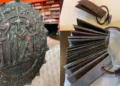
Held for over 160 years at Leiden University, the Leiden Plates are among the most important epigraphic records of the glorious Chola Empire.
The Chola emperors were visionary rulers who transformed a regional power into a formidable South and Southeast Asian empire. Their domains spanned vast stretches of peninsular Bharat, islands in the Indian Ocean, and overseas territories in South East Asia.
Evidence of Maritime Connectivity
Issued under Chola Emperors viz. Rajaraja Chola I, Rajendra Chola I, and later Kulottunga Chola I, the Anaimangalam Plates consist of two sets: 21 copper plates bearing Rajendra’s seal (and mentioning the will of his predecessor and father Raja Raja Chola) and three bearing Kulottunga. Written in Sanskrit and Tamil, the plates document the grant of Anaimangalam village revenues to the Chudamani Vihara in Nagapattinam. They stand as evidence of administrative precision, maritime connectivity, and a deeply pluralistic ethos.
From Nagapattinam to Leiden
The journey of these plates from Tamil soil to a European archive reflects the layered mechanics of colonial extraction. During the late 17th century, Nagapattinam fell under the control of the Dutch East India Company (VOC), which operated as both a trading enterprise and a territorial power. It was in this context that the plates were likely unearthed between 1687 and 1700.
A key figure in their subsequent removal was Florentius Camper, a pastor from Batavia (present-day Indonesia), who arrived in Nagapattinam under VOC patronage. As recounted to the Organiser by Advocate B. Jagannath, Camper (who was also associated with the colonial networks of trade and missionary activity) encountered the Chudamani Vihara and took possession of the copper plates.
Transported to the Netherlands around 1712, the plates remained within the Camper family for generations. They were inherited by Johanna Camper, the great-granddaughter of Florentius, who was married to noted orientalist scholar Hendrik Arent Hamaker. It was their descendants who eventually donated the artefacts to Leiden University in 1862, embedding them within European academic collections.
A modern provenance investigation by Leiden confirmed that the plates had been removed without the consent of their rightful custodians, classifying the act as an involuntary loss of possession.
Advocate Jagannath’s Intervention
The restitution might have remained a moral footnote were it not for sustained legal action within Bharat. Advocate B. Jagannath, a senior lawyer associated with the Akhil Bharatiya Adhivakta Parishad ABAP), brought the issue before the Madras High Court through a Public Interest Litigation in 2019 (WP 10780 of 2019). Appearing as a party-in-person, he sought not only the return of the Leiden Plates but also broader accountability for stolen Bharatiya artefacts abroad.
The case came before Justices R Mahadevan and P D Audikesavalu, whose directions compelled the authorities to respond and act. Their intervention created the legal architecture that empowered the Archaeological Survey of India (ASI) and the Ministry of External Affairs to take up coordinated and strong diplomatic engagement to achieve the shared goal.
Jagannath’s approach was both strategic and expansive. Alongside the international repatriation effort, he pressed for the reconstruction of the Chudamani Vihara, grounding his arguments in the very inscriptions contained within the plates.
Importantly, Jagannath has maintained that the success was collective. He has credited the roles of the ASI, the Ministry of Culture, the Ministry of External Affairs under S Jaishankar, and the diplomatic channels activated during Prime Minister Modi’s tenure.
From Courtroom to Global Stage
The legal momentum generated in Chennai translated into diplomatic traction internationally. Bharat raised the issue at UNESCO’s Intergovernmental Committee for Promoting the Return of Cultural Property.
Backed by this framework, the Netherlands acknowledged Bharat’s rightful claim. The eventual handover in May 2026 represents a rare convergence of legal persistence, scholarly evidence, and diplomatic will.
Precedent for the Future
For Jagannath and many cultural activists, the significance of this restitution lies in what it enables next.
The successful return of the Leiden Plates establishes a crucial precedent: institutions holding artefacts acquired during colonial rule must now demonstrate legitimate provenance. The burden of proof is shifting. This has implications for numerous contested artefacts across the world, from temple idols in European galleries to iconic relics such as (but not limited to) the Kohinoor diamond, etc.
The message is clear. Repatriation is no longer an exception; it is becoming an expectation.
Jain Manuscripts: Historic Return
Parallel to the Dutch restitution, the Wellcome Trust has initiated the return of more than 2,000 Jain manuscripts collected by Henry Wellcome.
Acquired under unequal colonial conditions from a temple in Punjab, these manuscripts span centuries of Bharatiya intellectual and spiritual tradition. Their return is being hailed as a “landmark restitution” and a model for ethical engagement with cultural heritage.
What makes this restitution particularly significant is the sheer intellectual and civilisational depth of the manuscripts being returned. The collection spans from the 15th to the 19th centuries and includes rare illustrated texts, philosophical treatises, cosmological works, and early scientific writings rooted in Jain knowledge systems.
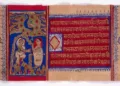
Among the most remarkable is a 16th-century illustrated copy of the Kalpasutra, one of Jainism’s most sacred texts, which narrates the lives of the Tirthankaras, including Bhagwan Mahavira.
The collection also includes early medical and proto-scientific works, such as a 1592 Hindi treatise often translated as ‘A Celebration of Physicians’, reflecting Bharat’s indigenous traditions of medicine and healing. These manuscripts are not merely religious artefacts, they are repositories of Bharat’s knowledge traditions in linguistics, mathematics, ethics, and health sciences.
Crucially, the Wellcome Trust itself acknowledged that many of these manuscripts were acquired “against the best interests of their original owners,” often for a pittance, and under the coercive environment of colonial power structures.
In some cases, temple custodians were compelled to sell due to legal or financial pressures imposed under colonial administration. This admission marks a rare moment of institutional honesty in the history of Western collecting practices.
Another layer of historical loss deepens the significance of this return, the original Jain temple in undivided Bharat’s Punjab province (now in Pakistan), from which a majority of these manuscripts were sourced, no longer exists.
According to the UK daily The Times, “According to the foundation, Wellcome’s agents purchased more than half of the manuscripts just under a century ago from a single Jain temple in Punjab, in modern-day Pakistan, which no longer exists… They were bought for a handful of rupees each and “against the best interests of their original owners”, it said on Thursday.”
This makes the manuscripts not just religious texts, but among the last surviving material links to a vanished sacred site and its scholarly ecosystem.
The restitution process has also been notable for its collaborative approach. The manuscripts are being transferred with the involvement of Jain organisations such as the Institute of Jainology, and academic bodies like the University of Birmingham’s Dharmanath Network in Jain Studies, ensuring both preservation and respectful reintegration with the community.
Reclaiming Narrative, Not Just Objects
Beyond their material value, the Chola Plates carry a powerful intellectual message. They dismantle the artificial binaries that dominate modern discourse.
The seamless integration of Sanskrit and Tamil within the same document reflects a civilisational harmony that defies contemporary linguistic politics. Likewise, the Chola embrace of pan-Indian sacred geography challenges rigid narratives of cultural separation. For Bharat, their return is not just about restoring artefacts, it is about restoring continuity.
Beginning of a Larger Return
The homecoming of the Anaimangalam or Leiden Plates and Jain manuscripts is both culmination and commencement. It closes a chapter of displacement that began under colonial rule. At the same time, it opens a pathway for reclaiming countless other artefacts scattered across global institutions.
In this larger arc of cultural restitution, PM Narendra Modi has emerged as the leader under whose tenure Bharat has secured the return of more than 600 stolen and trafficked antiquities from across the world, the highest ever in independent Bharat’s history.
Significance of the Return
Through sustained diplomatic engagement, sharper legal positioning, and a clear civilisational vision, his Government has transformed repatriation from a symbolic demand into a consistent policy outcome.
The return of the Chola copper plates and Jain manuscripts thus becomes part of a broader, deliberate effort to bring Bharat’s scattered heritage back home, piece by piece, record by record.
As Bharat asserts its rightful place in shaping the narrative of its past, these restitutions stand as milestones in a larger civilisational journey, one where history is not merely remembered, but returned.